Low-impact cardio can feel easy or demanding, depending on the movement and your effort. It can also leave you breathing almost exactly as you did before. Low impact describes the movement’s contact pattern; low intensity describes how demanding that movement is for you. One label cannot settle the other.
You do not need a smartwatch to make a useful effort check. A familiar movement, a short spoken sentence and an honest record of work and recovery are enough to guide an ordinary beginner session. This approach estimates effort; it does not measure oxygen use, diagnose fitness or calculate calories.
Start with a movement you already control
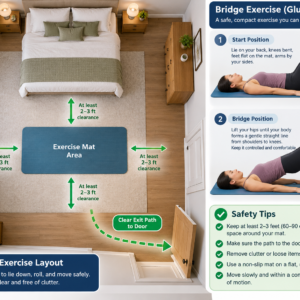
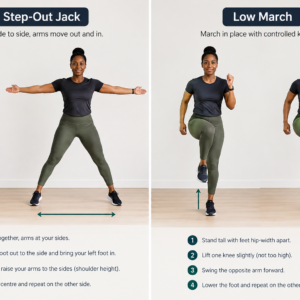
Choose an easy march or short side tap you can perform without pain or unsteadiness. Clear a dry, nonslip area and keep movements within its boundaries. Begin slowly for several minutes, allowing your breathing to change gradually rather than immediately trying to make it hard.
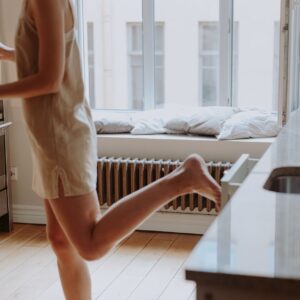
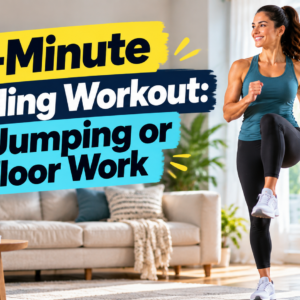
For marching, stand comfortably and alternate modest foot lifts. Place each foot back under you instead of leaning backward to raise the knee. Keep arms relaxed initially. An easier option is alternating heel lifts with toes remaining down, with light touch on a fixed counter if needed.
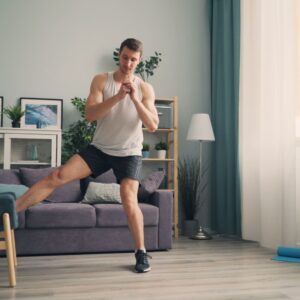
For side taps, tap one foot a short distance sideways, return it and change sides. Keep the step small enough that you do not hop back or drift into furniture. Practise eight taps before using it for a longer interval. These are simple illustrative movement choices, not validated clinical prescriptions.
If standing movement is unsuitable, use an activity already agreed with your clinician rather than trying to apply a general home routine to symptoms. Stop for pain or loss of balance. Dizziness, chest discomfort or unusual breathlessness require stopping and appropriate assessment, as AHA exercise safety advice explains.
Check your effort during low-impact cardio
During a steady, familiar movement, say a sentence aloud. Choose ordinary words you can repeat next time, such as: “I am moving comfortably and keeping my steps under control.” Do not perform a maximal breath-hold or force a long paragraph while moving.
CDC guidance describes moderate effort as allowing conversation but not singing; vigorous effort permits only a few words between breaths. That gives you a practical reference, not an exact personal threshold. Speech is affected by the sentence, breathing habits and health conditions, so combine it with how the activity feels and your movement control.
For a beginner experiment, there is no need to seek the hardest end of the scale. If you cannot comfortably complete your sentence, reduce effort and recover. Do not interpret breathlessness as a goal simply because the video calls itself cardio.
| Effort clue | What it may indicate | Practical response |
|---|---|---|
| Conversation feels much like resting; movement is easy | Light effort | Keep it here for preparation or recovery; increase gently only if desired |
| Breathing is clearly busier, speech remains workable | A moderate-effort candidate | Maintain a controlled pace and check again later |
| Speech becomes fragmented and breathing feels hard | High effort for you | Slow down or pause; beginner sessions need not target this |
| Unusual breathlessness, dizziness, chest symptoms or poor control | A reason to stop, regardless of label | Stop and seek appropriate help rather than scoring the interval |
The table uses observations to guide decisions. It is not a diagnostic test or a substitute for instructions about exercise with a medical condition.
Change one variable and check again
Suppose a low march feels very easy. First add a natural arm swing while keeping the same steps. After roughly a minute, repeat your sentence. If that produces a useful, comfortable rise in effort, keep it. You have no reason to add faster feet and higher knees at the same time.
If you want to try pace instead, return the arms to their previous pattern and slightly increase the rhythm. Foot placement should stay controlled. A pace that makes you stamp, stumble or lean has exceeded the useful version of that movement for the moment.
Range is another option, but it must fit both your body and room. A slightly larger side tap may feel different; a wide reach that puts you near a sharp table is not progress. Use normal comfortable range rather than exaggerating every movement to force breathlessness.
Allow enough time at the changed setting to notice how it feels, then reassess. There is no universal speed or knee height that makes everyone moderately active. If local leg fatigue is the main limiter, switching to another comfortable movement may be more useful than forcing more repetitions.
A worked session that separates activity from intensity
Here is an original 12-minute beginner example. Use a comfortable march or small side tap, and make the work blocks only as demanding as you can manage with control.
| Clock | Activity | Effort check |
|---|---|---|
| 0:00–5:00 | Gradually build from a very easy march | Start easy; keep speech comfortable |
| 5:00–6:00 | Comfortable work pace | Say your sentence near the end |
| 6:00–7:00 | Easy recovery march or rest | Wait for breathing to ease |
| 7:00–8:00 | Repeat work pace if appropriate | Keep or reduce the setting based on speech |
| 8:00–9:00 | Easy recovery march or rest | Take longer if needed |
| 9:00–10:00 | Third work block, optional | Stop early if control changes |
| 10:00–12:00 | Easy movement, gradually slowing | Continue longer if you have not settled |
Five preparation minutes, three work minutes, two recovery minutes and two closing minutes total 12 minutes. Extra recovery makes the elapsed session longer. The AHA recommends gradual warm-up and cool-down; this example is deliberately gentle rather than a prescription for intense intervals.
Imagine that speech and effort suggest a moderate level only during the three work blocks. Your log would say “12 minutes total, about three minutes at estimated moderate effort.” It would not label the entire session moderate merely because that was the planned target. The numbers in this example illustrate bookkeeping, not a measured participant result.
Sweat and soreness answer different questions
A warm room can make the same movement feel hotter without making it a better training session. Sweating participates in cooling, and heat changes the demands on your body; AHA warm-weather guidance advises adjusting activity to conditions. Ventilate the room where possible and reduce effort when heat makes the session uncomfortable. Do not dress excessively warmly to manufacture sweat.
Next-day soreness also does not tell you whether you reached moderate cardiovascular effort. Military Health guidance on exercise myths explains that delayed soreness is not an indicator of training effectiveness. A familiar movement may leave little soreness. Unexpected pain should not become a target or something you ignore to prove the workout counted.
For this task, the useful scoreboard is simple: movement performed, approximate moving minutes, speech response, rest taken and any changes in control.
Keep a record you can repeat
Write one line after the session: “Low march, small arm swing; three one-minute work blocks; sentences manageable; one extra minute recovery.” On a later day, repeat those settings before deciding whether to increase anything.
Track total time separately from estimated intensity time. If you pause the video, include the pause in elapsed time but do not count it as a work minute. You can record an interval as uncertain rather than assigning a confident intensity label from one hurried sentence.
Sportiemade’s quiet home workout guide gives additional movement choices. Apply the same effort check to any option you select rather than assuming its name establishes intensity.
Frequently asked questions
Is low impact the same as low intensity?
No. A movement with no jump can be demanding, and a gentle march can be easy. Assess your breathing, speech and control during the actual activity rather than using the impact label.
Can I use the talk test without a watch?
Yes. Speak during a familiar steady movement and notice how comfortably you can complete the sentence. It is a practical estimate, not an exact heart-rate or oxygen-use measurement.
Does sweating mean the workout was effective?
Sweat alone cannot establish effort or fitness gains. Room conditions and cooling needs matter. Record what you did and how it felt rather than chasing a wet shirt.
At your next session, choose one familiar move and make one small adjustment. A repeatable observation will tell you more about your effort than adding intensity simply because the routine seems quiet.
Sources
Intensity reference: CDC measuring activity intensity. Additional context: AHA warm-weather exercise guidance and Military Health exercise myths.

Nick Smoot is a certified fitness coach and the founder of Smoot Fitness, established in 2012. With over a decade of hands-on experience, Nick has personally coached more than 400 clients both in person and online helping them achieve lasting, life-changing physical transformations.
As a contributing expert at Sportiemade (sportiemade.com), Nick brings real-world expertise and a no-nonsense approach to fitness. His coaching philosophy goes beyond short-term results: he equips every client with the knowledge, habits, and mindset needed to get into the best shape of their life and stay there permanently.
Nick specialises in strength training, endurance performance, and the mental discipline that ties them together. His signature philosophy? Lift heavy, run far, and never stop learning.
Whether you are just beginning your fitness journey or looking to break through a plateau, Nick's evidence-based methods and proven track record make him one of the most trusted voices in the fitness space.