
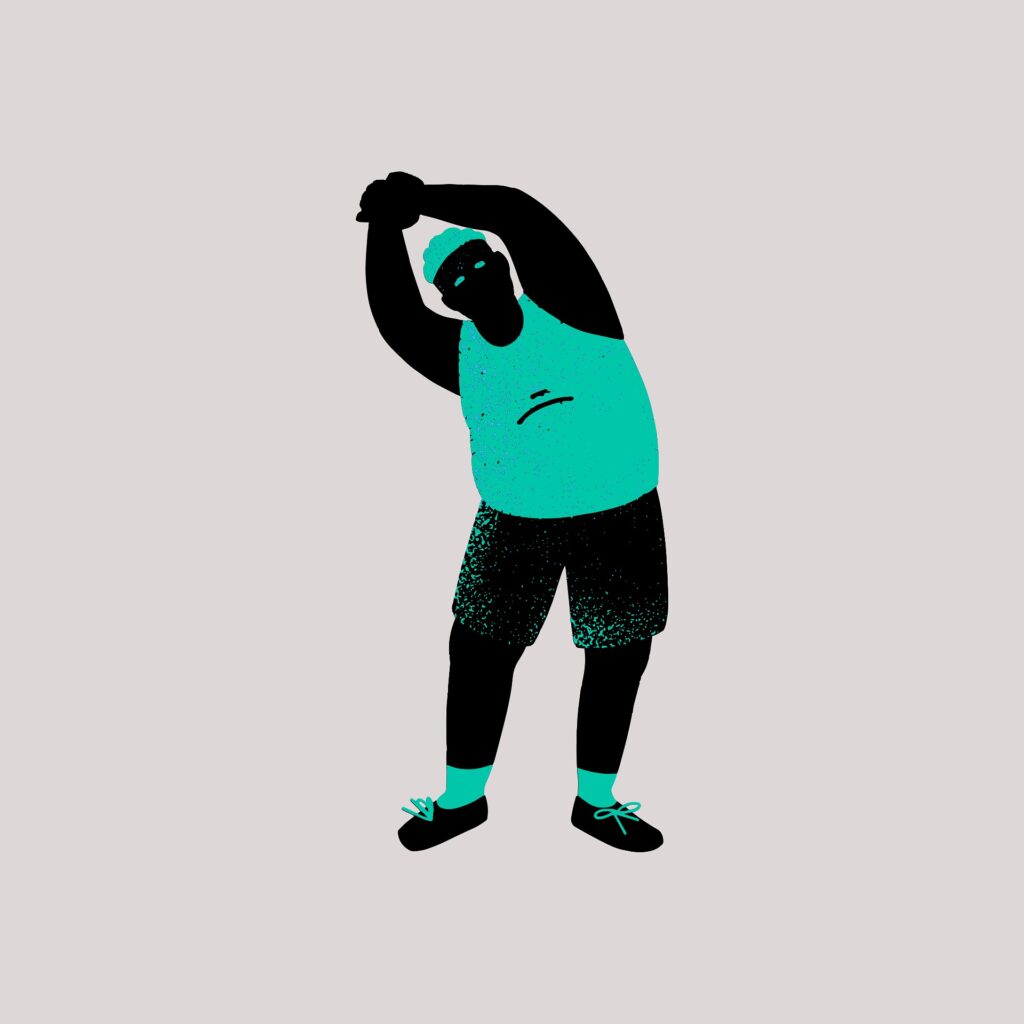
Warmup (The State of Play): Why Your “Quick Stretch” Isn’t Cutting It
Walk into most gyms and you’ll see the same ritual: a few arm swings, maybe a hamstring stretch, then straight into heavy lifts or a fast run. It feels productive, but injury data tells a different story nearly 30–50% of non-contact musculoskeletal injuries trace back to poor neuromuscular preparation rather than load alone.
That gap matters more after 40. Tendons stiffen, motor units fire less synchronously, and insulin sensitivity becomes more sensitive to how you start not just how hard you train.
Your warmup isn’t a prelude. It’s a control system.
Pre-Workout Warmups Explained
A proper warmup primes the nervous system, improves tissue elasticity, and stabilizes metabolic output before load.
- Neuromuscular activation: Enhances motor unit recruitment and coordination
- Tissue preparation: Increases muscle temperature and tendon compliance
- Metabolic priming: Improves glucose uptake and mitochondrial efficiency
Skip any one of these, and performance drops.
The Mechanical Truth: What Actually Happens During a Warmup
Muscle isn’t just contractile tissue it’s an electrical network governed by the central nervous system. When you warm up correctly, you increase alpha motor neuron excitability, allowing faster and more coordinated recruitment of Type II fibers without excessive strain.
At the same time, intramuscular temperature rises by 1–2°C, which improves actin-myosin cross-bridge cycling speed and reduces passive stiffness in connective tissue. That translates to smoother force production and less shear stress at joints.
Then comes the metabolic layer.
A structured warmup enhances GLUT4 translocation independent of insulin, meaning your muscles start pulling glucose from the bloodstream more efficiently before the first working set. That matters for both performance and long-term metabolic health.
Small shift. Big payoff.
The Sportiemade Power Table
| Variable | Traditional Approach | Optimized Approach |
|---|---|---|
| Stretching | Static holds before lifting | Dynamic mobility with active tension |
| Cardio Warmup | 5–10 min random treadmill | Targeted heart rate ramp (Zone 2 → Zone 3) |
| Activation | Skipped or minimal | Muscle-specific priming (glutes, scapula) |
| Intensity Build | Jump to working weight | Gradual neural ramp sets |
| Breathing | Ignored | Diaphragmatic patterning for stability |
The Five Warmups You Should Never Skip
1. Dynamic Mobility (Not Static Stretching)
Static stretching before strength work reduces peak force output by temporarily dampening neural drive. That’s fine for yoga. It’s a liability before lifting.
Dynamic mobility, on the other hand, uses controlled movement through range to activate proprioceptors specifically muscle spindles and Golgi tendon organs which refine joint positioning and force control.
Think walking lunges with rotation or inchworms.
These movements improve joint centration, meaning your joints sit in their optimal mechanical position under load. That reduces wear over time, especially in knees and shoulders.
Living Room Modification: Use a hallway for walking lunges or perform stationary split squats with torso rotation. No equipment needed.
Coach’s Corner Floor-Level Cue:
“Don’t just lunge forward; rotate toward the front leg to wake up your thoracic spine and glute med.”
2. Targeted Muscle Activation
Certain muscles tend to “go offline” with age and sedentary habits. The glute medius, lower trapezius, and deep core stabilizers are common casualties.
If these muscles don’t activate, larger groups compensate. That’s where joint stress accumulates.
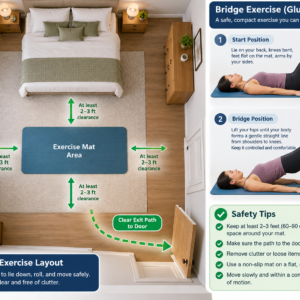
Activation drills use low-load, high-control movements to restore neural connection. For example, glute bridges improve hip extension by reinforcing posterior chain sequencing, while band pull-aparts activate scapular stabilizers.
You’re not building strength here. You’re restoring signal clarity.
Living Room Modification: Use a resistance band or even a towel for isometric tension exercises like pull-aparts or glute bridges on the floor.
Coach’s Corner Floor-Level Cue:
“In a glute bridge, push through your heels and imagine pulling your hips toward your ribs.”
3. Progressive Cardiovascular Ramp
Jumping straight into high intensity shocks the cardiovascular system and spikes heart rate variability (HRV) in the wrong direction.
A gradual ramp from Zone 2 to low Zone 3 improves stroke volume and oxygen delivery while stabilizing autonomic balance. That leads to better endurance and reduced perceived exertion.
This phase also enhances mitochondrial enzyme activity, which supports sustained ATP production during your workout.
You’re building capacity before demand.
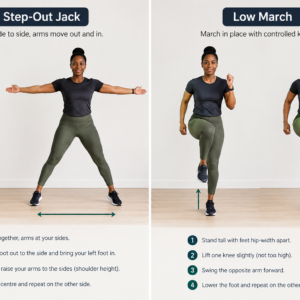
Living Room Modification: March in place, perform step-ups on stairs, or use shadow boxing to elevate heart rate progressively.
Coach’s Corner Floor-Level Cue:
“Breathe through your nose for the first 3 minutes to control heart rate rise.”
4. Movement Pattern Rehearsal
Before loading a squat or deadlift, your brain needs a rehearsal. This is where neural patterning comes in.
Practicing movement patterns with light resistance or bodyweight strengthens synaptic pathways between the motor cortex and working muscles. That improves coordination and reduces compensatory movement.
In practical terms, it means fewer technical breakdowns under load.
You’re teaching your body the script.
Living Room Modification: Practice air squats, hip hinges with a broomstick, or push-up progressions against a wall.
Coach’s Corner Floor-Level Cue:
“In a hinge, push your hips back like you’re closing a car door with them.”
5. Neural Ramp Sets (The Most Skipped Step)
This is where most people fail.
Instead of jumping to your working weight, ramp gradually with submaximal sets. These sets increase motor unit recruitment efficiency and synchronize firing rates across muscle fibers.
The result is higher force output with less perceived strain.
This step also protects connective tissue by allowing tendons to adapt to increasing load incrementally.
Think of it as calibrating your system.
Living Room Modification: Use tempo reps or pause reps with lighter weights (or bodyweight) to simulate ramping when equipment is limited.
Coach’s Corner Floor-Level Cue:
“Treat your warmup sets like practice, not a race.”
The Contrarian Insight: Why Static Stretching Before Workouts Falls Short After 40
The standard advice “stretch before exercise” ignores how aging changes neuromuscular behavior.
Static stretching reduces muscle-tendon stiffness temporarily, which sounds beneficial. But stiffness is what allows efficient force transfer. Too little stiffness, and you lose power and joint stability.
For older adults, this becomes a trade-off between flexibility and control.
Dynamic mobility preserves range of motion while maintaining neural readiness. Static stretching has a place but it belongs after training or in separate sessions.
Timing matters more than method.
The Data Most People Miss: Warmups and Metabolic Health
Recent studies (2023–2025) show that structured warmups can significantly influence metabolic biomarkers, especially in midlife populations.
One study found that performing a 10-minute progressive warmup before resistance training improved post-prandial glucose control by up to 18% compared to no warmup. That’s a meaningful shift in insulin sensitivity.
Another trial linked proper warmup protocols to improved VO2 kinetics meaning your body reaches steady-state oxygen consumption faster, reducing fatigue onset.
Then there’s HRV.
A well-designed warmup stabilizes parasympathetic withdrawal, preventing the sharp sympathetic spikes associated with overtraining and poor recovery.
This isn’t just about performance.
It’s metabolic insurance.
Read more on metabolic health
How to Build Your 12-Minute Longevity Warmup
Minute 0–3: Cardiovascular ramp (Zone 2)
Minute 3–6: Dynamic mobility (hips, thoracic spine, shoulders)
Minute 6–9: Targeted activation (glutes, core, scapula)
Minute 9–12: Movement rehearsal + ramp sets
Each phase builds on the last. Skip one, and the system weakens.
Consistency beats intensity here.
[Healthy living resource page]
Efficiency, Safety, Consistency: The Longevity Lens
Efficiency means getting more output from less strain. A structured warmup improves force production without increasing load.
Safety comes from joint integrity. When muscles fire in the correct sequence, joints stay centered and stress distributes evenly.
Consistency is the long game. Injuries don’t just hurt they interrupt momentum, which is the real driver of long-term fitness.
Train smarter. Stay in the game.
Final Thought: Your Warmup Is Your First Set
Most people treat warmups as optional. That mindset works until it doesn’t.
The truth is simpler.
Your warmup determines how your body experiences the workout that follows.
Treat it like training.
References
- McCrary JM, et al. Injury prevention in strength training: a systematic review. Br J Sports Med. 2022.
- Aagaard P. Training-induced changes in neural function. Exerc Sport Sci Rev. 2023.
- Behm DG, et al. Acute effects of static stretching on performance. Med Sci Sports Exerc. 2021.
- Granata C, et al. Mitochondrial adaptations to exercise. Cell Metab. 2022.
- van Dijk JW, et al. Exercise timing and glycemic control. Diabetologia. 2024.
- Poole DC, et al. VO2 kinetics and exercise performance. J Appl Physiol. 2023.

Nick Smoot is a certified fitness coach and the founder of Smoot Fitness, established in 2012. With over a decade of hands-on experience, Nick has personally coached more than 400 clients both in person and online helping them achieve lasting, life-changing physical transformations.
As a contributing expert at Sportiemade (sportiemade.com), Nick brings real-world expertise and a no-nonsense approach to fitness. His coaching philosophy goes beyond short-term results: he equips every client with the knowledge, habits, and mindset needed to get into the best shape of their life and stay there permanently.
Nick specialises in strength training, endurance performance, and the mental discipline that ties them together. His signature philosophy? Lift heavy, run far, and never stop learning.
Whether you are just beginning your fitness journey or looking to break through a plateau, Nick's evidence-based methods and proven track record make him one of the most trusted voices in the fitness space.






2 Comments