How to Track Fitness Progress Without a Scale
You have been showing up, workouts done, meals improved, sleep prioritized. Then you step on the scale and the number barely moves. That single digit has a way of undoing everything you felt good about, and suddenly three weeks of real effort feels meaningless.
Here is the problem: the scale measures one thing. Total body weight. It cannot tell the difference between fat, muscle, water, or what you ate at dinner. It gives you a number stripped of all context, and for a lot of people working out at home, that number actively works against motivation.
Learning how to track fitness progress without a scale is not a workaround for people avoiding results but actually a smarter way to measure what is changing in your body. This article walks you through the methods that matter, how to use them consistently, and what to look for when you are working out in your living room with limited equipment and a busy schedule. By the end, you will have a clear, practical tracking system built around evidence, not the bathroom floor.
Why the Scale Misleads More Than It Measures
Your body weight can shift by two to five pounds in a single day which none of it is related to fat gain or fat loss. Water retention, sodium intake, hormonal fluctuations, undigested food, and even the time of day all influence the number you see. A study published in the International Journal of Obesity found that body weight naturally fluctuates across a seven-day cycle in both men and women, with the lowest point typically occurring on Friday morning and the highest on Sunday evening (Orsama et al., 2014).
More importantly, the scale cannot detect body recomposition which is the process where your body loses fat while simultaneously building or preserving muscle. This is extremely common in people who begin home workout routines, particularly those combining bodyweight resistance training with improved nutrition. On the scale, the results look flat. In real life, clothes fit differently, movements feel easier, and energy levels climb. Those are real changes. The scale just cannot see them.
The American College of Sports Medicine (ACSM) identifies four primary components of fitness: aerobic capacity, muscular strength and endurance, flexibility, and body composition (ACSM, 2022). Body weight alone addresses none of these adequately. Tracking them directly gives you a far more complete picture of what your efforts are producing.
Six Practical Ways to Track Fitness Progress Without a Scale
None of these methods require expensive equipment. Most take under five minutes. Used together, they give you a clearer, more motivating view of progress than a single number ever could.
1. Body Measurements with a Tape Measure
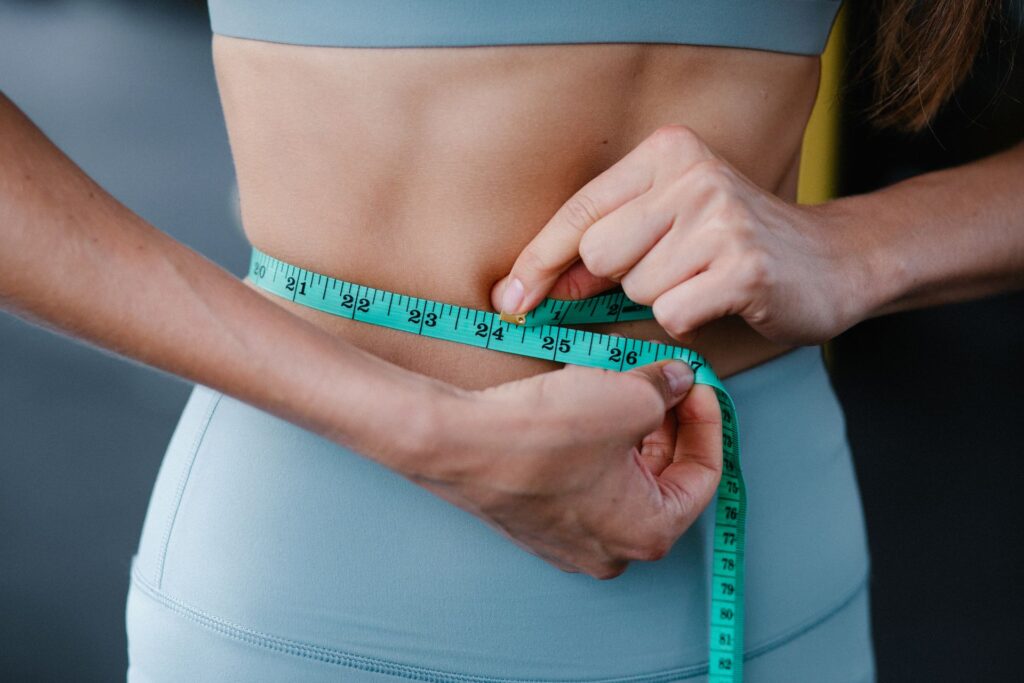
A soft measuring tape costs almost nothing and tells you more about shape change than the scale ever will. Muscle is denser than fat meaning as your body composition improves, your measurements shrink even when your weight stays the same. This is one of the most reliable non-scale methods available, and it is completely accessible at home.
Measure the following sites consistently, always at the same time of day (morning, before eating):
| Measurement Site | Where to Place the Tape | How Often to Measure |
|---|---|---|
| Waist | Narrowest point, usually just above the navel | Every 2–4 weeks |
| Hips | Widest point across the buttocks | Every 2–4 weeks |
| Chest | Across the nipple line, arms relaxed at sides | Every 2–4 weeks |
| Upper arm (right) | Midpoint between shoulder and elbow, arm relaxed | Monthly |
| Thigh (right) | Midpoint between hip crease and top of knee | Monthly |
Quick tip: Always measure at the same time of day every morning before breakfast is best. Measure twice and take the average if the numbers differ. Log these in a notes app, a spreadsheet, or a notebook. Four weeks of data is far more meaningful than any single measurement taken in isolation.
2. Strength and Performance Logs
One of the clearest signs your body is adapting to exercise is doing more than you could last week. Strength gains often happen before visible changes, which means your performance log will show progress even when you feel like nothing is working. This matters especially for beginners, the neuromuscular adaptations that come in the first six to twelve weeks of training are rapid and measurable, even without a mirror or a scale.
To track strength gains at home without equipment, keep a simple workout log. After each session, record:
- The exercise performed
- Number of reps and sets completed
- Any notes on difficulty (easy, moderate, hard)
- Rest time between sets
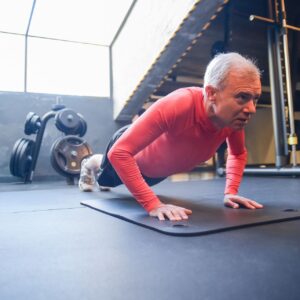
When you can do 15 push-ups where you previously maxed out at 8, that is a measurable, meaningful improvement and it has nothing to do with a number on a bathroom floor. Over time, these logs reveal a pattern of progressive overload, which is the single most reliable indicator of genuine strength development (Kraemer & Ratamess, 2004).
| Exercise | Week 1 | Week 4 | Week 8 |
|---|---|---|---|
| Push-ups | 3 × 8 | 3 × 12 | 3 × 16 |
| Bodyweight squats | 3 × 10 | 3 × 15 | 3 × 20 |
| Plank hold (seconds) | 20 sec | 35 sec | 55 sec |
| Glute bridges | 3 × 10 | 3 × 15 | 3 × 18 |
| Reverse lunges per side | 3 × 8 | 3 × 12 | 3 × 15 |
3. Resting Heart Rate as a Cardiovascular Fitness Marker
Your resting heart rate (RHR) is one of the most underused fitness indicators available and you can measure it for free with two fingers and thirty seconds. As cardiovascular fitness improves, your heart becomes more efficient at pumping blood, and your resting heart rate decreases. A large population study involving over 10,000 adults published in PLOS ONE confirmed that resting heart rate is a valid biomarker of cardiorespiratory fitness, with lower RHR consistently associated with higher aerobic capacity (Pearce et al., 2023).
Measure your RHR first thing in the morning, before getting out of bed. Place two fingers on the inside of your wrist (radial pulse) or the side of your neck (carotid pulse). Count beats for 60 seconds. Log this number weekly. A drop of even three to five beats per minute over six to eight weeks of consistent training is a real, physiological sign of improved cardiovascular health.
Quick tip: Most adults have a resting heart rate between 60 and 100 bpm. Athletes often sit between 40 and 60 bpm. If your resting heart rate drops noticeably over the course of a training programme, your heart is literally working less hard to keep you alive and that is tangible fitness improvement, measurable without any device.
4. Progress Photos Taken Consistently
Progress photos are not vanity but they are a legitimate tracking tool used by coaches, physical therapists, and athletes at every level. Your eye adapts to gradual change, which is why most people cannot see their own progress in the mirror day to day. A photo taken every four weeks from the same angle, in the same lighting, wearing the same clothing, reveals the cumulative effect of your effort in a way that is almost impossible to argue with.
To make progress photos actually useful:
- Take photos from the front, side, and back
- Use the same background, lighting source, and time of day each time
- Wear form-fitting clothing (or the same outfit every time)
- Take them every four to six weeks, not weekly because weekly is too soon to see meaningful visual change
- Store them in a private folder and compare side by side rather than individually
If showing up consistently and seeing absolutely zero visible change after twelve weeks, that is a signal to review nutrition, workout structure, or both because it’s not a reason to give up. But in most cases, four to six weeks of consistent effort produces visible changes that a photo will capture and a scale will miss entirely.
5. Energy Levels, Sleep Quality, and Daily Function
If you have started a home exercise routine and noticed you are getting up from the floor more easily, carrying groceries without needing a break, or sleeping through the night for the first time in months, those are direct indicators of improved physical fitness. Functional improvements often precede aesthetic changes by weeks.
Keep a brief weekly log of:
- Energy level mid-afternoon (rate 1–10)
- Sleep quality (did you wake up feeling rested?)
- Recovery speed after exercise (how sore you are 24 hours later)
- Any tasks that feel physically easier than before
Research published in the British Journal of Sports Medicine found that regular moderate-intensity exercise consistently improves sleep quality, daytime energy, and self-reported physical function in adults aged 25–65 (Kredlow et al., 2015). These outcomes are real health gains, they just do not show up on any scale.
6. The Fit of Your Clothes
This one sounds simple because it is and yet it is one of the most consistently reliable non-scale indicators available. A pair of jeans that was tight in the waist three months ago now closes comfortably. A shirt fits differently across the shoulders. These changes reflect genuine shifts in body composition, and unlike scale weight, they account for muscle gain alongside fat reduction.
Pick one item of clothing you want to fit differently, not as a punishment, but as a reference point. Try it on every four weeks and note the difference. That is it. No measurements, no numbers, no complex protocol. Just a tangible, wearable marker of change.
The Tracking Mistake That Kills Motivation Early
Most people who start a new fitness routine measure too often, too soon, using only one method and then quit when that single method shows no movement.
If you have ever weighed yourself every morning for two weeks straight, watched the number go up and down without any clear pattern, and concluded that your efforts were not working. You are not alone, and you were not wrong to feel frustrated. That is a structure problem, not a willpower problem. The measurement approach was set up to fail.
Here is what actually works: use multiple tracking methods, measure infrequently enough to see meaningful change, and never make any single measurement mean more than the full picture.
A simple rule of thumb is to take body measurements and check your workout log every two to four weeks. Take progress photos every four to six weeks. Check resting heart rate weekly. That rhythm gives each metric enough time to show real movement. Checking anything more often than weekly rarely adds useful information; it mostly adds anxiety.
The other common mistake is treating a plateau as failure. Plateaus in any single metric are normal and expected. What matters is looking across multiple markers at the same time. Measurements static but energy improved? That is progress. Weight unchanged but can now do 15 pull-ups instead of 6? That is significant physical change. No single number tells the full story which is exactly why tracking without a scale tends to give a more honest view of actual progress than relying on one.
What a Real Tracking Week Looks Like for Home Exercisers
Tracking does not need to be a separate project. For most people working from home with a full schedule, five minutes per week is enough to maintain a meaningful log.
| Day | Tracking Task | Time Required |
|---|---|---|
| Monday (start of week) | Record resting heart rate (before getting out of bed) | 2 minutes |
| After each workout | Log exercises, reps, sets, and difficulty in workout journal | 3 minutes |
| Sunday (end of week) | Rate energy level and sleep quality for the week (1–10 scale) | 2 minutes |
| Every 2–4 weeks | Take body measurements (waist, hips, chest, arms, thighs) | 10 minutes |
| Every 4–6 weeks | Take progress photos (front, side, back) | 5 minutes |
| Monthly | Review all tracking data and identify trends | 10 minutes |
The monthly review is the most important step most people skip. Sitting down for ten minutes once a month to compare this month’s data against last month’s gives you a genuinely useful view of your trajectory. One week of data means nothing. Four weeks of data starts to tell a story.
If you are new to home workouts and have not yet built a consistent routine, the tracking system above will feel easier to stick to than a rigid daily log. Start with just one method which is the workout log and layer in the others as the habit builds.
When to Involve a Professional in Your Progress Tracking
Most healthy adults can track their own fitness progress safely at home using the methods above. There are a few situations, however, where self-tracking is not enough and where professional input makes a meaningful difference.
Speak to your GP or a registered exercise physiologist if any of the following apply:
- You have a diagnosed cardiovascular condition, diabetes, or musculoskeletal injury, exercise intensity and tracking baselines may need to be established clinically
- Your resting heart rate is consistently above 100 bpm at rest, or you experience heart palpitations during or after low-intensity exercise
- You are experiencing persistent fatigue, joint pain, or shortness of breath that does not improve with rest, these are not normal training side effects and should be evaluated
- You have a history of disordered eating — scale-free tracking can be genuinely helpful in recovery contexts, but a registered dietitian should be involved in setting appropriate goals
- Progress has stalled completely across all markers for more than eight weeks despite consistent training and adequate sleep, a professional can assess whether a hormonal, nutritional, or structural issue is at play
Seeking professional guidance is not a sign that your programme is failing but the appropriate next step when self-monitoring reaches its limits. A certified personal trainer or physiotherapist can also reassess your movement patterns and identify compensations that may be limiting progress or increasing injury risk.
Here’s a beginner guide on how to build muscle at home without gym equipment
Frequently Asked Questions
How do I know if I’m losing fat but the scale isn’t moving?
Look at your body measurements rather than your weight. If your waist circumference is decreasing while your weight stays the same, you are very likely losing fat and gaining or preserving muscle which is a process called body recomposition. Clothes fitting differently, improved energy levels, and better workout performance are all additional signs that your body is changing even when the scale does not move.
What is a non-scale victory?
A non-scale victory (NSV) is any positive change in your health, fitness, or daily function that does not appear as a number on the scale. Examples include being able to complete more push-ups than last month, sleeping through the night more consistently, noticing that a flight of stairs leaves you less breathless, or finding that a previously tight pair of trousers now fits comfortably. These markers often reflect real physiological improvement better than body weight alone.
How often should I take progress photos?
Every four to six weeks is the right frequency for most people. Taking photos weekly is too soon to see meaningful visual change, and it can lead to unnecessary frustration. Take photos at the same time of day, in the same lighting, from the front, side, and back. Compare side by side rather than looking at single images, the contrast between photos taken weeks apart is much easier to see than any day-to-day difference.
Is a measuring tape better than a scale for tracking fitness?
For most people working toward body composition goals, yes. A measuring tape tracks actual changes in body shape and size, it picks up fat loss even when muscle gain offsets it on the scale. Body weight fluctuates daily based on water, food, and hormones, none of which reflect changes in fat or muscle. Waist circumference in particular is strongly linked to metabolic health risk, making it a more clinically meaningful marker than total body weight.
How do I track muscle gain at home without a gym?
Keep a simple strength log after every workout. Record the exercises you did, the number of reps and sets, and how difficult each felt. When you are regularly hitting the top end of your rep range with good form, increase difficulty and add reps, slow the tempo, reduce rest time, or move to a harder progression of the exercise. Consistent increases in the volume and difficulty of what you can do are the most reliable indicator of muscle development at home, even without weights.
Why does the scale go up after I start working out?
Several things can cause this, none of which mean you are gaining fat. New exercise often causes temporary water retention as your muscles repair micro-tears, this is a normal inflammatory response and typically resolves within one to two weeks. Increased food intake in response to increased activity can also shift the number upward temporarily. If your measurements are stable or decreasing and your performance is improving, the scale increase is almost certainly not body fat. This is one of the clearest reasons why relying on scale weight alone gives you an incomplete picture.
The Takeaway
Body weight is one data point. It is not the verdict on your efforts. The methods above are measurements, strength logs, resting heart rate, progress photos, energy tracking, and how your clothes fit which collectively paint a picture of your health that is richer, more accurate, and frankly more motivating than anything a scale can tell you.
Start with two methods rather than all six. A workout log and a monthly measurement check is enough to begin seeing patterns. Add the others gradually as the habit takes hold. What matters most is consistency over time and not perfect data from day one.
The goal was never the number. It was how you feel getting through your day, what your body can do that it could not do before, and the quiet confidence that comes from showing up repeatedly. Track the things that reflect that and the scale becomes optional.
References
- Orsama, A. L., Mattila, E., Ermes, M., van Gils, M., Wansink, B., & Korhonen, I. (2014). Weight rhythm: Weight increases during weekends and decreases during weekdays. Obesity Facts, 7(1), 36–47. https://doi.org/10.1159/000356147
- American College of Sports Medicine (ACSM). (2022). ACSM’s Guidelines for Exercise Testing and Prescription (11th ed.). Wolters Kluwer. https://www.acsm.org
- Kraemer, W. J., & Ratamess, N. A. (2004). Fundamentals of resistance training: Progression and exercise prescription. Medicine & Science in Sports & Exercise, 36(4), 674–688. https://doi.org/10.1249/01.MSS.0000121945.36635.61
- Pearce, M., Strain, T., Wijndaele, K., Sharp, S. J., Brage, S., & Khaw, K. T. (2023). Resting heart rate is a population-level biomarker of cardiorespiratory fitness: The Fenland Study. PLOS ONE. https://www.ncbi.nlm.nih.gov/pmc/articles/PMC10174582/
- Kredlow, M. A., Capozzoli, M. C., Hearon, B. A., Calkins, A. W., & Otto, M. W. (2015). The effects of physical activity on sleep: A meta-analytic review. Journal of Behavioral Medicine, 38(3), 427–449. https://doi.org/10.1007/s10865-015-9617-6

Nick Smoot is a certified fitness coach and the founder of Smoot Fitness, established in 2012. With over a decade of hands-on experience, Nick has personally coached more than 400 clients both in person and online helping them achieve lasting, life-changing physical transformations.
As a contributing expert at Sportiemade (sportiemade.com), Nick brings real-world expertise and a no-nonsense approach to fitness. His coaching philosophy goes beyond short-term results: he equips every client with the knowledge, habits, and mindset needed to get into the best shape of their life and stay there permanently.
Nick specialises in strength training, endurance performance, and the mental discipline that ties them together. His signature philosophy? Lift heavy, run far, and never stop learning.
Whether you are just beginning your fitness journey or looking to break through a plateau, Nick's evidence-based methods and proven track record make him one of the most trusted voices in the fitness space.