
The Science of Active Recovery: What to Do on Rest Days to Recover Faster and Train Harder
Last reviewed by Nick Smoot, NASM-CPT, Fitness & Wellness Coach Published on Sportiemade.com | Updated June 2026
Quick Summary
- Active recovery which is low-intensity movement on rest days clears metabolic waste, reduces soreness, and speeds up muscle repair faster than lying on the couch.
- Muscle protein synthesis stays elevated for up to 48 hours after a hard workout, meaning your rest days are actually your growth days.
- The best active recovery activities are 20–30 minutes of walking, yoga, swimming, or light cycling are nothing that leaves you winded.
- Sleep is the single most underrated recovery tool. Cutting it short measurably reduces the rate at which your muscles rebuild.
Who this is for: Anyone who trains 3 or more days a week, whether you lift weights at home, run, do HIIT, or follow a bodyweight routine and wants to stop wasting their off days.
Most people treat rest days the same way they treat airplane food: tolerate it, get through it, and don’t think too hard about it. You took a day off. Fine. You’ll be back at it tomorrow.
But here’s what’s quietly happening inside your body while you sit on that couch: the quality of your recovery on what you eat, how you move, how long you sleep directly determines how much of your last workout actually sticks. Skip recovery intentionally and you’re leaving real gains on the table. Get it right, and your next session will feel like a different body showed up.
What Is Active Recovery, and Why Does It Beat Doing Nothing?
Active recovery is exactly what it sounds like: purposeful, low-intensity movement on the days between hard training sessions. We’re not talking about another workout. A 20-minute walk, a slow yoga session, 15 minutes of mobility work, that’s the zone.
The reason it works comes down to blood flow. When you move your muscles at a low intensity, you increase circulation to the very tissues that need repair. That circulation brings in oxygen and nutrients while flushing out the metabolic byproducts which are lactic acid, hydrogen ions, creatine kinase that accumulate during intense exercise and contribute to that deep, aching soreness you feel the next day.
A study published in Frontiers in Physiology (Sañudo et al., 2020) confirmed that active recovery walking at roughly 40% of maximum aerobic effort meaningfully improved blood flow and facilitated lactate clearance compared to passive rest. (Source)
That’s the core mechanism. Keep the blood moving, and recovery accelerates.
How Does Active Recovery Work Physiologically?
Understanding the science behind what to do on rest days makes it far easier to actually do it because you stop feeling guilty for “not working hard.”
After a tough training session, your body enters a repair state. The muscle fibers you stressed develop microscopic tears. Your immune system kicks in to clear the damaged tissue. Then muscle protein synthesis is the process that rebuilds those fibers thicker and stronger, ramps up.
Here’s the part that matters: research published in the Journal of Gerontology (Bell et al., 2015) found that myofibrillar protein synthesis remained significantly elevated at both 24 and 48 hours after resistance and high-intensity exercise. (Source) Your rest day isn’t downtime. It’s when the adaptation actually happens.
But that process only runs efficiently when the conditions are right which are adequate blood flow, proper nutrition, and especially sleep.
On the nervous system side, hard training activates your sympathetic nervous system (the “fight or flight” system). Recovery requires a shift toward parasympathetic dominance, the “rest and digest” state. That shift doesn’t happen automatically or instantly. It’s facilitated by low-intensity movement, controlled breathing, and sleep. People who skip recovery work and go from hard session to hard session never fully make that shift. Over weeks, this accumulates into what coaches call overtraining syndrome: elevated resting heart rate, disrupted sleep, flat performance, and mood changes.
Active Recovery vs. Rest Day: Which One Should You Take?
This question comes up constantly, and the honest answer is: it depends on how hard you’ve been training.
| Active Recovery Day | Full Rest Day | |
|---|---|---|
| Best for | After moderate-intensity training, 3–5 days/week exercisers | After max-effort sessions, illness, or injury |
| What you do | Walk, yoga, swim, light bike, foam roll | Minimal physical activity, prioritize sleep and food |
| Nervous system state | Gentle parasympathetic activation | Full parasympathetic recovery |
| Soreness level | Mild to moderate DOMS | Severe soreness, joint pain, or fatigue |
| Training frequency | Training 4–6x/week | Training 6–7x/week, or coming off a deload |
| Mood/energy | Slightly flat but functional | Exhausted, irritable, dreading training |
The mistake I’ve seen dozens of times: someone doing 5 hard sessions a week insists on “active recovery” every single off day when their body is screaming for a real rest. Active recovery is a tool not a requirement to avoid guilt.
A good rule of thumb: if two or more of the right-hand column conditions apply, take the full rest day without negotiating with yourself about it.
The Best Active Recovery Exercises (With Time and Intensity Guides)
The threshold is simple that you should be able to hold a full conversation throughout. If you’re breathing hard, it’s not recovery, it’s training.
Walking (Most Accessible, Highest Return)
Twenty to thirty minutes at a relaxed pace. Flat terrain if you’re particularly sore. Research is consistent: low-intensity walking after lower-body training is one of the most effective ways to reduce stiffness and improve next-session readiness. No equipment, no gym, no cost.
Yoga and Mobility Work
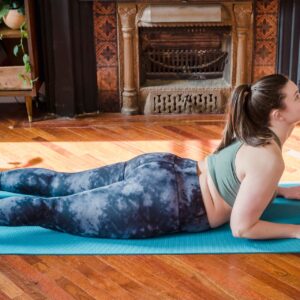
Restorative yoga is not power yoga, not hot yoga which hits the dual target of parasympathetic activation and soft tissue restoration. Ten to fifteen minutes of gentle hip flexor work, thoracic rotation, and hamstring holds does more for your next squat session than most people realize.
Swimming and Aqua Movement
The buoyancy of water removes joint load almost completely, making swimming ideal for anyone with knee or hip issues. Gentle laps or simply moving in water for 20 minutes works. Worth noting: the cool water temperature also has a mild anti-inflammatory effect on sore muscles.
Light Cycling
Indoor bike at RPE 3–4 out of 10. No climbs, no speed targets. This is the mode most commonly used in sports science research when testing active recovery protocols because it’s precise, controllable, and effective for clearing lactic acid from the legs.
Foam Rolling and Self-Myofascial Release
Not a replacement for movement, but a strong complement. Spend 60–90 seconds per muscle group on tight areas like quads, calves, lats, thoracic spine. A 2019 study in PLOS ONE found that foam rolling reduced perceived muscle soreness and improved range of motion in the 72-hour post-exercise window. (Source — NCBI)
Your Complete Active Recovery Day Protocol (Step-by-Step)
This is what a genuinely useful recovery day looks like — no guesswork, no equipment required for the basics.
Morning (10–15 minutes)
- Wake up, drink 500ml of water immediately
- 5–7 minutes of light joint mobility: ankle circles, hip circles, shoulder rolls, neck rolls
- 3 minutes of slow diaphragmatic breathing (4 counts in, 4 hold, 6 counts out) this actively shifts you into parasympathetic mode
Mid-Morning or Afternoon (20–30 minutes of movement) 4. Choose ONE from: brisk walk outdoors, 20-minute gentle yoga (search “restorative yoga” on YouTube), easy cycling at very low resistance, or gentle swimming 5. Keep heart rate below 120 BPM throughout if you’re wearing a tracker, stay in zone 1
Post-Movement (10 minutes) 6. Foam roll the muscle groups you trained hardest in your last 2 sessions of 60–90 seconds per area, slow and steady 7. Finish with 5 minutes of static stretching: hold each stretch 30–45 seconds, breathe into it
Nutrition on Your Recovery Day 8. Don’t dramatically cut calories when your body is still actively rebuilding. Keep protein high: aim for 0.7–1g per pound of bodyweight 9. Prioritize anti-inflammatory foods: fatty fish, leafy greens, berries, olive oil, nuts 10. Limit alcohol because it directly impairs muscle protein synthesis and fragments sleep architecture
Evening 11. Aim for 7–9 hours of sleep. This is non-negotiable (see below). 12. If sleep is poor, consider 3–5 minutes of box breathing before bed: 4 counts in, 4 hold, 4 out, 4 hold. Repeat 8 times.
Why Sleep Is Your Most Powerful Recovery Tool (And What Happens When You Cut It Short)
There’s a section in almost every fitness article that says “get enough sleep” and moves on in 20 words. That’s a disservice to how critical this actually is.
Research published in the Journal of Physiology (Areta et al., 2020) found that restricting sleep to just 4 hours per night significantly reduced the rate of myofibrillar protein synthesis meaning the very process that rebuilds your muscles after training was measurably impaired by sleep loss. (Source)
Think about what that means in practice. You trained hard. You hit your protein targets. You did everything right and then you stayed up until 1 AM. The building materials are there, but the construction crew went home early. All that protein you ate is not being converted into the muscle you were trying to build, at the rate it should be.
Additionally, a separate NCBI study confirmed that protein ingested before sleep is actively incorporated into muscle protein during overnight recovery but only when sleep quality and duration are adequate. (Source)
The practical takeaway: if you’re choosing between 30 minutes of foam rolling and 30 extra minutes of sleep, take the sleep.
The Rest Day Mistakes That Are Secretly Stalling Your Progress
Mistake 1: Going Too Hard on “Recovery” Days
This is the most common one. Someone calls a 45-minute tempo run their “light day” because it’s shorter than their usual workout. If it’s raising your heart rate into zone 3 or above, it’s not recovery but additional training stress. Your central nervous system doesn’t know the difference.
Mistake 2: Dramatically Under-Eating on Rest Days
A lot of people think rest days mean fewer calories because they’re not burning as much. But your muscles are rebuilding. Slashing food intake on recovery days especially protein starves the repair process at the exact moment it’s running at full speed.
Mistake 3: Treating Soreness as the Only Recovery Signal
DOMS (delayed onset muscle soreness) is just one signal. Heart rate variability, sleep quality, resting heart rate, and mood are often better indicators of recovery status. You can feel physically “not sore” and still be under-recovered from a nervous system perspective.
Mistake 4: Skipping Hydration Because You’re Not Sweating
Muscle repair requires water. Protein synthesis requires water. Joint lubrication requires water. Being sedentary on a rest day doesn’t reduce your hydration needs as much as most people assume, especially in warm weather.
The Section Nobody Else Writes: Recovery When You’re Time-Poor, Budget-Constrained, or Just Mentally Done
Here’s where most fitness content abandons real people.
The scenario: You’re a working parent. You got 5.5 hours of sleep. Your rest day lands on a day where you have back-to-back meetings and a commute. You have zero access to a gym, pool, or yoga mat. What now?
You still have options that actually move the needle:
- Lunch break walk (15 minutes): Even 15 minutes of low-intensity walking significantly increases blood flow and reduces afternoon cortisol compared to sitting still. It doesn’t need to be 30 minutes to matter.
- Desk mobility (5 minutes): Hip flexor stretches, seated thoracic rotations, shoulder circles done at your desk, no one around you needs to know. Your hips don’t care where you stretch them.
- Breathwork before sleep: If you do nothing else, spend 5 minutes on slow breathing before bed. It measurably activates the parasympathetic nervous system, lowers cortisol, and improves sleep onset and depth.
- Protein at dinner: If today is imperfect, the single highest-leverage action is eating a protein-rich dinner. A study in Sports Medicine confirmed that pre-sleep casein protein intake improved overnight muscle protein synthesis even after a day with minimal structured recovery. (Source)
The point: a compressed, imperfect recovery day is still better than ignoring recovery entirely. Do what you can with what you have.
Active Recovery for Specific Situations
After Leg Day (Heavy Squats, Lunges, Deadlifts)
Your legs will be the most affected by DOMS. Counterintuitively, walking is your best tool not stretching on the floor. Light walking increases blood flow specifically to the quads, hamstrings, and glutes, which accelerates metabolite clearance. Avoid stairs and hills. Keep it flat and easy.
For People with Bad Knees or Limited Mobility
Swimming or water walking removes almost all joint compression while still driving blood flow. If a pool isn’t accessible, seated cycling on a stationary bike at zero resistance for 15 minutes achieves similar circulatory benefits without knee loading. Foam rolling the quads and IT band and not directly on the knee can also reduce referred tension around the joint.
For Shift Workers or Those with Disrupted Sleep Schedules
This is an underserved group. If your sleep window is odd or fragmented, lean harder on the breathing protocols mentioned above. The parasympathetic activation from slow breathing partially compensates for sleep disruption by reducing cortisol and it won’t replace sleep, but it meaningfully softens the deficit. Keep active recovery shorter (15–20 minutes) and lower intensity than usual on days following poor sleep.
For Home Workout-Only Exercisers
You already have everything you need. Check out Sportiemade’s home workout guides for movement options that scale perfectly to recovery intensity, bodyweight movements done slowly, with full control, at a fraction of your normal training pace.
What Results Should You Realistically Expect — and When?
Let’s be honest about timelines, because other sites either refuse to give them or oversell them.
Within 1–2 weeks of structured recovery days: You’ll notice less residual soreness going into your next training session. Sleep quality often improves. Training feels more consistent.
Within 4–6 weeks: Most people notice a measurable improvement in workout performance like more reps at the same weight, better running pace, improved endurance. This is the compound effect of consistently showing up to each session with a more recovered nervous system and better-repaired muscle tissue.
Within 8–12 weeks: If you’ve also dialed in sleep and nutrition on recovery days, you’ll likely see visible changes in body composition. The people who build muscle or lose fat most consistently aren’t always the ones training hardest but they’re often the ones recovering best.
What won’t happen: you won’t lose fitness by taking a proper recovery day. You won’t “detrain” in 24 hours. The research is unambiguous on this point. The fear of rest is cultural, not physiological.
FAQ
Q: Is it okay to exercise on rest days? A: Yes, as long as the exercise is genuinely low-intensity (heart rate below 120 BPM, conversational pace). Active recovery movement improves blood flow and accelerates muscle repair. What’s not okay is treating rest days as a second workout.
Q: What counts as active recovery? A: Walking, light yoga, easy swimming, slow cycling, foam rolling, or gentle mobility work. The defining feature is that you finish feeling looser and more energized than when you started and not tired.
Q: How long should active recovery last? A: 20–30 minutes of movement is the evidence-backed sweet spot. Short enough that it adds no meaningful training stress, long enough to drive circulation and soft tissue benefits. For foam rolling, 10–15 minutes is sufficient.
Q: Should you feel sore on rest days? A: DOMS typically peaks 24–48 hours after the workout that caused it, so mild to moderate soreness on rest days is normal and expected. If soreness is severe, joint-specific, or still present after 72+ hours, that’s a signal to take a full passive rest day and potentially reduce training volume.
Q: Is walking on rest days beneficial? A: Walking is one of the most researched and consistently effective active recovery tools available. Even 15–20 minutes of flat, easy walking meaningfully increases blood flow to lower body muscles, reduces stiffness, and begins flushing metabolic waste from the last session.
Q: Can active recovery replace rest days entirely? A: No. Active recovery is a tool to use on most off days but passive, full rest days serve a different physiological purpose, particularly for the central nervous system. Most people benefit from at least 1 genuine full rest day per week if training 4 or more sessions per week.
Q: What should I eat on a rest day? A: Keep protein intake consistent with training days (0.7–1g per pound of bodyweight). Slightly reduce overall calories if desired, but don’t slash intake dramatically when your body is actively rebuilding. Prioritize whole foods, anti-inflammatory fats, and adequate hydration.
The Challenge
Pick one thing from this article and actually apply it this week. Add a 20-minute walk on your next rest day. Eat a proper protein dinner before bed. Try the five-minute breathing protocol tonight.
Recovery isn’t complicated. It’s just consistently overlooked. The people who train longest without injury, and who actually see their physique change over years rather than months, aren’t doing more on their off days and they’re doing the right things.
Your next rest day is a training day. You just won’t be sweating.
Citations
- Sañudo B, et al. Impact of Active Recovery and Whole-Body Electromyostimulation on Blood-Flow and Blood Lactate Removal in Healthy People. Frontiers in Physiology, 2020. https://www.ncbi.nlm.nih.gov/pmc/articles/PMC7179681/
- Bell KE, et al. Day-to-Day Changes in Muscle Protein Synthesis in Recovery From Resistance, Aerobic, and High-Intensity Interval Exercise in Older Men. Journal of Gerontology, 2015. https://pubmed.ncbi.nlm.nih.gov/25650305/
- Areta JL, et al. Sleep restriction reduces myofibrillar protein synthesis in healthy young men. Journal of Physiology, 2020. https://pubmed.ncbi.nlm.nih.gov/32078168/
- Res PT, et al. Pre-sleep protein ingestion improves whole body protein net balance during overnight recovery following resistance exercise. American Journal of Physiology, 2018. https://pubmed.ncbi.nlm.nih.gov/28536184/
- Okamoto T, et al. The effectiveness of active recovery, foam rolling, and neuromuscular electrical stimulation on blood lactate, DOMS, and performance recovery. PubMed, 2019. https://pubmed.ncbi.nlm.nih.gov/31684705/
- Dupuy O, et al. An Evidence-Based Approach for Choosing Post-Exercise Recovery Techniques to Reduce Markers of Muscle Damage, Soreness, Fatigue, and Inflammation. Frontiers in Physiology, 2018. https://www.ncbi.nlm.nih.gov/pmc/articles/PMC5932411/

Nick Smoot is a certified fitness coach and the founder of Smoot Fitness, established in 2012. With over a decade of hands-on experience, Nick has personally coached more than 400 clients both in person and online helping them achieve lasting, life-changing physical transformations.
As a contributing expert at Sportiemade (sportiemade.com), Nick brings real-world expertise and a no-nonsense approach to fitness. His coaching philosophy goes beyond short-term results: he equips every client with the knowledge, habits, and mindset needed to get into the best shape of their life and stay there permanently.
Nick specialises in strength training, endurance performance, and the mental discipline that ties them together. His signature philosophy? Lift heavy, run far, and never stop learning.
Whether you are just beginning your fitness journey or looking to break through a plateau, Nick's evidence-based methods and proven track record make him one of the most trusted voices in the fitness space.