7 Strength Moves Every Woman Should Do at Home (Backed by Science)
Last reviewed by Nick Smoot, NASM-Certified Personal Trainer, Founder of Smoot Fitness
Who This Is For
This guide is for women at any age who want to build real, functional strength at home without a gym membership, expensive equipment, or an hour to spare. Whether you are a complete beginner, coming back after a long break, or approaching your 40s and starting to feel like your body is working against you, these seven moves are built for you.
Quick Summary
- You do not need a gym or weights to build meaningful strength because bodyweight training produces measurable muscle and bone gains
- Two to three sessions per week is enough to see results within 4–8 weeks
- Women lose roughly 1% of muscle mass per year from their mid-30s because strength training is the single most effective way to slow that
- These seven moves hit every major muscle group and take under 30 minutes combined
Most women who want to get stronger never start and not because they lack motivation, but because the advice they find online is either buried in gym-speak or assumes they already own a rack of dumbbells. A 2024 review published in Health Promotion Journal of Australia confirmed that women are among the populations least likely to meet muscle-strengthening guidelines, despite the fact that the health stakes for them are arguably higher than for men. That gap between knowing and doing is exactly what this guide was written to close.
Why Strength Training Is Non-Negotiable for Women’s Health
Let’s be direct about something most fitness articles gloss over: the muscle you build in your 30s and 40s is money in the bank for your 50s and 60s.
Women begin losing muscle mass through a process called sarcopenia from around their mid-30s. The rate accelerates after menopause as estrogen levels fall. A comprehensive 2025 narrative review in Sports Medicine and Health Science, authored by researchers including Dr. William J. Kraemer of the University of Connecticut, found that resistance training in women produces measurable improvements in strength, bone health, body composition, cardiovascular function, and even mental health and self-esteem. These are not marginal benefits. They are life-changing ones.
Bone density is particularly urgent. which consistently shows that resistance training stimulates bone remodeling by creating mechanical stress on the skeleton and the same stress that signals your body to lay down new bone tissue. For women approaching or past menopause, this is not optional maintenance. It is active disease prevention.
And the mental health angle which almost nobody talks about is just as compelling. A qualitative study from Simmons University, published in the American Journal of Health Education (2023), found that women who strength-trained long-term consistently reported improved emotional resilience, lower stress, and a measurable boost in self-confidence. One participant put it plainly: strength training gave her a sense of control over her body that no cardio class ever had.
The 7 Strength Moves Every Woman Should Do at Home
These seven exercises were selected for three reasons: they require no equipment to begin, they hit multiple muscle groups simultaneously, and they have the strongest evidence base for functional strength outcomes. You can progress every single one as you get stronger.
1. Bodyweight Squat (Lower Body Foundation)
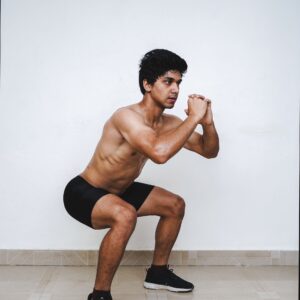
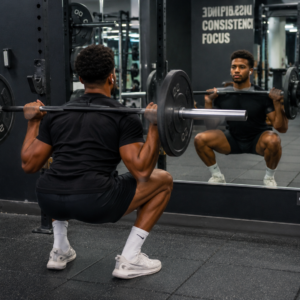
The squat is the most functional movement a human being can perform. Every time you sit down and stand up from a chair, a toilet, a car — you are squatting. Training it deliberately protects your knees, hips, and lower back for the rest of your life.
How to do it:
- Stand with feet shoulder-width apart, toes turned out slightly
- Push your hips back and bend your knees, keeping your chest tall and your knees tracking over your toes
- Lower until your thighs are parallel to the floor (or as low as comfortable)
- Drive through your heels to stand, squeezing your glutes at the top
Sets and reps: 3 sets of 10–15 reps. Rest 60 seconds between sets.
Progress it: Add a pulse at the bottom. Then try a split squat. Eventually, hold a water bottle or a backpack for resistance.
Common mistake: Letting your knees cave inward. Press them out actively throughout the movement.
2. Push-Up (Upper Body and Core)
Push-ups have a reputation problem. Women are told to do them from their knees as if the full version is somehow beyond them. It is not but just takes building up to. Even the modified version, done correctly, builds real pressing strength in your chest, shoulders, and triceps.
How to do it (full version):
- Start in a high plank with hands slightly wider than shoulder-width, fingers pointing forward
- Lower your chest to the floor by bending your elbows at a 45-degree angle from your body (not flared wide)
- Keep your core braced and your body in a straight line from head to heels
- Push the floor away to return to the start
Modified version: Perform from your knees, but keep your hips in line with your torso, do not let them sag.
Sets and reps: 3 sets of 6–12 reps. Rest 60 seconds.
Progress it: Elevate your feet on a chair. Then try slow, 3-second lowering phases.
3. Glute Bridge (Posterior Chain Powerhouse)
If you sit at a desk for most of the day, your glutes are almost certainly underactive. Weak glutes are linked to lower back pain, poor posture, and knee problems which are three complaints that are staggeringly common among women who spend long hours seated. The glute bridge fixes this without putting any load through your spine.
How to do it:
- Lie on your back with knees bent and feet flat on the floor, hip-width apart
- Press your feet into the floor and drive your hips toward the ceiling, squeezing your glutes hard at the top
- Hold for 1–2 seconds at the peak, then lower slowly
- Do not hyperextend your lower back, your body should form a straight line from knees to shoulders at the top
Sets and reps: 3 sets of 12–15 reps.
Progress it: Single-leg bridges. Then elevate your feet on a chair or couch.
4. Reverse Lunge (Balance, Stability, and Unilateral Strength)
Lunges tend to be programmed as pure quad exercises, but the reverse version does something most exercises cannot: it trains each leg independently, exposing and correcting strength imbalances that can lead to injury over time. It also challenges your balance in a way that pays dividends well into older age.
How to do it:
- Stand tall with feet together
- Step one foot directly backward, lowering your back knee toward the floor
- Keep your front shin vertical and your torso upright
- Drive through your front heel to return to standing
- Alternate sides
Sets and reps: 3 sets of 8–10 reps per leg.
Progress it: Add a slight forward lean to increase glute engagement. Then hold dumbbells or a loaded backpack.
5. Dead Bug (Deep Core Stability)
Sit-ups are not the gold standard of core training, not even close. The dead bug, recommended widely by physiotherapists and strength coaches alike, trains your deep stabilizing muscles (the transverse abdominis and the multifidus) in a way that crunches never can. It also protects your spine by teaching your core to brace against rotational force.
How to do it:
- Lie on your back and press your lower back firmly into the floor, keep it there the entire time
- Lift your arms straight toward the ceiling and raise your legs to a 90-degree angle (knees above hips)
- Slowly lower your right arm overhead and extend your left leg toward the floor simultaneously
- Return to the start, then switch sides
- The movement should be slow and controlled; if your lower back lifts off the floor, you have gone too far
Sets and reps: 3 sets of 6–8 reps per side.
Progress it: Extend the lowering phase to 5 seconds. Then add light ankle weights.
6. Superman Hold (Back Strength and Posture)
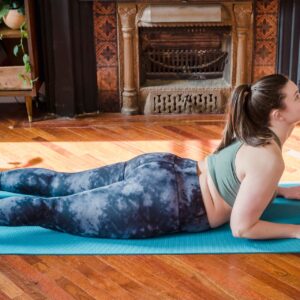
Women who spend time at desks, nursing, or carrying children often develop anterior-dominant posture which is forward-rounded shoulders and a weakened upper back. The superman hold is a simple posterior chain exercise that strengthens the erector spinae, glutes, and upper back simultaneously. No equipment, no space, no excuses.
How to do it:
- Lie face-down on the floor with arms extended overhead
- Simultaneously lift your arms, chest, and legs off the floor by squeezing your glutes and back muscles
- Hold for 2–3 seconds at the top
- Lower under control and repeat
Sets and reps: 3 sets of 10–12 reps.
Progress it: Increase the hold time at the top to 5 seconds. Then alternate sides (one arm, opposite leg) for added coordination challenge.
7. Hollow Body Hold (Full-Body Tension and Core Endurance)
The hollow body hold looks deceptively simple. It is not. Gymnastics coaches use it as the foundation of every skill because it teaches your body to create total-body tension and a quality that makes every other exercise more effective. For women building strength at home, it is the connective tissue between all the other moves.
How to do it:
- Lie on your back and press your lower back into the floor
- Extend your legs and point them at a 45-degree angle from the floor (higher if you need to, lower as you get stronger)
- Extend your arms overhead with your ears between your arms
- Hold the position, breathing shallowly, maintaining the lower back contact throughout
Sets and reps: 3 holds of 20–30 seconds. Build toward 45 seconds over time.
Progress it: Lower your legs incrementally toward the floor as your core strength improves.
Your 4-Week Home Strength Training Plan
This plan is designed for women with no equipment and limited time. Two to three days per week is the minimum effective dose, according to both the WHO physical activity guidelines and the ACSM’s 2026 Resistance Training Position Stand, which synthesized data from over 30,000 participants and confirmed that home-based bodyweight training produces significant strength and functional gains.
| Week | Days per Week | Sets per Move | Rest Between Sets | Session Length |
|---|---|---|---|---|
| 1 | 2 | 2 | 90 seconds | ~20 minutes |
| 2 | 2–3 | 2 | 75 seconds | ~22 minutes |
| 3 | 3 | 3 | 60 seconds | ~28 minutes |
| 4 | 3 | 3 | 45–60 seconds | ~30 minutes |
Session order: Squat → Reverse Lunge → Glute Bridge → Push-Up → Superman → Dead Bug → Hollow Body Hold
Take at least one rest day between sessions. On rest days, walking or light stretching is encouraged not required.
Modifications for Bad Knees, Limited Mobility, or Postpartum Recovery
This is where most articles fail women completely.
Bad knees: Replace reverse lunges with step-ups onto a low step or box. Limit squat depth to pain-free range and even a quarter squat is productive. Avoid impact. The glute bridge and superman hold are excellent choices for knee-pain sufferers because they load the posterior chain without stressing the joint.
Limited mobility or joint pain: Elevate your squat target by placing a chair behind you and sitting to the edge in which the chair gives you a controlled depth and eliminates the fear of falling. For push-ups, begin against a wall, then progress to an incline on a table or counter.
Postpartum recovery: If you are fewer than 12 weeks postpartum or have been diagnosed with diastasis recti, avoid the hollow body hold and standard dead bug until your core has been cleared by a pelvic floor physiotherapist. The glute bridge, superman, and wall push-up are generally safe starting points. Always consult your midwife or OB before beginning any postpartum exercise program.
Women over 60: Perform all movements at a reduced range of motion initially. Prioritize the glute bridge, superman, and modified squat. Balance is a key concern at this age, hold a chair during lunges if needed. The research is unequivocal: even minimal resistance training twice a week protects against falls and functional decline.
The Part Nobody Talks About: What Strength Training Does to Your Mind
A 39-year-old working mother of two, no gym access, perpetually running on four hours of sleep, she started doing these seven moves three times a week. Six weeks in, she was not noticeably leaner. But she reported something more important: she felt capable again. Her words.
That experience is backed by research. The Simmons University qualitative study found that women who maintained long-term strength training programs consistently described the same themes: emotional resilience, a calmer response to stress, and a quiet confidence that transferred out of the gym and into every area of life. Strength training is not just physical maintenance. It is a form of self-respect made physical.
Women’s fitness culture has spent decades selling them smaller. Fewer calories. Lower weights. Less space. Strength training, done for function rather than appearance, pushes back against all of that. You are not training to shrink. You are training to be capable.
What Happens When You Cannot Find the Energy
Let’s be honest. Some days, getting on the floor feels impossible.
On those days, do not skip the session but shorten it. Pick three of the seven moves and do two sets each. That is eight to ten minutes of work. It is enough to maintain the habit, keep the neural pathways firing, and remind your body what it is capable of.
The ACSM’s landmark 2026 position stand was explicit: the most important shift is moving from no resistance training to any resistance training. Perfection is the enemy of progress, and a shortened session beats no session every single time.
If energy is a chronic issue, consider whether your sleep, protein intake, or iron levels may be factors. You can find more guidance on recovery and home wellness on sportiemade.com.
Honest Expectations: What Results Look Like and When
| Timeframe | What to Expect |
|---|---|
| Week 1–2 | Muscle soreness (normal). Improved body awareness. Sleep may improve. |
| Week 3–4 | Noticeable improvements in how the moves feel. Easier to get through sets. |
| Week 6–8 | Visible changes in muscle tone, particularly in the glutes, arms, and core. |
| Month 3+ | Measurable strength gains. Improved posture. Clothes fitting differently. |
| Month 6+ | Bone-density adaptations begin. Functional improvements in daily life become obvious. |
A 2023 meta-analysis published on PubMed, which analyzed training data from 621 women, found that lower-body strength gains of up to 17% were achievable within structured resistance training programs. That is not a small number. That is the difference between struggling to carry groceries and carrying them without thinking about it.
What you will not see: dramatic weight loss in the first month. Strength training changes your body composition over time by building muscle while reducing fat but the scale is a poor measure of this progress. Go by how you feel, how the movements improve, and how your clothes fit.
Myth-Busting: The Lies Women Have Been Told About Strength Training
“Lifting will make you bulky.” This is the most persistent and most damaging myth in women’s fitness. Women have far lower testosterone levels than men which is the primary hormone driving hypertrophy. A 2025 review in Sports Medicine and Health Science noted that women’s physiological adaptations to resistance training differ meaningfully from men’s and do not default to muscle bulk without intentional, high-volume programming and caloric surplus. What you will get from these seven moves: definition, tone, and functional strength. Not bulk.
“You need a gym to see real results.” The ACSM’s 2026 position stand stated explicitly: “Nontraditional training is highly effective. Utilizing tools such as elastic bands, bodyweight exercises, and home-based routines yield marked benefits in strength, hypertrophy, and physical function.” Home training is not a substitute for the real thing. Home training is the real thing.
“It’s too late to start in my 40s or 50s.” A 2024 systematic review and meta-analysis published in Climacteric examined resistance training in postmenopausal women and found measurable improvements in physical fitness, muscle strength, and body composition. There is no age at which your body stops responding to training. The sooner you start, the more you protect. But starting at any age is vastly better than not starting.
Frequently Asked Questions
How many days a week should women do strength training at home? Two to three days per week is the recommended minimum for measurable gains, with at least one rest day between sessions. The WHO and ACSM both recommend muscle-strengthening activity on at least two days per week for all adults. Starting at two sessions and progressing to three over a month is the most sustainable approach.
Can women build muscle at home without weights? Yes. Bodyweight exercises create sufficient mechanical tension to stimulate muscle protein synthesis, particularly for women who are untrained or returning after a break. As you get stronger, you can progress bodyweight moves through tempo manipulation, reduced rest periods, or the addition of improvised resistance (a loaded backpack, water-filled bottles, resistance bands).
What strength exercises should women do every week without fail? Squats, hip hinges (such as glute bridges), and some form of upper-body pressing (push-ups) cover the three foundational movement patterns every woman should train weekly. Adding a single-leg movement (reverse lunge) and a core stability hold (dead bug or hollow body) gives you a complete program.
How long does it take for women to see strength results at home? Most women notice improvements in how exercises feel within 2–3 weeks. Visible changes in muscle tone typically appear at the 6–8 week mark. Significant functional strength gains is the kind that change daily life generally take 3–4 months of consistent training.
Is strength training safe for women over 40 without supervision? For healthy women, yes. The seven moves in this guide are low-risk, require no equipment, and do not place excessive load on joints. Women with pre-existing conditions (osteoporosis, joint replacement, diastasis recti, or recent injury) should consult a healthcare provider or a certified trainer before beginning. Modifications for common conditions are covered in this article.
Does strength training help with perimenopause or menopause symptoms? Yes, substantially. A 2024 randomized pilot trial published in PMC found that a 12-week group-based strength training program for perimenopausal women improved physical activity levels, habit formation, and self-regulation. Separately, resistance training has been shown in multiple meta-analyses to slow muscle and bone loss associated with declining estrogen, reduce fatigue, and improve sleep quality.
What is the best time of day for women to strength train? Whenever you will actually do it. Consistency matters more than timing. That said, research suggests that morning training may improve adherence over time because it is less likely to be displaced by the demands of the day. If you are a night person and you train better at 9 PM, train at 9 PM.
Your Next Step
Pick one session. Not a plan. Not a schedule. One session this week.
Do the seven moves in order, two sets each, with 90 seconds of rest. Write down how many reps you completed on each. That number however small it is today is your baseline. Come back in four weeks and see what happened to it.
The gym is optional. The movement is not.
Citations
- Stimson AM, Anderson C, Holt AM, Henderson AJ. “Why don’t women engage in muscle strength exercise? An integrative review.” Health Promotion Journal of Australia. 2024 Oct;35(4):911–923. https://pubmed.ncbi.nlm.nih.gov/38566279/
- Kraemer WJ, Fragala MS, Ratamess NA. “Evolution of resistance training in women: History and mechanisms for health and performance.” Sports Medicine and Health Science. 2025 Feb;7(5):351–365. https://pmc.ncbi.nlm.nih.gov/articles/PMC12421175/
- González-Gálvez N, Moreno-Torres JM, Vaquero-Cristóbal R. “Resistance training effects on healthy postmenopausal women: a systematic review with meta-analysis.” Climacteric. 2024 Jun;27(3):296–304. https://pubmed.ncbi.nlm.nih.gov/38353251/
- Jung R, Gehlert S, Geisler S, et al. “Muscle strength gains per week are higher in the lower-body than the upper-body in resistance training experienced healthy young women.” PLOS ONE. 2023 Apr;18(4):e0284216. https://pmc.ncbi.nlm.nih.gov/articles/PMC10101404/
- American College of Sports Medicine. “ACSM Resistance Training Guidelines 2026 Position Stand.” acsm.org. https://acsm.org/resistance-training-guidelines-update-2026/
- Holloway JB, et al. “Exploring Women’s Psychological and Emotional Experiences in Long-Term Strength Training Adherence.” American Journal of Health Education. 2023;55(1). https://www.tandfonline.com/doi/full/10.1080/19325037.2023.2277934

Nick Smoot is a certified fitness coach and the founder of Smoot Fitness, established in 2012. With over a decade of hands-on experience, Nick has personally coached more than 400 clients both in person and online helping them achieve lasting, life-changing physical transformations.
As a contributing expert at Sportiemade (sportiemade.com), Nick brings real-world expertise and a no-nonsense approach to fitness. His coaching philosophy goes beyond short-term results: he equips every client with the knowledge, habits, and mindset needed to get into the best shape of their life and stay there permanently.
Nick specialises in strength training, endurance performance, and the mental discipline that ties them together. His signature philosophy? Lift heavy, run far, and never stop learning.
Whether you are just beginning your fitness journey or looking to break through a plateau, Nick's evidence-based methods and proven track record make him one of the most trusted voices in the fitness space.