
How to Breathe Correctly During High-Intensity Exercise
Learn how to breathe correctly during high-intensity exercise with science-backed techniques. Stop gassing out mid-workout and fix your breathing pattern today.
Last reviewed by Nick Smoot, NASM-CPT, Fitness & Wellness Coach, Founder of Smoot Fitness
How to Breathe Correctly During High-Intensity Exercise (And Why Most People Are Doing It Wrong)
Quick Summary
- Breathing correctly during high-intensity exercise directly affects how long you last and how fast you recover
- Diaphragmatic (belly) breathing which is not shallow chest breathing is the foundation of every technique here
- For most HIIT movements, exhale on exertion, inhale on the easier phase
- At peak intensity, switching to mouth or combined nose-mouth breathing is not a failure but physiology
- A structured 4-week breathing practice can measurably improve your stamina without adding a single extra workout
Who this is for: Anyone who gasses out faster than they feel they should during HIIT, running, circuit training, or home cardio workouts whether you’re a complete beginner or someone who’s been training for years but still struggles to catch their breath mid-round.
Most people’s breathing strategy during a hard workout is… surviving. You’re doing burpees, your lungs are burning, and the only thought in your head is just keep moving. The breath becomes frantic, shallow, and fast and that’s exactly what makes the workout feel twice as hard as it needs to be.
Here’s the part no one tells you: your cardiovascular system probably isn’t the bottleneck. Your breathing pattern is.
A 2024 randomized crossover study published in Healthcare found that regulated breathing rhythms during high-intensity metabolic training significantly reduced cardiopulmonary stress and improved post-exercise oxygen consumption compared to free, uncontrolled breathing. In plain terms, people who breathed intentionally performed better and recovered faster than those who just gasped their way through the same workout. Same effort. Meaningfully different outcome.
Learning how to breathe correctly during high-intensity exercise won’t make you a different athlete overnight. But it’s one of the very few things you can change that costs nothing, requires zero equipment, and starts working the same day you try it.
What Actually Happens to Your Breathing When Exercise Gets Hard
Before you can fix your breathing, it helps to understand what your body is trying to do when intensity spikes.
When you push into high-intensity effort, your muscles need more oxygen and produce more carbon dioxide and metabolic waste (including lactate). Your brain detects the rising CO2 levels in your blood and sends a signal to breathe faster and deeper. This is why your breathing rate can jump from a resting 12–16 breaths per minute to 40–60 breaths per minute during all-out effort in which your lungs are trying to dump CO2 as fast as possible while pulling in fresh oxygen.
This is normal. This is supposed to happen.
The problem is what most untrained breathers do in response: they shift to rapid, shallow chest breathing. The upper chest expands up and down, the diaphragm barely moves, and only the top third of the lungs actually fill. You’re working harder to breathe and getting less oxygen per breath. It’s the respiratory equivalent of running with a weighted vest you didn’t sign up for.
The research from the University of Rome published in Frontiers in Physiology (2023) confirms that breathing rate is a reliable marker of physical effort and that deliberate breathing strategies during high-intensity exercise can meaningfully modulate how the body handles that effort. Your breathing isn’t just a side effect of hard work. It’s a dial you can actually turn.
Why Diaphragm Engagement Is the Foundation of Everything
Your diaphragm is a dome-shaped muscle sitting at the base of your lungs. When it contracts fully, it pulls downward and creates a large pressure differential that draws air deep into the lower lobes of the lungs which is the most oxygen-rich, blood-vessel-dense part. This is diaphragmatic breathing, sometimes called belly breathing.
Here’s a quick test. Put one hand on your chest and one on your belly right now. Take a deep breath. Which hand moves first and most?
If it’s your chest: you’re a chest breather. Most people are, especially during exercise.
Chest breathing is shallow. It fills the upper third of the lungs and leaves the lower lobes underused. Over a hard 20-minute workout, this compounds every breath is slightly less efficient, CO2 clears slightly slower, and fatigue arrives sooner than it should.
A 2024 study published in Applied Sciences found that respiratory muscle strength, particularly the strength and endurance of the inspiratory muscles (including the diaphragm), was significantly correlated with VO2 max and aerobic endurance in competitive athletes. In short, a stronger, more engaged diaphragm isn’t just about breathing comfort but directly linked to how much oxygen your body can actually use.
Training the diaphragm to do its job during exercise is the first fix. Everything else builds on it.
The Nose vs. Mouth Debate — What the Science Actually Says
You’ve probably heard “breathe through your nose” more times than you can count. And at low to moderate intensity, nasal breathing has real advantages: it filters air, humidifies it, and produces nitric oxide, which helps dilate blood vessels.
But here’s where the advice gets oversimplified and where most fitness articles mislead you.
A 2025 study published in Physiological Reports (Western University, Canada) found that during high-intensity 20-second sprints, breath-holding caused heart rate to spike significantly higher (131 bpm vs. 118 bpm under free breathing) and raised post-exercise systolic blood pressure. A separate 2025 ventilatory response study from NCBI concluded that while nasal breathing works fine at low intensities, it becomes inadequate at higher intensities which is potentially causing CO2 accumulation and earlier fatigue.
What does this mean practically?
| Exercise Intensity | Recommended Breathing Route | Why |
|---|---|---|
| Low (warm-up, walking, yoga) | Nose in, nose out | Filters air, promotes calm, adequate airflow |
| Moderate (light jog, steady cardio) | Nose in, mouth out | Balances filtration with slightly higher airflow |
| High (HIIT intervals, sprints, circuits) | Mouth or combined nose-mouth | Maximises air volume; nasal airway becomes limiting |
| Peak effort (30-second all-out bursts) | Whatever gets air in fastest | Survival mode is fine; technique resumes at rest |
The takeaway: stop making yourself miserable trying to nasal-breathe through a Tabata set. At genuine high intensity, oronasal breathing (both nose and mouth) or full mouth breathing is not only acceptable, it’s what physiology demands.
How to Breathe Correctly During Specific HIIT Exercises
This is the section every competitor leaves out. General breathing advice is easy to find. Telling you exactly what to do during a burpee or a kettlebell swing? That’s the gap.
How to Breathe During Burpees
Burpees are chaotic which you’re moving through four distinct positions in about two seconds. Here’s the pattern that works:
- Inhale as you lower your chest to the floor (eccentric phase, body descending)
- Exhale sharply as you push up off the floor (exertion phase)
- Quick inhale as you jump your feet forward
- Exhale as you jump and clap overhead
The key is the sharp exhale on the push-up. Think of it as bracing your core with the exhale that you’re not just moving air, you’re using the breath to stabilize your spine.
How to Breathe During Jump Squats
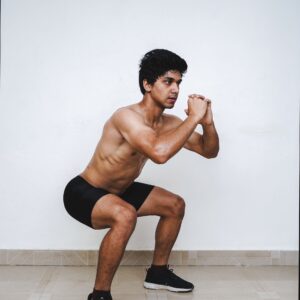
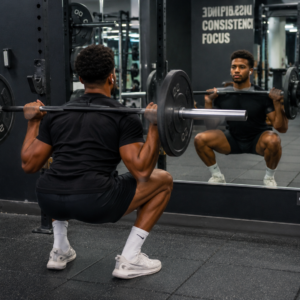
The pattern here is also tied to exertion. Inhale as you sit back and down into the squat (loading phase), then exhale forcefully as you drive through the floor and jump. Landing should coincide with a natural inhale reset.
Avoid the common mistake of holding your breath on the jump. A 2025 study on breath-holding during high-intensity exercise showed that breath-holding significantly elevated heart rate and blood pressure during effort, exactly what you don’t want during repeated explosive movements.
How to Breathe During Sprint Intervals
For running-based sprints, a 2:1 or 2:2 rhythm works for most people at submaximal effort:
- 2:2 rhythm (moderate pace): inhale for 2 strides, exhale for 2 strides
- 2:1 rhythm (higher pace): inhale for 2 strides, exhale for 1 and allows faster CO2 expulsion
At true all-out sprint effort (90–100% max), rhythm breathing often breaks down. Don’t fight it. Focus on the rest interval: slow the exhale, take 2–3 diaphragmatic breaths, and establish control before the next round.
How to Breathe During Kettlebell Swings
The swing is a hinge movement with a sharp hip drive. Exhale at the top of the swing (when the bell reaches shoulder height and you’re in full hip extension) not at the bottom. The exhale at the top corresponds to the moment of peak abdominal bracing, which keeps your spine safe under load. Inhale as the bell swings back down and between your legs.
How to Breathe During Box Jumps and Plyometrics
Same rule as jump squats: inhale on the descend or load, exhale on the explosive push. On landing, take a controlled inhale before the next rep rather than rushing straight into the next jump. Two seconds of reset is worth more than the half-second you save by rushing.
The Breathing Problem Solver — When Things Go Wrong Mid-Workout
“I can’t catch my breath between rounds”
This is the most common complaint I hear. Between HIIT intervals, most people do shallow, panicked breathing when the thing they need is the exact opposite.
Try this: after the round ends, immediately start a 4-7-8 modified recovery breath:
- Exhale fully and completely for 4 counts (empty the lungs before you refill)
- Inhale through the nose for 4 counts, letting the belly expand
- Exhale slowly through pursed lips for 6 counts
Two of these cycles are about 20 seconds which will measurably drop your heart rate before the next round. It feels counterintuitive to breathe slowly when you’re gasping, but you’re helping your body expel CO2 faster, not slower.
“I feel dizzy or lightheaded during intense cardio”
Dizziness during exercise usually points to one of two things: hyperventilation (breathing too fast and shallow, which drops CO2 too quickly) or, less commonly, a blood pressure response. If it’s breathing-related, the fix is to slow your breathing, not speed it up. Take three slow, deep belly breaths. If dizziness persists or comes with chest pain, stop and consult a doctor.
“I keep getting a side stitch during HIIT”
Side stitches (sharp pain under the ribs) are often triggered by shallow breathing, a diaphragm that cramps under repetitive impact, or starting exercise too soon after eating. The fix mid-workout: press your fingers into the area, forcefully exhale three times through pursed lips, then resume with deliberate belly breathing. Longer term, improving diaphragmatic engagement makes side stitches significantly rarer.
“I hold my breath without realizing it”
This is extremely common, especially during the hardest part of a movement (the final push-up, the last few seconds of a plank). The fix is a cue: make sound. Even a quiet exhale “hiss” forces you to breathe. Some coaches have their clients count reps out loud for exactly this reason and you can’t count and hold your breath at the same time.
The Part No Competitor Covers: What Anxiety Does to Your Breathing During HIIT
High-intensity training doesn’t just challenge your muscles but activates your sympathetic nervous system. Your body reads high effort as a mild stress signal, and stress makes breathing shallow almost automatically.
For many people, particularly those returning to exercise after a break, those who are heavier, or those with any history of anxiety that the breathlessness of intense exercise feels genuinely alarming. The panic of “I can’t breathe” kicks in, which makes breathing worse, which makes the exercise feel harder, which confirms the panic. It’s a loop.
A 36-year-old working mother who’d been sedentary for three years told me she quit three different HIIT programmes in the first week not because of sore muscles, but because the breathlessness during the first few sessions felt terrifying, like something was wrong. Nothing was wrong. Her cardiovascular system just wasn’t used to that signal yet.
The fix here isn’t purely physical. It’s about understanding that controlled breathlessness at high intensity is not a sign your body is failing. It is the correct physiological response to high-intensity effort. Knowing why you’re breathing hard, and having a technique to manage it, completely changes the experience.
Research published in Frontiers in Human Neuroscience showed that diaphragmatic breathing training over 8 weeks significantly reduced cortisol levels and improved stress responses. The breath is one of the few physiological systems you can consciously control and during a hard workout, using it intentionally is as much about managing your nervous system as it is about oxygen.
Your 4-Week Breathing Practice Protocol
This isn’t just theory. Here is exactly what to do, starting today, to change how you breathe during intense exercise. No equipment needed.
Week 1 — Rebuild the foundation (10 min/day)
Practice diaphragmatic breathing daily, separately from your workouts:
- Lie on your back, knees bent, one hand on your chest, one on your belly
- Inhale slowly through your nose for 4 counts — belly rises, chest stays still
- Exhale slowly through your mouth for 6 counts — belly falls
- Repeat for 10 minutes
Do this every morning or before bed. You’re rebuilding a movement pattern your body may not have used in years.
Week 2 — Add it to your warm-up (5 min before every workout)
Before starting any HIIT session:
- Stand upright, feet hip-width apart
- Take 5 slow diaphragmatic breaths as described above
- Then do 10 nasal breaths during light movement (marching in place or arm circles)
- Begin your workout — you’ve primed the system
Week 3 — Practice movement-specific patterns
During your actual workouts this week, focus on one thing: exhale on every exertion. Just that. Don’t worry about perfect rhythm or nasal vs mouth. Pick one exercise per session and consciously exhale every time you push, jump, or drive. Build the habit movement by movement.
Week 4 — Apply the recovery breath protocol
Between every round or every 45–60 seconds of HIIT:
- Full exhale (empty before refilling)
- Nose inhale for 4 counts, belly expanding
- Pursed-lip exhale for 6 counts
- One more cycle if needed, then resume
By week 4, most people notice they’re getting through rounds that previously broke them not because they’re fitter (though they may be), but because they’re not wasting energy on panicked breathing.
What to Realistically Expect — and When
This is where most fitness content either sells you a fantasy or gives you nothing.
Week 1–2: You’ll feel a bit awkward. Conscious breathing during exercise feels unnatural at first because you’re overriding an automatic process. That’s normal. Don’t expect performance gains yet.
Week 3–4: Most people notice they’re slightly less winded between intervals. Recovery feels marginally faster. This is real because you’re becoming more efficient at CO2 expulsion and diaphragm recruitment.
Month 2–3: This is where it gets noticeable. If you’ve been consistent, you’ll likely be able to sustain higher effort for longer before hitting the wall, and your recovery between rounds will feel meaningfully faster. The research on respiratory muscle training published in Strength & Conditioning Journal (2024) found measurable improvements in endurance performance, reduced perceived exertion, and reduced breathlessness with consistent practice.
What won’t happen: Breathing technique alone won’t replace cardio conditioning. If your base fitness is low, you still need to build it. Breathing is the optimizer not the engine.
A Note for People With Asthma or Respiratory Conditions
If you have exercise-induced asthma or any chronic respiratory condition, the principles here still apply, but with important caveats. Breathing through the nose (which warms and humidifies air) is more important for you at all intensities, not just low ones. High-intensity intervals should be introduced very gradually, and any breathing technique change should be cleared with your doctor or respiratory therapist. We cover modified approaches for exercisers with asthma in a separate guide over on sportiemade.com.
Putting It All Together
Breathing is the one part of exercise almost nobody practices deliberately. Everyone tracks reps, rest time, calories, steps. Nobody schedules ten minutes to work on the thing that determines how well every other minute of their workout goes.
The science is consistent: regulated breathing during high-intensity exercise reduces physiological stress, supports oxygen delivery, and improves recovery. The technique is learnable in a matter of weeks. The investment is ten minutes a day.
Here’s your challenge for this week: pick one workout, pick one exercise in that workout, and focus exclusively on exhaling on the exertion. That’s it. One cue. One movement.
You don’t need to transform your entire breathing pattern overnight. Start where the breath actually goes wrong in the hardest moment of the hardest movement. Fix that first, and the rest follows.
FAQ
Q: Should I breathe through my nose or mouth during high-intensity exercise? A: At low to moderate intensity, nasal breathing is preferable because it filters air and supports better oxygen uptake. During genuine high-intensity effort (HIIT intervals, sprints, all-out circuits), combined nose-mouth or full mouth breathing is both normal and necessary. Your nasal airway alone cannot move enough air at peak effort.
Q: Is it bad to hold your breath during exercise? A: Yes. A 2025 study published in Physiological Reports found that breath-holding during high-intensity exercise significantly raised heart rate (by about 13 bpm) and elevated post-exercise blood pressure. Sustained breath-holding also reduces oxygen availability to muscles. The one partial exception is the Valsalva maneuver like a brief, controlled breath-hold used during maximal lifts which should only be used by trained individuals under appropriate conditions.
Q: What is diaphragmatic breathing and why does it matter for workouts? A: Diaphragmatic breathing (belly breathing) engages the diaphragm muscle to draw air deep into the lower lungs rather than just the upper chest. Since the lower lungs have denser blood vessel networks, deeper breaths deliver more oxygen per breath. During exercise, this efficiency becomes critically important which each inefficient shallow breath is a small deficit that compounds across a full workout.
Q: How do I recover my breathing faster between HIIT intervals? A: Immediately after a round ends, exhale fully to empty the lungs first. Then inhale through the nose for 4 counts, letting the belly rise. Exhale slowly through pursed lips for 6 counts. Two cycles of this takes about 20 seconds and measurably accelerates CO2 clearance and heart rate recovery compared to uncontrolled panting.
Q: Why do I get dizzy during intense cardio? A: Most exercise-related dizziness comes from hyperventilation which is breathing too fast and shallow drops blood CO2 levels rapidly, which paradoxically constricts blood vessels and reduces oxygen delivery to the brain. The fix is to slow the exhale, not breathe faster. If dizziness during exercise is frequent, severe, or accompanied by chest pain or irregular heartbeat, seek medical evaluation.
Q: Can breathing correctly actually improve my performance? A: Yes and measurably so. Respiratory muscle training studies, including a 2024 review in Strength & Conditioning Journal, found consistent improvements in endurance performance, reduced perceived exertion, and reduced breathlessness with structured breathing practice. A 2024 study in Applied Sciences linked respiratory muscle strength directly to VO2 max. Better breathing is not a marginal gain for most recreational exercisers, it’s one of the highest-return improvements available.
Q: I’m a complete beginner. Is there a simpler version of this I should start with? A: Yes. Ignore everything else and start with just one rule: exhale every time you exert. Push, exhale. Jump, exhale. Drive up and exhale. That single cue will stop breath-holding, activate your core, and start rewiring your breathing pattern. Add more specificity as it becomes automatic.
References
- Li, Y. et al. (2024). The Impact of Starting Positions and Breathing Rhythms on Cardiopulmonary Stress and Post-Exercise Oxygen Consumption after High-Intensity Metabolic Training. Healthcare, 12(18), 1889. https://www.ncbi.nlm.nih.gov/pmc/articles/PMC11431213/
- Walsh, J. et al. (2025). The physiological effects of breath-holding during high-intensity exercise. Physiological Reports. DOI: 10.14814/phy2.70437. https://www.ncbi.nlm.nih.gov/pmc/articles/PMC12190552/
- Nicolò, A. & Gruet, M. (2023). Breathing in sport and exercise: physiology, pathophysiology and applications. Frontiers in Physiology, 14, 1347806. https://pmc.ncbi.nlm.nih.gov/articles/PMC10773579/
- Kasiak, P. et al. (2024). Respiratory Muscle Strength as a Predictor of VO2max and Aerobic Endurance in Competitive Athletes. Applied Sciences, 14(19), 8976. https://www.mdpi.com/2076-3417/14/19/8976
- Ventilatory Responses to Progressive Treadmill Speeds — Nasal, Oral, and Oronasal Breathing (2025). NCBI. https://www.ncbi.nlm.nih.gov/pmc/articles/PMC12111123/
- Kowalski, T. et al. (2024). Practical Application of Respiratory Muscle Training in Endurance Sports. Strength & Conditioning Journal, 46(6), 686–695. https://journals.lww.com/nsca-scj/fulltext/2024/12000/practical_application_of_respiratory_muscle.5.aspx
- Ma, X. et al. (2017). The Effect of Diaphragmatic Breathing on Attention, Negative Affect and Stress in Healthy Adults. Frontiers in Human Neuroscience. https://www.ncbi.nlm.nih.gov/pmc/articles/PMC5455070/

Nick Smoot is a certified fitness coach and the founder of Smoot Fitness, established in 2012. With over a decade of hands-on experience, Nick has personally coached more than 400 clients both in person and online helping them achieve lasting, life-changing physical transformations.
As a contributing expert at Sportiemade (sportiemade.com), Nick brings real-world expertise and a no-nonsense approach to fitness. His coaching philosophy goes beyond short-term results: he equips every client with the knowledge, habits, and mindset needed to get into the best shape of their life and stay there permanently.
Nick specialises in strength training, endurance performance, and the mental discipline that ties them together. His signature philosophy? Lift heavy, run far, and never stop learning.
Whether you are just beginning your fitness journey or looking to break through a plateau, Nick's evidence-based methods and proven track record make him one of the most trusted voices in the fitness space.