Build a Healthy Snack: Pair Two Foods Instead of Chasing a “Perfect” Snack
Picture the 3 p.m. snack most of us actually eat: a granola bar, a handful of pretzels, a banana on its own. By four you’re hungry again and looking for something else. The snack wasn’t terrible. It was just alone. Healthy snack pairing fixes that with one rule: put two foods together, and make sure one of them brings protein, fat or fibre the other one lacks.
This guide is written for people with a desk, a limited budget and about two minutes to spare. No blender, no Sunday meal-prep, no hunting for a “perfect” snack. Just a repeatable way to build one from whatever is already in your kitchen.
Why two foods beat one
A snack that is mostly carbohydrate, like crackers, pretzels or a bare piece of fruit, tends to move through you quickly. Adding protein, fat or fibre slows that down, which is the whole idea behind pairing. Healthy eating in general is about the overall pattern rather than one perfect ingredient, and NHS guidance consistently puts fruit and vegetables at the top of the snack list. Pairing is simply a way to make those choices last longer.
There is some trial evidence behind it, though it’s modest. In a randomised crossover study of 23 women, a higher-protein, higher-fibre snack bar was compared with a high-fat, high-sugar bar. The higher-protein, higher-fibre option was associated with eating less at the next meal and better short-term glucose and insulin readings. It was a small study and used a bar rather than whole foods, so read it as a direction, not a guarantee.
A second finding is more useful if you’re counting costs. A 12-week trial paper describes earlier breakfast research in which a meal with 20 g of protein and 7 g of fibre lowered after-meal glucose and later food intake about as well as a meal with 30 g of protein and only 1 g of fibre. In plain terms, fibre can cover some of the work that protein would otherwise have to do. Protein is usually the expensive part of a snack, so that matters.
Plain popcorn is a decent example from the snack literature: a review of snack trials notes it produced a stronger short-term fullness effect than potato chips.
The pairing formula: one anchor, one partner
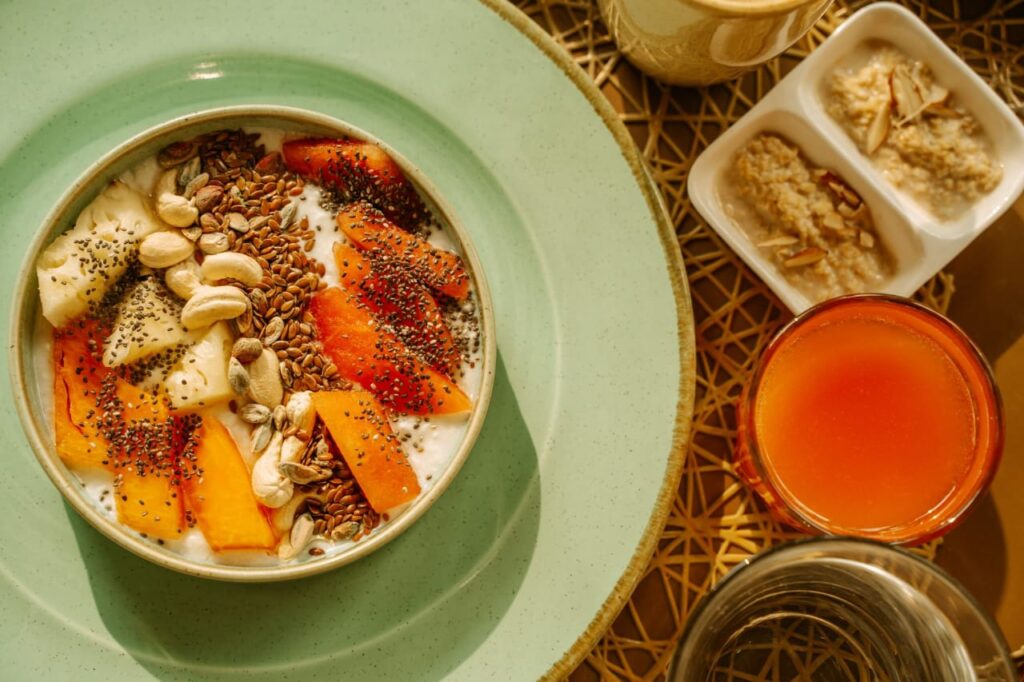
Pick an anchor, something with fibre or bulk that you already like: an apple, a banana, carrot sticks, oatcakes, popcorn. Then add a partner that brings protein or fat: peanut butter, plain yoghurt, a boiled egg, cheese, hummus, a few unsalted nuts.
Don’t pair two anchors. Crackers with juice is two fast carbohydrates, and you’ll be back in the kitchen in an hour.
Portion the partner once, then stop measuring. According to NHS hospital dietetic guidance, a 30 g handful of unsalted nuts is roughly 196 kcal and 7 g of protein, and one tablespoon of nut butter is roughly 91 kcal and 4 g. Both are filling, and both are dense enough that an unmeasured spoonful turns into three. Use a real tablespoon for a week and your eye will calibrate.
Seven pairings that need no cooking
| Pairing | What each food brings | Prep | Watch for |
|---|---|---|---|
| Apple + peanut butter | Fibre and bulk from the apple; protein and fat from the nut butter | About a minute | Choose nut butter with no added sugar or salt; measure the first few spoonfuls |
| Banana + peanut butter | Quick carbohydrate plus slower-digesting protein and fat | About a minute | Banana alone is the version that leaves people hungry again |
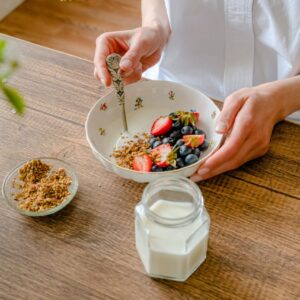
| Plain yoghurt + fruit | Protein from the yoghurt; fibre and sweetness from the fruit | Under two minutes | Flavoured yoghurts often carry much more added sugar than plain; add your own fruit |
| Carrot sticks + hummus | Fibre from the vegetable; plant protein and fat from the chickpeas | Minutes if the carrots are pre-cut | Lower-fat hummus exists, but the standard kind is fine in a sensible portion |
| Boiled egg + a piece of fruit | Protein from the egg; fibre from the fruit | Cook a batch once, then it’s grab-and-go | Keep cooked eggs refrigerated |
| Oatcakes + cottage cheese | Whole-grain carbohydrate plus dairy protein | About a minute | Check salt on both labels |
| Plain popcorn + a small handful of unsalted nuts | Bulk from the popcorn; protein and fat from the nuts | Two minutes | Nuts add up fast; one small handful is the portion |
Start with the version that takes the least effort
If the ideal routine takes thirty minutes, ask what still helps when you only have five. If a balanced snack normally means chopping, assembling and washing up, pick one combination you can build in under two minutes and make that your default. An apple and a spoon of peanut butter is not impressive. It works at 3 p.m. on a bad day, which is when a snack plan is actually tested.
Use a cue instead of relying on motivation
Attach the snack to something that already happens: the end of a meeting block, the kettle clicking off, washing your lunch container. After lunch you might put tomorrow’s fruit by your keys; when you close your laptop you might put a spoon in the peanut butter jar so tomorrow’s snack is half built. The cue does the remembering for you.
Make the pairing visible
Environment does more than willpower. NHS Wales dietetic guidance suggests keeping fruit in a bowl where you can see it, and putting reduced-fat or plain yoghurts at the front of the fridge. At work, a desk drawer with oatcakes and a jar of unsalted nuts beats a vending machine you have to walk to. These are small changes, but they cut down the number of decisions you have to make when you’re tired.
Pairing on a tight budget
You don’t need specialty products. Eggs, peanut butter, plain yoghurt, oats and tinned chickpeas or beans are cheap protein partners. Frozen and tinned fruit and vegetables are generally good value and just as nutritious as fresh ones; if you buy tinned fruit, pick the kind packed in juice, not syrup. Buying a large tub of plain yoghurt and adding fruit yourself is usually cheaper per portion than single-serve flavoured pots, and it keeps the added sugar down.
Build a backup version
A routine that only works on perfect days is fragile. Decide ahead of time what you’ll do when the day falls apart. Your normal snack might be yoghurt with berries and a few nuts; the backup might be a banana and a spoon of peanut butter eaten standing up. The goal is continuity, not perfection.
Read more detailed tips on Wellness and Healthy Living
Common mistakes with snack pairing
- Pairing the wrong way round. A tiny sliver of cheese on a huge pile of crackers is still a carbohydrate snack.
- Letting the partner take over. Nuts and nut butter are filling because they’re calorie-dense. A spoonful is a snack; half a jar is a meal.
- Trusting the front of the pack. “Natural” yoghurts and “protein” bars can still be high in added sugar. Read the label.
- Treating it as a pass-or-fail test. This is the biggest trap. Missing a day doesn’t erase the habit. Avoid compensating with extreme restriction, excessive exercise or an unrealistic catch-up plan, and just resume at the next reasonable opportunity.
A simple 7-day experiment
For one week, keep the change narrow. Pick one cue, one pairing and one way to record it; a check mark on a calendar is enough. At the end, ask yourself three things. Did it fit my schedule? Was I less hungry before dinner? What kept getting in the way? Then adjust one part, such as the partner food or the time of day, rather than rebuilding everything.
When to get individual advice
General snack guidance can’t account for every medical condition, medication, allergy or circumstance. If you manage diabetes (especially if you take insulin or other glucose-lowering medication), have a kidney condition, have a nut or dairy allergy, are pregnant, or have a history of disordered eating, work out your snacks with your doctor or a registered dietitian rather than from a general article. Whole nuts are also not recommended for children under five. If hunger, fatigue or blood-sugar symptoms are persistent, severe or getting worse, speak with a qualified healthcare professional instead of trying to fix it with a snack.
Quick checklist
- Pick one anchor (fibre or bulk) and one partner (protein or fat).
- Measure the partner for the first week, then eyeball it.
- Attach the snack to an existing daily cue.
- Keep fruit, oatcakes or nuts where you can see them.
- Have a two-minute backup version for busy days.
- Track consistency, not perfection, and review after seven days.
Frequently asked questions
What is the easiest way to start with healthy snack pairing?
Start with one anchor food you already like and add one protein or fat partner, such as an apple with a tablespoon of peanut butter or plain yoghurt with fruit. Make it specific, attach it to an existing routine and keep the ingredients in sight.
Is apple and peanut butter a good snack pairing?
For most people, yes. The apple brings fibre and bulk, and the peanut butter brings protein and fat. Use a measured tablespoon, because nut butters are calorie-dense, and pick one with no added sugar or salt. If you have a peanut allergy, choose a different partner such as plain yoghurt.
Do I need to pair my snacks every day?
No. A sustainable routine fits your life. Consistency over time matters more than perfection on any single day.
What if I miss a day?
Resume at the next practical opportunity. Avoid compensating with extreme changes; one missed day is normal in a long-term routine.
How can I pair snacks on a small budget?
Lean on eggs, peanut butter, plain yoghurt, oats and tinned beans or chickpeas as partners, and pair them with seasonal, frozen or tinned-in-juice fruit and vegetables. Buying plain yoghurt in a large tub and adding fruit yourself is usually cheaper than single-serve flavoured pots.
Can this replace medical advice?
No. This is general wellness information. If you have diabetes, an allergy, a kidney condition or a history of disordered eating, or if symptoms are persistent or concerning, talk with an appropriate healthcare professional.
Sources
- Randomised crossover trial of a higher-protein, higher-fibre snack bar versus a high-fat, high-sugar bar in 23 women: pubmed.ncbi.nlm.nih.gov/17077058
- Twelve-week trial paper discussing protein-and-fibre breakfast studies (background section): pmc.ncbi.nlm.nih.gov/articles/PMC9178960
- Review of snack satiety trials, including popcorn versus potato chips: pmc.ncbi.nlm.nih.gov/articles/PMC5015032
- Royal Papworth Hospital NHS Foundation Trust, heart-healthy nourishing snacks and food boosters (nut and nut butter portions): royalpapworth.nhs.uk
- NHS Change4Life, fruit and veg snacks: nhs.uk/change4life
- Aneurin Bevan University Health Board (NHS Wales), healthy snacks fact sheet: abuhb.nhs.wales
- Government of Jersey, healthy eating (tinned and frozen fruit and veg value): gov.je/healthyeating

Nick Smoot is a certified fitness coach and the founder of Smoot Fitness, established in 2012. With over a decade of hands-on experience, Nick has personally coached more than 400 clients both in person and online helping them achieve lasting, life-changing physical transformations.
As a contributing expert at Sportiemade (sportiemade.com), Nick brings real-world expertise and a no-nonsense approach to fitness. His coaching philosophy goes beyond short-term results: he equips every client with the knowledge, habits, and mindset needed to get into the best shape of their life and stay there permanently.
Nick specialises in strength training, endurance performance, and the mental discipline that ties them together. His signature philosophy? Lift heavy, run far, and never stop learning.
Whether you are just beginning your fitness journey or looking to break through a plateau, Nick's evidence-based methods and proven track record make him one of the most trusted voices in the fitness space.