Caffeine in the Afternoon: How to Decide When to Stop
Most advice on afternoon caffeine hands you a clock time. Stop at noon. Stop at 2. Stop at 3. A clock time means very little without a bedtime attached, and it ignores how much you drank and how quickly your body clears it. A better caffeine cutoff starts from the other end: decide when you want to be asleep, then count backward.
This guide walks through that arithmetic, what the research on late-day coffee does and doesn’t prove, and how to run a one-week test so your cutoff comes from your own sleep instead of someone else’s rule. It leans toward people whose days don’t fit a tidy 9-to-5: shift workers, parents on broken sleep, anyone whose bedtime moves around.
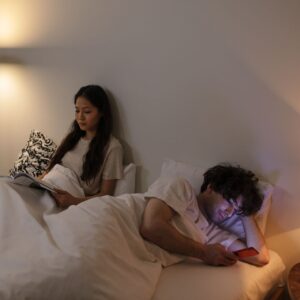
Sleep is part of everyday health, not a reward you earn after a productive day. The CDC says most adults aged 18–60 need at least seven hours of sleep and recommends consistent sleep and wake times, a comfortable sleep environment and reducing electronic-device use before bed.
Why a fixed clock time is the wrong starting point
“No caffeine after 2 p.m.” works fine for someone who goes to bed at 10. It’s too strict for a nurse who clocks out at 7 p.m. and sleeps at 1 a.m., and it’s meaningless for someone on nights who sleeps at 8 in the morning. The deadline is sleep. Caffeine’s clock starts the moment you finish the cup.
Caffeine’s half-life, the time your body needs to clear half of a dose, typically sits somewhere between 3 and 6 hours, according to a recent dose-and-timing trial. Here is what that looks like with a 5-hour half-life, as a rough illustration rather than a measurement: a 200 mg coffee at 2 p.m. leaves about 100 mg in your system at 7 p.m. and about 50 mg at midnight. That’s the equivalent of a small cup of tea still circulating when you’re trying to fall asleep.
What caffeine is doing at 4 p.m.
Caffeine works largely by blocking adenosine receptors. Adenosine is a signal that builds up while you’re awake, and the standard model holds that this build-up is a big part of what produces sleep pressure (source). Caffeine doesn’t erase that pressure. It stops your brain from registering it.
A late cup can feel harmless because the alertness is real. The cost arrives later, at night, when you’ve got less to show for the hours in bed.
What happens when you drink caffeine six hours before bed
The study most worth knowing is a 2013 trial in the Journal of Clinical Sleep Medicine by Drake and colleagues. Twelve healthy sleepers took 400 mg of caffeine (roughly two to three cups of coffee, according to the American Academy of Sleep Medicine’s summary) at bedtime, three hours before, or six hours before, and a placebo on a separate night. All three caffeine timings disturbed sleep compared with placebo. At six hours, the in-home sleep monitor showed total sleep time cut by about an hour.
The part people skip: participants didn’t notice. Their own sleep reports didn’t reflect the loss the monitor recorded. A later review praised the crossover and blinded design and noted the finding has since been replicated, including one study where caffeine five hours earlier affected daytime sleep.
The limits are worth stating plainly. Twelve people is a small sample. The dose, 400 mg, equals the entire daily ceiling the FDA cites for most adults, so it shows what one big dose does and says less about a modest cup. The trial’s own authors point to earlier work in which much smaller doses, taken closer to bedtime, still left a detectable mark on sleep. So the safest reading is not “six hours is exactly right.” It’s that six hours is a reasonable floor, and that you can’t trust how you feel to tell you when you’ve crossed it.
Work out your own caffeine cutoff time
Start from your usual bedtime and subtract. The six-hour column below comes from the Drake trial. The eight-hour column reflects the more conservative gap the Sleep Foundation recommends. If you take a long time to fall asleep or wake in the night, begin with eight hours. Treat six as the floor, not the target.
| Usual bedtime | Last caffeine (6-hour minimum) | Last caffeine (8-hour cautious) |
|---|---|---|
| 9:00 p.m. | 3:00 p.m. | 1:00 p.m. |
| 10:00 p.m. | 4:00 p.m. | 2:00 p.m. |
| 11:00 p.m. | 5:00 p.m. | 3:00 p.m. |
| Midnight | 6:00 p.m. | 4:00 p.m. |
| 8:00 a.m. (sleeping after a night shift) | 2:00 a.m. | Midnight |
One caveat on that last row. The Drake participants kept their normal night-time sleep schedules, so applying the same gap to daytime sleep is a reasonable extension rather than something that trial tested.
If your bedtime swings, anchor to the earliest one you’re likely to have that week. It’s easier to enjoy a late coffee on a night you end up staying up than to lie awake on a night you didn’t.
Dose matters as much as the clock
A cutoff time assumes a cup of a known size. Real cups vary a lot. These are the FDA’s typical figures per 12-fluid-ounce serving:
| Drink (12 fl oz) | Typical caffeine |
|---|---|
| Regular brewed coffee | 113–247 mg |
| Energy drink | 41–246 mg |
| Black tea | 71 mg |
| Green tea | 37 mg |
| Caffeinated soft drink | 23–83 mg |
Source: U.S. Food and Drug Administration. The same page cites 400 mg a day as an amount not generally linked to negative effects in most adults, and notes that “too much” varies with body weight, medications, medical conditions and individual sensitivity.
The practical takeaway: a 16-ounce coffee-shop cup can easily carry more than a 12-ounce reading above. If your 4 p.m. drink is a large one, your real cutoff is earlier than the table suggests. If it’s a mug of green tea, you have more room.
Why your coworker can drink espresso at 8 p.m.
Genes explain some of it. A liver enzyme called CYP1A2 does most of the work of breaking caffeine down, and common variants in the gene for it change how fast that happens. A second gene, ADORA2A, affects the adenosine receptor caffeine acts on. Researchers have linked variants in both to differences in caffeine response and metabolism (review), and slower metabolizers are likely to have a longer half-life.
That variation is the best argument for testing rather than copying. It’s also a reason to be skeptical of the “I’m just not affected” feeling. As the Drake result shows, subjective sleep can look fine while the monitor disagrees, and the dose-and-timing trial raised the same concern about people misjudging caffeine’s effect on their own sleep.
Three schedules, three cutoffs
The 3 p.m. slump at a desk. If you sleep at 11, the 5 p.m. floor is generous, and a 3 p.m. cup fits even the cautious column. The more useful move is to shift your biggest dose earlier, say to late morning, so the afternoon cup is the small one.
The night worker. Count from your sleep time, not the clock on the wall. If you sleep at 8 a.m., your “afternoon” cutoff might fall at 2 a.m. Many people on nights drink caffeine early in the shift and switch to water or decaf for the last few hours.
The parent on fragmented sleep. Sleep that’s already broken is the situation where an extra cup is most tempting and most likely to cost you. Start with the eight-hour column and move your last cup earlier in small steps. Don’t abandon caffeine on the days you need it, just front-load it.
Start with the version that takes the least effort
Abrupt change is where most cutoffs die. If you currently have a coffee at 5 p.m., don’t jump to noon. Move it to 4:30, hold it for three days, then 4:00. The FDA notes that cutting back gradually is the best approach, and that withdrawal from caffeine isn’t considered dangerous but can be unpleasant.
Use a cue instead of relying on motivation
Attach the cutoff to something that already happens every day. “Last cup when I finish lunch” is easier to follow than “nothing after 2:15,” because lunch doesn’t need an alarm. Or tie it to the end of your last meeting, or to the moment you start your commute.
Make the replacement visible
Environment matters. Keep decaf or herbal tea where the second coffee used to live. Put a water bottle on the desk. Decaf isn’t completely caffeine-free, but the FDA puts a typical 8-ounce cup at roughly 2 to 15 mg, a fraction of a regular coffee.
Build a backup version
A cutoff that only works on easy days is fragile. Decide ahead what happens when the meeting runs long or you slept badly the night before. Your normal plan might be no caffeine after 2 p.m. The backup might be a half-size cup of black tea, which carries well under half the caffeine of a large coffee, by 3. The goal is continuity, not perfection.
Watch for the common trap
The biggest trap is turning a useful habit into a pass-or-fail test. One late coffee doesn’t erase a week of earlier cutoffs. Resist compensating with a strict zero-caffeine day, which is more likely to bring a headache than a better night’s sleep. Resume at the next reasonable opportunity.
A simple 7-day experiment
For the next week, change one thing: the time of your last caffeine, set from the table above. Each morning, write down when you had your last cup and roughly how large it was, when you went to bed, how long you think you took to fall asleep, and how rested you felt. A calendar note is enough.
At the end of seven days, ask: Did it fit my schedule? Did I fall asleep faster or wake less? What kept getting in the way? Then adjust one part rather than rebuilding the routine.
One honest limit on this test: a diary can miss what a sleep monitor catches, which is exactly what the Drake study found. A smooth week on paper is a good sign, not proof. If you already use a wearable, glance at its sleep data too, and keep the six-hour floor unless you have a reason to move it.
When to get individual advice
General wellness guidance cannot account for every medical condition, medication, pregnancy, eating disorder, sleep disorder or other individual circumstance. The FDA lists a racing or pounding heart, anxiety, jitters, insomnia and an upset stomach among the signs of too much caffeine. If a symptom is persistent, severe, worsening or interfering with daily life, speak with a qualified healthcare professional rather than trying to solve it with a lifestyle hack. If you take regular medication, ask a pharmacist whether caffeine interacts with it.
Read more detailed tips on Wellness and Healthy Living
Quick checklist
- Count back at least six hours from your actual bedtime; use eight if your sleep is already fragile.
- Check the real size and caffeine content of your afternoon drink.
- Move the cutoff earlier in small steps instead of all at once.
- Attach it to an existing daily cue.
- Keep a decaf or herbal option within reach.
- Plan a backup for busy days.
- Test for one week, then adjust one thing.
Frequently asked questions
What time should I stop drinking caffeine?
Count back from your bedtime. The most cited trial on this found that a large dose six hours before bed still cut objectively measured sleep, so six hours is a sensible minimum. If you fall asleep slowly or wake during the night, use eight hours instead. For a 10 p.m. bedtime that means 4 p.m. at the latest, or 2 p.m. to be careful.
What is the easiest way to start with an afternoon caffeine cutoff?
Move your last cup 30 minutes earlier, hold it for a few days, then move it again. Tie the change to something that already happens, like finishing lunch, so you aren’t relying on remembering. Cutting from a 5 p.m. coffee to nothing after noon in one step is the version most people abandon.
Does decaf count?
Decaf still contains a small amount of caffeine. The FDA puts a typical 8-ounce cup of decaf coffee at roughly 2 to 15 milligrams, far below regular coffee. For most people that’s fine in the evening, but if you’re very sensitive, treat it as a low dose rather than zero.
I drink coffee at night and sleep fine. Am I immune?
Probably not entirely. In the six-hours-before-bed study, participants’ own reports of their sleep missed a disruption that a sleep monitor picked up. Some people do metabolize caffeine faster or respond less to it, but feeling fine is weak evidence on its own.
Do I need to do this every day?
Not necessarily. A sustainable routine should fit your life, and consistency over time matters more than perfection. If your schedule has two or three fixed bedtimes during the week, set a cutoff for each.
What if I miss a day?
Resume at the next practical opportunity. One late coffee doesn’t undo a week of earlier cutoffs. Skip the urge to compensate with a strict no-caffeine day, which tends to bring on headaches and a rebound.
Can this replace medical advice?
No. This is general wellness information. Persistent insomnia, a racing heart, anxiety that tracks with caffeine, pregnancy, or medications that interact with caffeine all deserve a conversation with a healthcare professional.
Sources
- Drake C, Roehrs T, Shambroom J, Roth T. Caffeine effects on sleep taken 0, 3, or 6 hours before going to bed. J Clin Sleep Med. 2013;9(11):1195–1200. PMC3805807
- Doty TJ, Collen JF. Buzzed before bedtime: hidden harms of late day caffeine consumption. J Clin Sleep Med. 2020;16(suppl_1):23S–24S. PMC7792895
- Caffeine dose and timing trial with CYP1A2 and ADORA2A genotyping. PMC11985402
- Genetic variation and caffeine response (review). PMC6213712
- U.S. FDA. Spilling the Beans: How Much Caffeine Is Too Much? fda.gov
- American Academy of Sleep Medicine. Late afternoon and early evening caffeine can disrupt sleep at night. aasm.org
- Sleep Foundation. Caffeine and Sleep. sleepfoundation.org

Nick Smoot is a certified fitness coach and the founder of Smoot Fitness, established in 2012. With over a decade of hands-on experience, Nick has personally coached more than 400 clients both in person and online helping them achieve lasting, life-changing physical transformations.
As a contributing expert at Sportiemade (sportiemade.com), Nick brings real-world expertise and a no-nonsense approach to fitness. His coaching philosophy goes beyond short-term results: he equips every client with the knowledge, habits, and mindset needed to get into the best shape of their life and stay there permanently.
Nick specialises in strength training, endurance performance, and the mental discipline that ties them together. His signature philosophy? Lift heavy, run far, and never stop learning.
Whether you are just beginning your fitness journey or looking to break through a plateau, Nick's evidence-based methods and proven track record make him one of the most trusted voices in the fitness space.