Tabata Training for Beginners at Home: The Real-World Starter Guide
Reviewed by Nick Smoot, NASM-CPT, Founder of Smoot Fitness
Your first tabata workout will probably humble you somewhere around round four. That’s normal, and it’s actually the point. Tabata training for beginners at home isn’t about looking impressive in a 20-second burst because it’s about learning to push your body hard, recover fast, and repeat, using nothing but your living room floor. If you’ve tried HIIT apps before and quit because the pacing felt random or the moves needed equipment you don’t own, this guide is built to fix that. You’ll learn exactly how tabata works, how to structure a session with what you already have, and how to avoid the two or three mistakes that send most beginners back to the couch by week two.
Why Tabata Works When You Only Have 20 Minutes and No Gym
Tabata isn’t a marketing term. It’s a specific training protocol built around 20 seconds of all-out effort followed by 10 seconds of rest, repeated for eight rounds which is four minutes total per block. It comes from a 1996 study by Izumi Tabata and colleagues, who found that this pattern of near-maximal intermittent exercise improved both aerobic and anaerobic capacity more than steady, moderate-intensity cardio did over the same six-week period (Tabata et al., 1996).
What that means for you, practically, is this: four minutes of true tabata effort asks more of your cardiovascular system than twenty minutes of a comfortable jog. You don’t need a treadmill, a set of dumbbells, or a gym membership to get that stimulus, you need your own bodyweight and a willingness to work uncomfortably hard for short bursts. That’s exactly why tabata has become one of the most searched formats for tabata workout for beginners no equipment routines. It fits into a lunch break, it fits into a spare bedroom, and it doesn’t require you to plan around gym hours.
The Centers for Disease Control and Prevention notes that adults need at least 75 minutes of vigorous-intensity activity per week for meaningful health benefits (CDC, 2023). A well-run 20-minute tabata session, done three to four times a week, can get you there without eating up your whole evening.
There’s also a lingering effect worth knowing about. High-intensity intermittent effort raises what exercise scientists call excess post-exercise oxygen consumption which essentially, your body keeps burning slightly more energy for a period after you stop moving, as it works to restore itself to baseline (LaForgia, Withers & Gore, 2006). Steady, low-intensity cardio doesn’t produce nearly the same effect. That’s not a reason to expect dramatic results from four minutes of work, but it does explain why short, hard sessions punch above their weight compared to longer, easier ones.
None of this means tabata is automatically “better” than walking, cycling, or strength training. It means it’s a genuinely efficient option for someone with 20 spare minutes and a body that’s ready for vigorous effort which is a specific, common situation, not a universal one.
How to Do Tabata at Home: The Core Framework
Every tabata session, whether you’re brand new or six months in, follows the same skeleton: warm up, work in 20-on/10-off intervals, rest between blocks, cool down. The variable is which movements you plug into that structure. Here’s how to build your first sessions without overthinking it.
Pick Movements You Can Do With Zero Setup
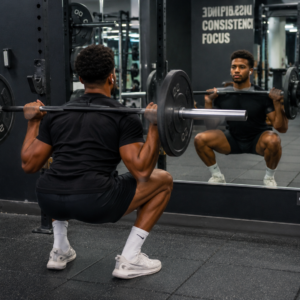
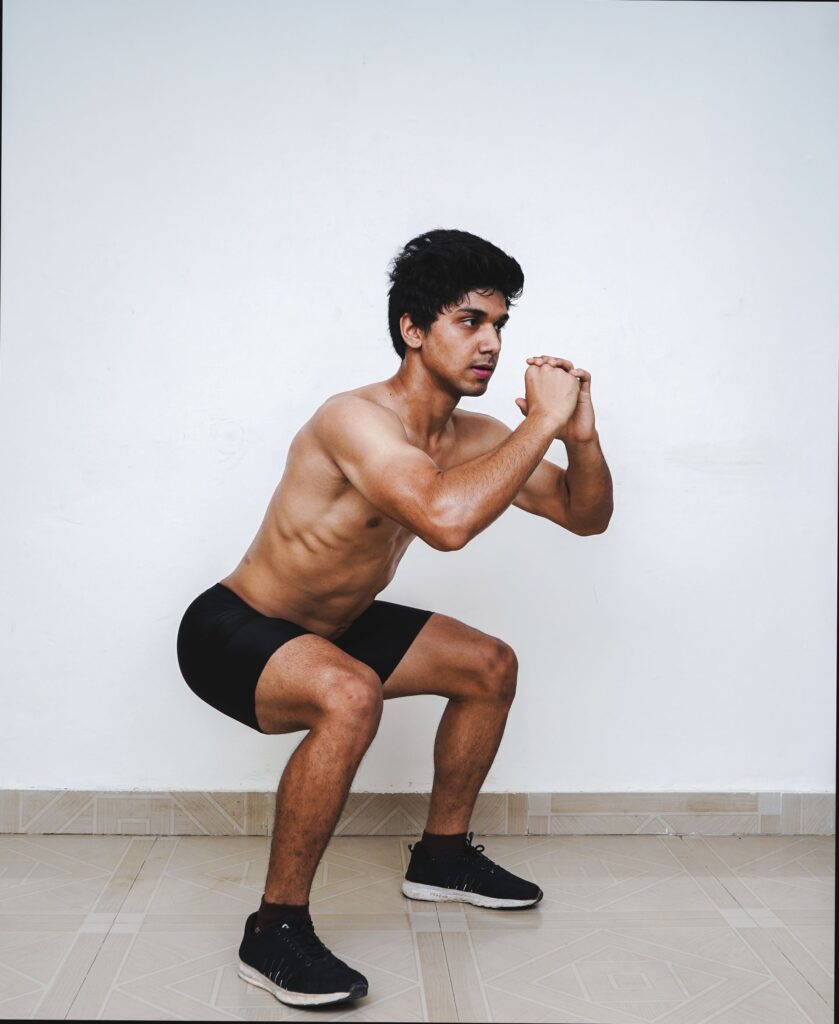
For your first few weeks, stick to movements your body already knows well: bodyweight squats, push-ups (knee push-ups count, and they should be your starting point if a full push-up isn’t solid yet), mountain climbers, high knees, glute bridges, and standing oblique twists. You’re not trying to master a new skill under fatigue, that’s how form breaks down and joints get cranky. Save anything technical, like burpees with a jump or lateral bounds, for once the basic pattern feels automatic.
Quick tip: if a move requires you to think about your footing before your breathing, it’s too advanced for round six of a tabata set. Save it for later.
A solid beginner rotation might include: bodyweight squats, incline or knee push-ups, standing mountain climbers, high knees, reverse lunges, glute bridges, plank shoulder taps, and standing bicycle crunches. That’s more than enough variety to build full four-block sessions for weeks without repeating the same movement twice in a row. If your space is tight like a home office corner, a hotel-sized living room, a shared apartment floor then every one of these moves fits in roughly a six-by-six-foot square, so lack of room isn’t a real barrier here either.
Set Your Timer and Build the Block
A single tabata block is 20 seconds of work, 10 seconds of rest, repeated eight times equals to four minutes. A full beginner session for how to do tabata at home usually stacks three to four blocks with one minute of standing rest between each, plus a warm-up and cool-down. That lands you at roughly 20 minutes total, which is where the 20 minute tabata workout at home searches come from but it’s genuinely the sweet spot for a beginner body that’s still adapting.
Use a free interval timer app rather than trying to eyeball the clock. Watching a stopwatch while gasping for air is its own kind of misery, and it pulls your attention away from your form right when form matters most.
Breathe on Purpose, Not by Accident
Most beginners hold their breath somewhere around round three without realizing it, which spikes heart rate and makes the next round feel worse than it needs to. Try exhaling sharply on the hardest part of each rep like the push of a push-up, the drive up from a squat and take one full inhale during your 10-second rest window. It sounds like a small detail. It changes how round six feels.
During that 10-second rest, resist the urge to collapse to the floor. Stay standing, hands on your hips or overhead, and let your chest expand fully. Lying down compresses your diaphragm right when you need it working at full capacity.
Warm Up and Cool Down Like You Mean It
Five minutes of dynamic movement before you start which are leg swings, arm circles, bodyweight squats at a slow pace, torso rotations raises your core temperature and primes the joints you’re about to load. Skipping this because “it’s only 20 minutes anyway” is one of the fastest ways to turn a good workout into a sore Tuesday. After your last block, spend three to five minutes walking in place and stretching your hips, hamstrings, and shoulders while your heart rate comes down gradually instead of dropping off a cliff.
The Mistake Almost Everyone Makes With Tabata
If you’ve started a tabata routine before, felt wrecked after two sessions, and quietly stopped, that’s not a willpower problem but a pacing problem, and it’s one that most beginner guides gloss over entirely.
Here’s what actually happens: new tabata practitioners treat every single round like a sprint from second one, burn out by round three of the first block, and spend the rest of the session moving at a pace that’s technically “tabata” in name only. True tabata intensity is meant to be near-maximal, but it’s calibrated across eight rounds, not one. A more sustainable approach for your first two to three weeks is to aim for an effort level around 8 out of 10 on a perceived exertion scale, rather than 10 out of 10, so you can actually hold form and intensity through the full block (Borg, 1982). You build toward true maximal effort as your conditioning improves, you don’t start there.
The second version of this mistake is skipping the rest. Ten seconds feels short, so some beginners keep moving through it “to stay warm.” Don’t. That rest window is part of the protocol, not a suggestion, and cutting it short is what turns tabata from a smart interval method into a good way to strain something.
The third mistake is quieter, and it shows up weeks in, not on day one: doing the same four movements in the same order every single session. Your body adapts fast to a repeated pattern, and once it does, the workout stops asking as much of you even though it still feels exhausting. Rotating your movement selection every one to two weeks like swapping mountain climbers for high knees, or a reverse lunge for a lateral lunge keeps the stimulus honest and keeps boredom from creeping in before month two.
How to Progress From Week One to Week Six
One thing most beginner guides skip entirely is what changes over time. Tabata isn’t a workout you do the exact same way forever but a format you grow into. Here’s a realistic way to think about the first six weeks:
Weeks 1-2: Focus on learning the pacing, not chasing exhaustion. Aim for two sessions a week, three tabata blocks each, at roughly 70-80% effort. Your goal here is simply finishing all eight rounds of every block with recognizable form, not collapsing by round five.
Weeks 3-4: Add a third weekly session and push effort closer to 85-90%. You’ll likely notice the 10-second rest starts to feel shorter then that’s your conditioning improving, not the clock changing. This is also a good point to swap in one or two slightly harder variations, like a jump squat instead of a bodyweight squat.
Weeks 5-6: If your form has stayed solid and recovery between sessions feels manageable, you can move toward four blocks per session and true near-maximal effort on your strongest days. Not every session needs to hit that ceiling because alternating a hard day with a moderate day keeps you consistent instead of constantly wrecked.
If any of that timeline feels too fast for where you’re starting from, slow it down. There’s no prize for rushing into full intensity, and a beginner who takes eight weeks to build up steadily will outlast one who burns out in week three.
What a Real Week of Tabata Looks Like at Home
Tabata is intense enough that doing it every single day isn’t the goal, recovery is where the adaptation actually happens. A realistic beginner week, built around a home setup with no equipment, looks something like this:
| Day | Session | Focus |
|---|---|---|
| Monday | 3 tabata blocks (squats, push-ups, mountain climbers) | Full-body, moderate effort |
| Tuesday | 20-30 minute walk or light stretching | Active recovery |
| Wednesday | 4 tabata blocks (high knees, glute bridges, oblique twists, step-ups) | Full-body, higher effort |
| Thursday | Rest or gentle mobility work | Recovery |
| Friday | 3 tabata blocks, revisit Monday’s movements | Full-body, track progress |
| Saturday / Sunday | Walk, light activity, or full rest | Recovery |
Three tabata sessions a week is a strong, sustainable starting cadence for most beginners. If you’re new to structured exercise altogether, pairing this with a broader look at can help you fit tabata into a routine that also covers strength and mobility, not just intervals.
Do You Need Any Equipment at All?
No. Every movement in this guide works with nothing but floor space and a timer, which is exactly why tabata suits a home setup better than most workout formats. That said, once the bodyweight basics feel manageable, a couple of low-cost additions can extend how long the format stays interesting.
A pair of light dumbbells turns squats and presses into a slightly different stimulus. A yoga mat protects your knees and wrists during floor-based moves like mountain climbers. Neither is required, and if you’ve been putting off starting because you don’t own either one, that’s a good sign you’re overthinking the barrier to entry rather than the workout itself.
When to Scale Back or Check In With a Professional
Tabata is demanding by design, and that’s exactly why it isn’t the right starting point for everyone. If you’re returning from a joint injury, managing a heart condition, are pregnant, or haven’t done structured vigorous exercise in years, it’s worth talking to a doctor or a certified trainer before jumping into all-out intervals. The American College of Sports Medicine recommends a health screening for anyone with existing cardiovascular, metabolic, or musculoskeletal conditions before beginning vigorous-intensity exercise (ACSM, 2022).
Even without a pre-existing condition, pay attention to signals your body sends mid-session: sharp joint pain (different from muscle burn), dizziness, chest tightness, or nausea are all reasons to stop the block, not push through it. Tabata should leave you breathless and challenged because it shouldn’t leave you in pain.
It’s also worth being honest about age and starting point. A 30-year-old who ran cross-country in college and a 60-year-old returning to exercise after a decade off will both benefit from tabata’s structure, but they shouldn’t start at the same intensity. If you’re older, deconditioned, or simply unsure, the safer opening move is a lower-impact version which step-ups instead of jump squats, standing marches instead of high knees which run at the same 20/10 timing. You get the same interval training effect on your cardiovascular system with far less strain on joints and tendons that haven’t been tested in a while.
Here’s a detailed guide on good quality Home Workouts
Frequently Asked Questions
Is tabata training good for complete beginners?
Yes, as long as you scale the effort and movement selection to your current fitness level. Beginners shouldn’t attempt true maximal intensity from day one starting around 70-80% effort with simple bodyweight moves lets you learn the pacing and build a base before pushing toward the format’s full intensity.
How many times a week should a beginner do tabata?
Two to three sessions a week is a sensible starting cadence, with rest or light activity on the days in between. Because tabata is high-intensity, your body needs recovery time to adapt; doing it daily as a beginner tends to lead to burnout or overuse issues rather than faster progress.
Can I do tabata training with no equipment at all?
Absolutely. Bodyweight movements like squats, push-ups, mountain climbers, high knees, and glute bridges provide plenty of intensity for a beginner tabata session. Equipment can add variety later, but it isn’t necessary to get a genuine training effect from the format.
How long should a beginner tabata workout be?
A full session, including warm-up and cool-down, typically runs around 20 minutes for beginners then usually three to four four-minute tabata blocks with a minute of rest between them. This is enough to get a real cardiovascular and muscular stimulus without overreaching on your first few attempts.
Will tabata training help me lose weight?
Tabata can support fat loss as part of a broader routine that includes consistent activity and reasonable nutrition habits, since it burns a meaningful amount of energy in a short window and can boost post-exercise calorie burn. It isn’t a shortcut on its own, and results depend on your overall activity level and eating pattern over time.
What’s the difference between tabata and regular HIIT?
Tabata is a specific, structured form of HIIT with a fixed 20-seconds-on, 10-seconds-off pattern repeated for exactly eight rounds. General HIIT is a broader category that can use different work-to-rest ratios and interval lengths, so tabata is best thought of as one precise protocol within the wider HIIT umbrella.
The Bottom Line
Tabata training for beginners at home works because it removes every excuse tied to time, equipment, and location and all it asks for is 20 focused minutes and a willingness to push into genuine discomfort for short bursts. Start with simple bodyweight movements, respect the 10-second rest windows, and build toward true maximal effort over your first few weeks rather than demanding it from session one. Do that consistently, three times a week, and the format will earn its reputation. For your next session, consider pairing tabata days with so your recovery works as hard as your workout does.
References
- Tabata, I., Nishimura, K., Kouzaki, M., et al. (1996). Effects of moderate-intensity endurance and high-intensity intermittent training on anaerobic capacity and VO2max. Medicine & Science in Sports & Exercise. https://pubmed.ncbi.nlm.nih.gov/8897392/
- Centers for Disease Control and Prevention. (2023). Physical Activity Guidelines for Adults. https://www.cdc.gov/physical-activity-basics/guidelines/adults.html
- American College of Sports Medicine. (2022). ACSM’s Guidelines for Exercise Testing and Prescription, 11th Edition — Pre-Participation Health Screening. https://www.acsm.org/education-resources/trending-topics-resources/physical-activity-guidelines
- Borg, G. (1982). Psychophysical bases of perceived exertion. Medicine & Science in Sports & Exercise, 14(5), 377-381. https://pubmed.ncbi.nlm.nih.gov/7154893/
- World Health Organization. (2022). Physical Activity Fact Sheet. https://www.who.int/news-room/fact-sheets/detail/physical-activity
- LaForgia, J., Withers, R. T., & Gore, C. J. (2006). Effects of exercise intensity and duration on the excess post-exercise oxygen consumption. Journal of Sports Sciences, 24(12), 1247-1264. https://pubmed.ncbi.nlm.nih.gov/17101527/

Nick Smoot is a certified fitness coach and the founder of Smoot Fitness, established in 2012. With over a decade of hands-on experience, Nick has personally coached more than 400 clients both in person and online helping them achieve lasting, life-changing physical transformations.
As a contributing expert at Sportiemade (sportiemade.com), Nick brings real-world expertise and a no-nonsense approach to fitness. His coaching philosophy goes beyond short-term results: he equips every client with the knowledge, habits, and mindset needed to get into the best shape of their life and stay there permanently.
Nick specialises in strength training, endurance performance, and the mental discipline that ties them together. His signature philosophy? Lift heavy, run far, and never stop learning.
Whether you are just beginning your fitness journey or looking to break through a plateau, Nick's evidence-based methods and proven track record make him one of the most trusted voices in the fitness space.