How to Increase Step Count Without Leaving the House (13 Real Ways)
Last reviewed by Nick Smoot 2026
Introduction
Some days, the front door stays shut and that’s just life. Whether it’s the weather, a packed schedule, a sick kid, or simply not feeling it, getting outside isn’t always an option. But your step count doesn’t have to suffer for it.
Learning how to increase your step count without leaving the house is more practical than most people realize. The home is full of movement opportunities that most people walk straight past. This article breaks down 13 tried-and-true strategies that work for real people living real lives, not just athletes with two-hour windows and a dedicated workout room.
No treadmill required. No expensive equipment. Just smart, sustainable ways to move more indoors whether you’re working from home, stuck inside with the kids, or just trying to build a healthier daily habit without overhauling your entire routine.
Why Your Step Count Actually Matters (and What 10,000 Really Means)
Before we get into the how, it’s worth being honest about the “why” because a lot of people have heard the 10,000-step target and taken it as gospel without knowing where it came from.
The 10,000-step figure actually originated from a Japanese marketing campaign in the 1960s, not a clinical recommendation. That said, the science behind daily movement is solid. According to the CDC, adults need at least 150 minutes of moderate-intensity physical activity per week, and regular walking is one of the most accessible ways to hit that target.
More recent research, including a study published via the American Journal of Preventive Medicine, found that people who took more steps daily had lower risks of cardiovascular disease, metabolic conditions, and early mortality which the benefits started showing well below 10,000 steps.
So the number itself isn’t sacred. What matters is moving more than you currently do. And that’s entirely achievable at home.
The Easiest Way to Get More Steps Indoors: Change How You Think About “Movement”
Most people approach step-counting as an exercise problem. They think: “I need to work out more.” But the bigger opportunity is actually in something called NEAT — Non-Exercise Activity Thermogenesis. This is all the movement your body does outside of intentional exercise: fidgeting, pacing, doing chores, walking to the kitchen.
NEAT is where most of your daily steps come from and it’s where most people lose the most steps when they stay home, because the home environment is designed for comfort and convenience, not movement.
The shift that changes everything is simple: stop thinking about steps as exercise, and start thinking about them as the sum of every tiny movement you make throughout the day.
Once you see your home through that lens, the opportunities are everywhere.
13 Practical Ways to Increase Your Step Count Without Leaving the House
1. Walk While You Talk
Phone calls are one of the most underused step-boosting tools in existence. Instead of sitting down every time your phone rings, pace around your home. Walk the hallway, loop the living room, go up and down the stairs.
A 20-minute phone call while walking can easily add 1,500–2,000 steps. If you have two or three calls a day, that’s a significant chunk of your daily target handled before you’ve done a single “workout.”
Pro Tip: Set your phone to vibrate with a walking reminder every time a call comes in. One week of this habit alone can add 8,000–10,000 steps to your weekly total.
2. Try Indoor Walking Workouts
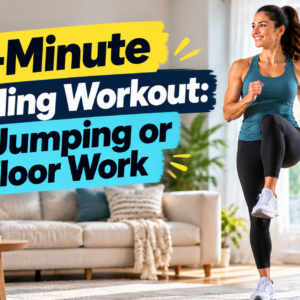
This is one of the most effective and most underestimated indoor walking exercises to increase steps. YouTube channels like Leslie Sansone’s “Walk at Home” have millions of followers for a reason: they work.
These routines simulate outdoor walking with added movements like side steps, kicks, and knee lifts. A 30-minute indoor walking video can deliver anywhere from 3,000 to 4,500 steps depending on the pace. They’re beginner-friendly, require no equipment, and can be done in a 6×6 foot space.
Here’s a detailed guide on How To Build Consistent Home Workout Routine
3. Use Your Stairs Deliberately
If your home has stairs, you have a built-in step multiplier. Most people use stairs functionally to get from A to B and leave it there. Flip that habit.
Set a goal to go up and down your stairs a specific number of times per day. Ten round trips on a standard staircase adds roughly 500–700 steps and elevates your heart rate in a way that flat walking doesn’t.
Beginner target: 5 stair trips per day. Intermediate target: 15–20 trips, spread across the day. Progression tip: Add a small weighted backpack once the body weight version feels easy.
4. Set a “Steps Every Hour” Rule
Sitting for long stretches is one of the biggest step-killers, especially for people working from home. The fix isn’t complicated: get up and walk for 5 minutes at the top of every hour.
Five minutes of walking at a moderate pace adds roughly 400–500 steps. Over an 8-hour workday, that’s 3,200–4,000 extra steps you wouldn’t have taken otherwise with zero disruption to your productivity.
Use your phone alarm, a smartwatch, or a free app like StepUp to remind you. The habit takes about two weeks to feel automatic.
5. March in Place During Screen Time
Watching TV, scrolling through content, waiting for something to load in which these are all moments of zero movement. They don’t have to be.
Marching in place (lifting your knees to hip height with alternating arms) burns calories, raises your heart rate, and adds steps faster than you’d expect. A 30-minute Netflix episode walked-in-place can rack up 2,000–3,000 steps. You’ll barely notice it by the second episode.
Form note: Keep your core lightly engaged, land softly on the balls of your feet, and keep your shoulders relaxed. It’s not a high-impact movement but just controlled, steady marching.
6. Make Chores Count
Vacuuming, mopping, doing laundry, tidying up all of these generate steps. The average person accumulates 1,500–3,000 steps just from a solid round of household cleaning.
The trick is to stop batching all your chores into one block and doing them efficiently. Instead, spread them out. Take one item upstairs at a time instead of carrying everything in one trip. Walk to the furthest bathroom to wash your hands. Put things away one by one rather than all at once.
This isn’t inefficiency, it’s intentional movement. Small choices like these compound across the day.
7. Pace While You Wait
The kettle is boiling. The microwave is counting down. The pasta is cooking. These are micro-moments of forced waiting that most people spend standing still or checking their phone.
Pace instead. Even 90 seconds of pacing at a time adds up. A busy home cook who paces during kitchen wait times can accumulate an extra 400–800 steps per day from this habit alone.
8. Do a “Steps Snack” Between Tasks
Habit stacking is one of the most reliable tools in behavior science. Attach a short walk to something you already do consistently like making coffee, finishing a work task, eating lunch.
A “steps snack” is just 2–5 minutes of intentional walking inserted between two existing activities. Walk to every room in your home and back. Do two laps of your garden if you have one. Pace your hallway.
These micro-walks add up to hundreds of steps per day and require almost no motivation because they’re tied to something you were already doing.
9. Dance — Seriously
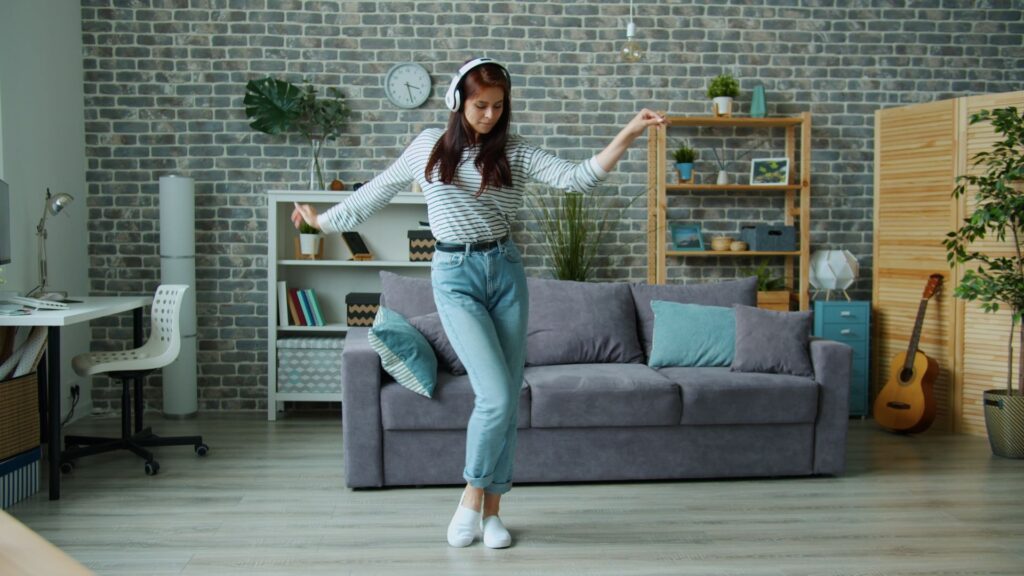
This one gets eye rolls until people actually try it. A 10-minute dance session in your kitchen generates roughly 700–1,200 steps and genuinely elevates your mood in a way that marching in place does not.
You don’t need to be good at it. You don’t need to follow a routine. Put on three songs back-to-back and move however feels natural. That’s it. The step count handles itself.
10. Try a Walking Pad or Under-Desk Treadmill
This is an investment, but for people who work from home and want to get 10,000 steps without leaving the house consistently, a walking pad changes the game. These flat, low-speed treadmills sit under a standing desk and let you walk slowly (1–2 km/h) while typing, reading, or taking calls.
Users who log walking pad time typically add 3,000–6,000 steps to their daily count without carving out any extra time for movement.
If the cost is a barrier, check secondhand marketplaces. These units have become popular enough that the resale market is well-stocked.
11. Play Active Games or Use a Fitness App
Fitness apps like Ring Fit Adventure (Nintendo Switch), Just Dance, or smartphone AR walking games create movement-based experiences that don’t feel like exercise. They’re particularly effective for people who find repetitive indoor walking boring.
Ring Fit Adventure, for example, has been shown in small studies to generate step counts and cardio output comparable to light jogging and the gamification makes it sustainable for longer.
12. Loop Your Home Deliberately
This one sounds almost too simple but it works. Pick a looping route inside your home (living room → hallway → kitchen → back) and do laps. It’s the indoor equivalent of a track.
Set a step target and loop until you hit it. With a decent route of 30–40 meters per lap, you can generate 1,000 steps in about 8–10 minutes. This is especially useful when you just need to hit a number before the day ends.
13. Stretch Walks and Yoga Flow
Yoga flows and stretching routines don’t generate high step counts, but they keep the body mobile and often transition naturally into walking movement. A 20-minute yoga flow followed by 10 minutes of pacing or marching can deliver a combined 1,200–1,800 steps while also improving flexibility and reducing the stiffness that comes from sedentary work.
Here’s a detailed guide on Best Yoga flow for Flexibility
A Realistic Look at What You Can Expect
| Strategy | Approximate Steps Added |
|---|---|
| Walking during phone calls (20 min) | 1,500–2,000 |
| Indoor walking workout (30 min) | 3,000–4,500 |
| Stair trips x10 (round trips) | 500–700 |
| Hourly 5-min walks x8 hours | 3,200–4,000 |
| Marching during 30-min TV show | 2,000–3,000 |
| Household chores (full round) | 1,500–3,000 |
| Pacing during kitchen wait times | 400–800 |
| Steps snacks x5 per day | 300–600 |
| Dance session (10 min) | 700–1,200 |
| Walking pad (1 hour at desk) | 3,000–5,000 |
No single strategy on this list will take you from 2,000 to 10,000 steps. But three or four of them combined? That’s a realistic daily target hit without a single step outside.
How to Increase Daily Step Count at Home: A Starter Week Plan
If you’re just getting started, don’t try to implement all 13 strategies at once. That’s the fastest way to feel overwhelmed and quit by Thursday.
Here’s a simple approach for week one:
- Day 1–2: Add walking during all phone calls. Track your steps.
- Day 3–4: Add one 30-minute indoor walking video.
- Day 5–6: Set hourly reminders and walk for 5 minutes each time.
- Day 7: Combine all three and see where your step count lands.
Most people who follow this pattern move from an average of 3,000–4,000 steps per day to 7,000–9,000 within the first week. From there, stacking in additional habits becomes much easier.
The Truth About Consistency (Because the Internet Won’t Tell You This)
Here’s something the fitness content space tends to skip over: most people don’t fail at this because they don’t know what to do. They fail because they try to do everything perfectly from day one.
If you hit 6,500 steps today and 8,000 tomorrow, that’s progress. If you hit 10,000 once and 4,000 the next day, that’s still a better week than sitting still. The goal of learning how to increase your step count without leaving the house isn’t to get it perfect but to find two or three habits that genuinely fit your life and do those consistently.
Sustainable beats optimal every time. One habit you actually keep is worth more than a ten-point plan you abandon by next Friday.
Conclusion
The steps are already in your home, they’re just waiting to be taken. Between pacing on calls, walking workouts, stair trips, and intentional movement during daily chores, hitting 8,000–10,000 steps without leaving the house is genuinely achievable for most people. You don’t need a gym membership, a treadmill, or a two-hour training block.
The key is doing a few of these things consistently rather than trying to do all of them at once. Start small, build the habit, and let it compound over time.
If you’ve been looking for a realistic way to increase your step count without leaving the house, you now have more than enough to start. Pick two strategies from this list that feel natural for your current routine, try them for a week, and adjust from there.
Start with just one today and see how you feel by the end of the week.
Frequently Asked Questions
Q: How many steps can I realistically get at home in a day? Most people can achieve 7,000–10,000 steps at home through a combination of indoor walking workouts, pacing habits, stair use, and active chores. The exact number depends on your home size, schedule, and which strategies you stack together.
Q: Is marching in place as good as actual walking? It’s close. Marching in place activates the same major muscle groups as walking and generates a comparable step count. The calorie burn is slightly lower because there’s no forward momentum, but for daily step accumulation and cardiovascular benefit, it’s a solid substitute.
Q: How long does it take to walk 1,000 steps indoors? At a moderate pace, 1,000 steps takes roughly 8–10 minutes. A brisk march in place covers 1,000 steps in closer to 7 minutes.
Q: Do household chores actually count toward my step goal? Yes, genuinely. Vacuuming, mopping, tidying, and cooking all generate steps. A thorough clean of an average-sized home can add 1,500–3,000 steps, depending on how much moving around is involved.
Q: What’s the best free app for counting indoor steps? Google Fit (Android) and Apple Health (iPhone) both use your phone’s accelerometer to count steps indoors. Samsung Health is another reliable option. These apps don’t require GPS and count steps whether you’re inside or out.
Q: I work from home and barely move — where do I start? Start with the hourly walk rule. Set an alarm for every hour and walk for five minutes. It’s the lowest-barrier habit on this list and creates a foundation everything else builds on.
References & Further Reading
- Centers for Disease Control and Prevention. Physical Activity Basics: How Much Physical Activity Do Adults Need? https://www.cdc.gov/physicalactivity/basics/adults/index.htm
- Harvard Health Publishing. Walking: Your steps to health. https://www.health.harvard.edu/staying-healthy/walking-your-steps-to-health
- U.S. Department of Health and Human Services. Physical Activity Guidelines for Americans, 2nd Edition. https://health.gov/paguidelines/second-edition/
- American Council on Exercise. Non-Exercise Activity Thermogenesis (NEAT): What It Is and Why It Matters. https://www.acefitness.org/education-and-resources/lifestyle/blog/6380/non-exercise-activity-thermogenesis-neat/
- Mayo Clinic. Walking: Trim your waistline, improve your health. https://www.mayoclinic.org/healthy-lifestyle/fitness/in-depth/walking/art-20046261

Nick Smoot is a certified fitness coach and the founder of Smoot Fitness, established in 2012. With over a decade of hands-on experience, Nick has personally coached more than 400 clients both in person and online helping them achieve lasting, life-changing physical transformations.
As a contributing expert at Sportiemade (sportiemade.com), Nick brings real-world expertise and a no-nonsense approach to fitness. His coaching philosophy goes beyond short-term results: he equips every client with the knowledge, habits, and mindset needed to get into the best shape of their life and stay there permanently.
Nick specialises in strength training, endurance performance, and the mental discipline that ties them together. His signature philosophy? Lift heavy, run far, and never stop learning.
Whether you are just beginning your fitness journey or looking to break through a plateau, Nick's evidence-based methods and proven track record make him one of the most trusted voices in the fitness space.