How to Create a Zen Workout Space in a Tiny Room
Your workout space doesn’t need square footage. It needs clarity.
Most people try to “fit fitness” into whatever corner is left over next to a laundry pile, under harsh lighting, surrounded by noise. Then they wonder why motivation drops and workouts feel scattered. The problem isn’t discipline. It’s environment design.
A cramped room can outperform a full home gym if it’s engineered for focus, low cognitive load, and nervous system balance. That’s what “zen” actually means in this context: fewer distractions, tighter feedback loops, better adherence.
What Is a Zen Workout Space?
A zen workout space is a small, intentionally designed environment that reduces sensory noise and improves focus during training.
- Visual minimalism: limited clutter, controlled color palette
- Sensory control: lighting, sound, and airflow tuned for calm alertness
- Functional efficiency: every object has a purpose and a place
The State of Play: Why Small Spaces Fail
Tiny rooms don’t kill consistency. Bad setups do.
You walk in. There’s no clear “start point.” Equipment overlaps. Lighting feels like a storage closet. Your brain reads chaos. Cortisol rises slightly. Decision fatigue creeps in before the first rep.
That friction matters. Behavioral research shows that small environmental barriers reduce habit adherence significantly over time. Your brain wants clean signals: this is where we train.
Zen design fixes that.
The Sportiemade Power Table
| Method | Benefit | Effort Level |
|---|---|---|
| Declutter to 5 core items | Reduces cognitive load, faster session start | Medium |
| Layered lighting (warm + task) | Improves focus, lowers stress response | Low |
| Defined floor zone | Builds habit consistency | Low |
| Vertical storage | Maximizes usable movement area | Medium |
| Sound curation | Stabilizes heart rate variability (HRV) | Low |
Step 1: Shrink Your Equipment On Purpose
Most people overestimate what they need.
A high-functioning small workout space can run on five tools:
- Adjustable dumbbells
- Resistance bands
- A foldable bench or mat
- A pull-up bar or suspension trainer
- A compact cardio option (jump rope or step platform)
That’s enough for strength, mobility, and Zone 2 cardio.
Why this works (mechanically):
Fewer tools reduce decision branching. Each extra choice adds cognitive load, which studies link to lower task persistence. When your brain has fewer options, it commits faster.
No-Equipment Alternative:
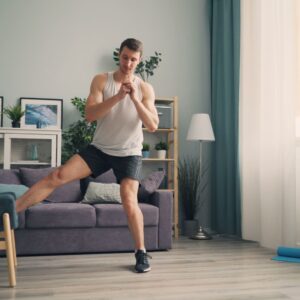
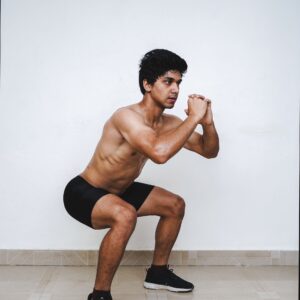
Bodyweight circuits: push-ups, split squats, wall sits, and tempo squats can drive hypertrophy when intensity is managed properly.
Step 2: Define a “Training Zone” (Even If It’s 6×6 Feet)
A zen space isn’t about size. It’s about boundaries.
Mark your workout area physically:
- Use a mat as your anchor
- Align it with a wall or window
- Keep everything inside arm’s reach
This creates what behavioral scientists call a context-dependent habit loop. Same space. Same cues. Faster activation.
Living Room Modification:
Roll out a mat at the same spot every day. Same orientation. Same music. Consistency beats novelty.
Step 3: Control Light Like a Pro
Lighting is the most underrated performance lever in home gyms.
Harsh overhead lighting spikes alertness but also tension. Dim lighting relaxes you but can reduce output. You want both.
The solution: layered lighting
- Warm ambient light (2700–3000K) for calm baseline
- Focus light (4000K) directed at your training zone
Why it matters:
Light affects circadian rhythm and cortisol patterns. Controlled lighting can improve perceived exertion and mood during exercise.
No-Equipment Alternative:
Train near a window. Natural light beats any bulb.
Step 4: Engineer Your Sound Environment
Silence isn’t always ideal. Neither is noise.
Your nervous system responds to sound frequency and rhythm. Slow tempos can lower heart rate. Fast beats can increase power output.
Two-zone audio strategy:
- Warm-up: slower tempo (60–90 BPM)
- Main session: moderate tempo (120–140 BPM)
This aligns with autonomic nervous system shifts parasympathetic to sympathetic activation.
Living Room Modification:
Noise-canceling headphones. Instant environment shift.
Step 5: Declutter Aggressively
Clutter isn’t just visual. It’s metabolic.
A cluttered space subtly increases stress markers. That’s not speculation environmental psychology studies show elevated cortisol in disorganized settings.
Set a rule:
If it doesn’t help your training, it doesn’t belong in the room.
Keep surfaces clear. Store vertically. Label nothing you should know where everything is.
No-Equipment Alternative:
Use a single basket. Everything goes in it post-workout. Zero loose items.
Step 6: Optimize Airflow and Temperature
Small rooms heat up fast. That matters.
Even a 2–3°C increase can reduce endurance and perceived performance.
Target range:
- Temperature: 18–21°C (64–70°F)
- Airflow: constant but gentle
Use a fan or crack a window. Oxygen flow improves performance and recovery.
Living Room Modification:
Train near airflow paths doorways or windows.
Step 7: Build a Ritual Entry Point
Zen isn’t decoration. It’s ritual.
Create a 60-second pre-workout sequence:
- Step onto your mat
- Take 5 slow breaths
- Start a consistent track
This conditions your brain. Over time, the ritual becomes the trigger.
Why it works:
Habit loops rely on cues. Strong cues reduce reliance on motivation.
The Data Most People Miss
“Zen” isn’t just aesthetic it’s physiological.
Recent research (2023–2025) has explored how environmental simplicity impacts cognitive performance and stress regulation. Findings show:
- Minimalist environments improve sustained attention and reduce mental fatigue
- Lower sensory load correlates with improved adherence to physical routines
- Controlled environments can stabilize heart rate variability, a marker of recovery and resilience
Here’s the contrarian insight:
A calmer workout space can lead to better long-term fitness results than a more “stimulating” one.
High-stimulation environments feel productive. They aren’t always sustainable.
Especially for people over 40, nervous system management matters as much as workload. Chronic stress blunts recovery, impacts glucose control, and slows adaptation.
Zen design isn’t about vibes. It’s about longevity.
Why Your Current Approach Might Fail
Let’s call out the common mistakes.
1. You chase aesthetics, not function
Plants, candles, decor. Looks great. Doesn’t fix poor layout.
2. You overcrowd the space
More gear equals less movement freedom.
3. You ignore sensory inputs
Lighting and sound shape performance more than equipment.
4. You change the setup too often
Your brain never builds a consistent cue-response loop.
Consistency beats creativity here.
Pro Tip:
I’ve seen people struggle with consistency in small spaces more than large ones. The fix is simple: make your first movement automatic. Place your dumbbells directly on your mat not on a rack, not in a corner. When your feet hit the mat, your hands hit the weights. No delay. No thinking.
The 10-Year Lens: Designing for Longevity
Short-term motivation is unreliable. Systems win.
Ask yourself:
- Can I walk into this space half-asleep and still start?
- Does it reduce friction or add it?
- Can I maintain this setup for a decade?
A zen workout space should feel inevitable, not optional.
That’s how habits stick.
[Healthy living resource page]
Interactive FAQ (Schema-Ready)
1. Can I create a zen workout space in a bedroom?
Yes. Use a fixed mat location, minimal equipment, and consistent lighting to separate “sleep” and “train” zones psychologically.
2. What colors work best for a calming workout environment?
Neutral tones soft grays, muted greens, and warm whites reduce visual stress and help maintain focus.
3. Is music necessary for a zen workout space?
Not required, but structured audio can enhance performance and regulate intensity levels.
4. How do I maintain focus in a small, shared space?
Use headphones, keep your setup portable, and train at consistent times to build routine-based focus.
5. Can this setup work for strength training over 40?
Yes. In fact, a controlled, low-distraction environment improves joint safety, movement quality, and recovery.
Final Word
You don’t need more space. You need better signals.
A zen workout space removes friction, sharpens focus, and supports consistency the three drivers of long-term fitness.
Build the system once. Let it carry you for years.
Disclaimer
This article is for informational purposes only and does not constitute medical advice. Consult a qualified healthcare provider before starting any exercise or wellness program, especially if you have pre-existing conditions.
References
- Wood W, Rünger D. Psychology of habit. Annu Rev Psychol. 2016;67:289–314.
- Iyengar SS, Lepper MR. When choice is demotivating. J Pers Soc Psychol. 2000;79(6):995–1006.
- Duhigg C. The Power of Habit. Random House; 2012.
- Cajochen C. Alerting effects of light. Sleep Med Rev. 2007;11(6):453–464.
- Saxbe DE, Repetti RL. No place like home: home tours correlate with cortisol. Pers Soc Psychol Bull. 2010.
- Nybo L. Exercise and heat stress. Physiol Rev. 2010;90(3):1079–1140.
- Lally P et al. How habits are formed. Eur J Soc Psychol. 2010;40(6):998–1009.
- Berman MG et al. Environmental simplicity and cognition. J Environ Psychol. 2023.
- Hunter RF et al. Built environment and physical activity adherence. Lancet Public Health. 2024.

Nick Smoot is a certified fitness coach and the founder of Smoot Fitness, established in 2012. With over a decade of hands-on experience, Nick has personally coached more than 400 clients both in person and online helping them achieve lasting, life-changing physical transformations.
As a contributing expert at Sportiemade (sportiemade.com), Nick brings real-world expertise and a no-nonsense approach to fitness. His coaching philosophy goes beyond short-term results: he equips every client with the knowledge, habits, and mindset needed to get into the best shape of their life and stay there permanently.
Nick specialises in strength training, endurance performance, and the mental discipline that ties them together. His signature philosophy? Lift heavy, run far, and never stop learning.
Whether you are just beginning your fitness journey or looking to break through a plateau, Nick's evidence-based methods and proven track record make him one of the most trusted voices in the fitness space.