The Ultimate 20-Minute HIIT Workout for Small Apartments
Living in a small apartment shouldn’t limit your fitness. In fact, short, intense workouts often work better for busy professionals and city dwellers than long gym sessions.
The key is efficiency training methods that deliver results without space, equipment, or hours of free time.
What Is a 20-Minute HIIT Workout?
A 20-minute HIIT workout is a short, high-intensity interval training session that alternates bursts of intense exercise with brief recovery periods. The goal is to elevate heart rate quickly, improve cardiovascular fitness, and burn calories efficiently using minimal space and little or no equipment.
Why Small-Space Workouts Matter More Than Ever
Urban living has changed how people exercise.
Many Sportiemade readers train in:
- Studio apartments
- Shared living spaces
- Small home offices
- Hotel rooms while traveling
And here’s the reality: consistency matters more than gym size.
Research shows that short, intense workouts performed regularly can improve cardiovascular fitness, metabolic health, and endurance even when total training time is limited.
A 20-minute HIIT session fits easily into:
- a lunch break
- early mornings before work
- evenings after dinner
For busy professionals, it removes the biggest barrier to fitness time.
The Science-Backed Benefits of HIIT
High-intensity interval training has been widely studied for its health impact.
Here are some of the most well-supported benefits.
1. Efficient Calorie Burn
HIIT can burn a large number of calories in a short time because the body continues using energy after the workout ends a process known as excess post-exercise oxygen consumption (EPOC).
A study published in the Journal of Obesity found HIIT can produce similar fat-loss outcomes as longer moderate workouts while requiring significantly less time.
2. Improved Cardiovascular Fitness
Short bursts of intense effort challenge the heart and lungs.
According to the Mayo Clinic, HIIT can improve:
- VO₂ max
- endurance
- heart efficiency
Even sessions lasting 20 minutes or less can produce measurable improvements.
3. Better Insulin Sensitivity
Research from the National Institutes of Health (NIH) suggests interval training may improve glucose control and insulin sensitivity.
That makes HIIT especially helpful for people trying to manage:
- blood sugar levels
- weight
- metabolic health
4. No Equipment Needed
One of the biggest advantages for apartment dwellers:
HIIT can rely entirely on bodyweight movements.
Examples include:
- squats
- mountain climbers
- high knees
- push-ups
No machines. No weights. No gym membership.
Unique Insight Most Fitness Blogs Miss
Many people assume HIIT requires explosive jumping.
That’s not always apartment-friendly.
Low-impact HIIT produces similar cardiovascular benefits while reducing noise and joint stress.
This approach is especially helpful if you live in:
- upstairs apartments
- buildings with thin floors
- shared housing
Smart exercise selection keeps the workout intense without disturbing neighbors.
The 20-Minute Apartment HIIT Workout
This session is designed for small spaces roughly a yoga mat area.
Structure
- Workout length: 20 minutes
- Intervals: 40 seconds work / 20 seconds rest
- Rounds: 4
- Exercises per round: 5
Warm-Up (3 Minutes)
Never skip this step even in short workouts.
Do:
- March in place – 30 seconds
- Arm circles – 30 seconds
- Bodyweight squats – 30 seconds
- Hip hinges – 30 seconds
- Light high knees – 60 seconds
This prepares joints and raises heart rate gradually.
The Main 20-Minute HIIT Circuit
Perform each movement for 40 seconds, then rest for 20 seconds.
Repeat the entire circuit 4 times.
Exercise List
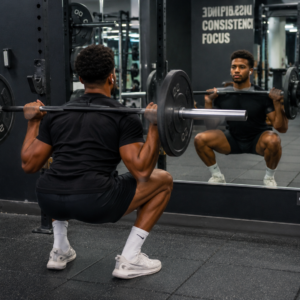
- Bodyweight Squats
- Push-Ups
- High Knees (Low-Impact Option Available)
- Mountain Climbers
- Plank Shoulder Taps
Movement Breakdown
1. Bodyweight Squats
Targets:
- quads
- glutes
- core
Coaching cue:
Sit back like you’re lowering into a chair.
Apartment tip: move slowly and control the descent.
2. Push-Ups
Targets:
- chest
- shoulders
- triceps
- core
Beginner option:
- perform push-ups against a wall or countertop.
3. High Knees
Raise knees toward hip height while pumping your arms.
Low-impact version:
- fast marching instead of jumping.
This keeps the workout neighbor-friendly.
4. Mountain Climbers
Start in a plank position.
Drive knees toward the chest alternately.
Focus on:
- core engagement
- steady breathing
5. Plank Shoulder Taps
Hold a plank and tap one shoulder with the opposite hand.
Benefits:
- builds core stability
- strengthens shoulders
Keep hips steady.
Quick Comparison: HIIT vs Traditional Cardio
| Feature | HIIT | Traditional Cardio |
|---|---|---|
| Workout Length | 15–30 minutes | 45–60 minutes |
| Intensity | High intervals | Moderate steady pace |
| Space Required | Very small | Often larger |
| Calorie Burn Efficiency | High | Moderate |
| Equipment Needed | Usually none | Sometimes machines |
For apartment living, HIIT often wins because it requires less time and space.
Mini Data Breakdown
Studies comparing HIIT to steady-state cardio show interesting results.
One NIH-reviewed analysis reported:
- HIIT increased VO₂ max by up to 15% in several weeks
- Participants spent less than half the training time compared with moderate cardio programs
This makes HIIT appealing for people balancing work, family, and limited space.
Real-World Scenario
Imagine this:
You finish work at 6:30 PM.
Dinner is cooking. Your apartment living room is barely larger than a yoga mat.
Instead of skipping exercise, you start a 20-minute HIIT session.
- 3 minutes warm-up
- 16 minutes of intervals
- 1 minute cool-down breathing
By the time dinner is ready, your workout is done.
That’s the power of short, structured training.
Practical Step-by-Step Guide
Here’s how to start today.
Step 1: Clear a Small Workout Space
You only need about 6–8 square feet.
Move:
- chairs
- coffee tables
- rugs if needed
Step 2: Set a Timer
Use:
- a HIIT timer app
- a smartwatch
- or a simple phone timer
Program 40 seconds work / 20 seconds rest.
Step 3: Focus on Effort
During each interval aim for 7–9 out of 10 intensity.
You should be breathing heavily but still able to maintain form.
Step 4: Track Progress
Over time you can increase challenge by:
- adding another round
- slowing rest periods
- improving movement speed
Progression keeps workouts effective.
Risks or Limitations
HIIT is effective, but it isn’t for everyone.
Potential limitations include:
- high intensity may be challenging for beginners
- poor form can increase injury risk
- insufficient recovery may lead to fatigue
People with certain health conditions should consult a healthcare professional before beginning intense exercise.
Pro Tip From Sportiemade
Many people treat HIIT like a daily workout.
That’s not the best approach.
Instead:
Perform HIIT 3–4 times per week and combine it with low-intensity activity such as walking or mobility training.
This approach supports:
- better recovery
- sustainable fitness
- long-term joint health
It also aligns with Sportiemade’s philosophy of discipline over hype.
For additional routines see:
[Related Home Workout Guide]
Common HIIT Myth
Myth: HIIT Only Works If You’re Jumping
Truth: Intensity matters more than jumping.
Low-impact HIIT can produce similar heart-rate responses when movements are performed quickly and with proper effort.
Examples include:
- fast squats
- marching high knees
- step-back lunges
This makes HIIT far more practical for apartment living.
Quick Summary
If you remember only a few things, remember this:
- A 20-minute HIIT workout alternates intense exercise with short recovery periods.
- It can improve cardiovascular fitness, calorie burn, and metabolic health.
- You only need a small floor space and bodyweight exercises.
- Low-impact variations help keep workouts apartment-friendly.
- Training 3–4 sessions per week supports consistent progress.
For broader wellness guidance, visit:
[Healthy Living Resource Page]
Frequently Asked Questions (FAQ)
Is 20 minutes of HIIT enough exercise?
Yes. Research shows short HIIT sessions can improve cardiovascular fitness and calorie burn when performed consistently at high intensity.
Can I do HIIT every day?
Most experts recommend 3–4 HIIT sessions per week with rest or lighter activity between sessions to allow recovery.
Is HIIT safe for beginners?
Beginners can start with low-impact variations and longer rest periods. Gradually increase intensity as fitness improves.
Does HIIT work without equipment?
Absolutely. Bodyweight exercises like squats, push-ups, and mountain climbers can create highly effective HIIT sessions.
How many calories does a 20-minute HIIT workout burn?
Calorie burn varies depending on body weight and intensity, but many people burn 150–300 calories per session, with additional energy use after the workout.
Final Takeaway
A small apartment doesn’t limit your fitness it just changes how you train.
Short, focused HIIT sessions provide:
- efficient workouts
- minimal equipment requirements
- flexible scheduling
Start with the 20-minute routine above, focus on proper form, and keep sessions consistent.
Over time, those compact workouts can build endurance, improve heart health, and support long-term wellness exactly the type of sustainable home fitness Sportiemade promotes.
Suggested Citations
- Weston KS et al. High-Intensity Interval Training in Patients With Lifestyle-Induced Cardiometabolic Disease. Journal of Obesity. (PubMed)
- Mayo Clinic Staff. High-Intensity Interval Training: Is it right for you? Mayo Clinic.
- NIH National Library of Medicine. Effects of High-Intensity Interval Training on Cardiorespiratory Fitness.
Medical Disclaimer
This article is for educational purposes only and does not replace professional medical advice. Consult your healthcare provider before starting any new health routine.

Nick Smoot is a certified fitness coach and the founder of Smoot Fitness, established in 2012. With over a decade of hands-on experience, Nick has personally coached more than 400 clients both in person and online helping them achieve lasting, life-changing physical transformations.
As a contributing expert at Sportiemade (sportiemade.com), Nick brings real-world expertise and a no-nonsense approach to fitness. His coaching philosophy goes beyond short-term results: he equips every client with the knowledge, habits, and mindset needed to get into the best shape of their life and stay there permanently.
Nick specialises in strength training, endurance performance, and the mental discipline that ties them together. His signature philosophy? Lift heavy, run far, and never stop learning.
Whether you are just beginning your fitness journey or looking to break through a plateau, Nick's evidence-based methods and proven track record make him one of the most trusted voices in the fitness space.