Full Body Burn: 15-Minute No-Equipment Circuit
The Fastest Way to Train Your Entire Body at Home
You don’t need a gym. You don’t need fancy equipment. And you definitely don’t need an hour.
If you have 15 focused minutes and a small patch of floor space, you can challenge every major muscle group, elevate your heart rate, and support long-term metabolic health.
Let’s break down exactly how.
What Is a 15-Minute No-Equipment Full Body Circuit?
A 15-minute no-equipment full body circuit is a high-efficiency workout that cycles through bodyweight exercises targeting the upper body, lower body, and core with minimal rest. It combines strength training and cardiovascular conditioning to improve muscle tone, endurance, and calorie burn in a short time.
Search Intent Breakdown
Primary intent: Informational + problem-solving
Readers want a quick, effective home workout that requires no equipment.
This guide is designed for:
- Beginners starting home fitness
- Busy professionals with limited time
- Intermediate exercisers needing conditioning days
- Adults over 40 focusing on longevity and joint health
We’ll also answer common “People Also Ask” questions like:
- Is 15 minutes enough for a full-body workout?
- Can you build muscle without equipment?
- How many calories does a 15-minute circuit burn?
- Is it safe to do daily?
- What’s the best structure for bodyweight circuits?
Why 15 Minutes Actually Works
The biggest myth in fitness? That workouts must be long to be effective.
Research published in The American Journal of Physiology shows that short bouts of high-intensity training can improve cardiovascular fitness and insulin sensitivity when performed consistently.
When structured correctly, 15 minutes can:
- Elevate heart rate into aerobic and anaerobic zones
- Stimulate major muscle groups
- Improve metabolic flexibility
- Support fat oxidation
- Enhance muscular endurance
The key isn’t duration.
It’s density.
Science-Backed Benefits of Full Body Circuits
1. Improved Cardiovascular Health
According to the Mayo Clinic, circuit-style training increases heart efficiency and circulation while lowering long-term cardiovascular risk.
2. Increased Muscle Activation
Bodyweight movements like push-ups and squats recruit multiple muscle groups simultaneously, improving neuromuscular coordination (NIH research on resistance training).
3. Metabolic Boost
Short high-intensity sessions may elevate post-exercise oxygen consumption (EPOC), meaning you continue burning calories after the workout ends (PubMed data on HIIT).
4. Better Insulin Sensitivity
Even brief resistance-based sessions improve glucose uptake and metabolic markers.
5. Longevity Support
Consistent moderate-to-high intensity movement is linked to lower all-cause mortality (WHO physical activity guidelines).
At Sportiemade, we emphasize sustainable fitness. This style of training supports long-term health without overtraining.
The 15-Minute Full Body Burn Circuit
Structure Overview
- 5 exercises
- 40 seconds work
- 20 seconds rest
- 3 rounds
- Total time: 15 minutes
Minimal rest. Controlled form. Maximum intent.
The Exercises
1. Bodyweight Squats
Targets: Quads, glutes, hamstrings
Keep chest upright. Drive through heels.
Beginner: Sit back to a chair.
Intermediate: Add jump squats.
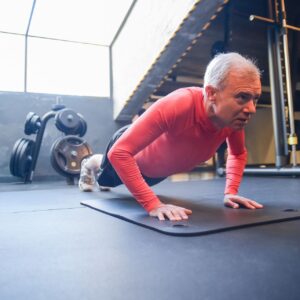
2. Push-Ups
Targets: Chest, shoulders, triceps, core
Beginner: Knees down.
Intermediate: Slow tempo (3 seconds down).
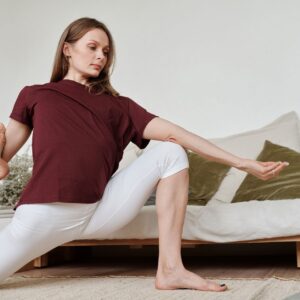
3. Reverse Lunges
Targets: Glutes, quads, balance stabilizers
Step back to reduce knee stress.
Keep front knee aligned with toes.
4. Plank Shoulder Taps
Targets: Core, shoulders, anti-rotation strength
Widen feet for stability if needed.
Avoid hip sway.
5. Mountain Climbers
Targets: Core, hip flexors, cardiovascular system
Drive knees forward with control.
Keep shoulders stacked over wrists.
Mini Data Breakdown: What Happens in 15 Minutes?
Here’s an estimate for a 160–180 lb adult:
| Metric | Estimated Range |
|---|---|
| Calories burned | 120–200 |
| Heart rate zone | 65–85% max HR |
| Muscles engaged | 80%+ of major groups |
| Recovery time | 12–24 hours |
Actual numbers vary by fitness level and intensity.
The real win? Consistency over months.
Is 15 Minutes Enough to Build Muscle?
Short answer: Yes if effort is high and progression is built in.
Muscle growth requires:
- Mechanical tension
- Metabolic stress
- Progressive overload
You can increase difficulty by:
- Slowing tempo
- Adding pauses
- Increasing rounds
- Reducing rest
- Advancing exercise variations
For beginners especially, bodyweight training provides ample stimulus.
Practical Comparison: 15-Minute Circuit vs Traditional Gym Session
| Factor | 15-Minute Circuit | 60-Minute Gym Session |
|---|---|---|
| Time commitment | Very low | High |
| Equipment needed | None | Machines/free weights |
| Calorie burn per minute | High | Moderate |
| Muscle isolation | Limited | Greater |
| Convenience | Extremely high | Moderate |
| Sustainability | High for busy adults | Lower if schedule tight |
For busy professionals or parents, adherence matters more than perfection.
Real-World Scenario
You wake up at 6:30 a.m.
Your first meeting is at 8:00.
The gym is 20 minutes away.
Do you skip the workout?
Or do you roll out of bed, clear space in your living room, and complete three focused rounds?
This is where discipline beats motivation.
Step-by-Step Guide to Maximize Results
Step 1: Warm Up (2–3 Minutes)
- Arm circles
- Hip circles
- March in place
- Light squats
Never skip this. Especially over 40.
Step 2: Set a Timer
Use interval timing (40/20).
Remove distractions.
Step 3: Focus on Form First
Quality reps outperform sloppy speed.
Step 4: Track Performance
Write down:
- Total reps
- Heart rate
- Perceived exertion
Progress is motivating.
Step 5: Cool Down
Deep breathing. Gentle hamstring and chest stretches.
This supports recovery and nervous system balance.
Pro Tip from Sportiemade
Instead of repeating the exact same circuit daily, rotate movement patterns:
Day 1: Squat dominant
Day 2: Hinge dominant
Day 3: Core stability focus
Variation reduces plateaus and overuse stress.
Most competitors don’t discuss movement rotation in short workouts. But for joint health and longevity, it makes a big difference.
Common Mistake: Going Too Hard Too Soon
Many beginners treat short workouts like punishment.
They sprint.
They sacrifice form.
They skip rest.
Result? Soreness, fatigue, dropout.
Intensity should feel challenging but controlled.
If you can’t maintain form, modify the movement.
Risks and Limitations
While generally safe, bodyweight circuits may pose challenges for:
- Individuals with knee pain (modify lunges/squats)
- Shoulder instability (elevate push-ups)
- High blood pressure (avoid breath-holding)
- Beginners with low conditioning
If you’re new to exercise or managing health conditions, start slower and consult a professional.
This article is for educational purposes only and does not replace professional medical advice. Consult your healthcare provider before starting any new health routine.
How Often Should You Do This Workout?
For general fitness:
- 3–4 times per week
For fat loss support:
- Combine with walking 8,000–10,000 steps daily
For muscle endurance:
- Progress difficulty weekly
Recovery matters.
Sleep, hydration, and protein intake support adaptation.
Explore more structured programming here:
[Related Home Workout Guide]
For broader lifestyle strategies:
[Healthy Living Resource Page]
Unique Insight: Why Short Workouts Improve Adherence
Studies on exercise behavior show that perceived time barrier is the #1 reason adults skip workouts.
Fifteen-minute circuits reduce psychological resistance.
When something feels manageable, you repeat it.
And repetition builds transformation.
Quick Summary
- A 15-minute no-equipment circuit trains the full body efficiently
- It improves cardiovascular health and muscular endurance
- It supports fat loss when paired with nutrition
- It’s ideal for busy professionals and home exercisers
- Progression and consistency drive results
Frequently Asked Questions
Is 15 minutes enough for a full-body workout?
Yes. When structured as a high-density circuit targeting major muscle groups, 15 minutes can improve strength, endurance, and cardiovascular fitness.
How many calories can I burn in 15 minutes?
Most adults burn between 120–200 calories depending on intensity, body weight, and conditioning level.
Can I do this workout every day?
It’s better to perform it 3–4 times weekly and allow recovery, especially if intensity is high.
Is bodyweight training effective for muscle growth?
Yes, particularly for beginners and intermediates. Progressive overload through tempo, volume, and variation is necessary.
Is this workout safe for people over 40?
Generally yes, with proper warm-up and modifications. Focus on joint-friendly variations and controlled tempo.
Final Takeaway
You don’t need more time.
You need more intention.
Fifteen focused minutes can improve heart health, build muscle endurance, and reinforce daily discipline. The goal isn’t exhaustion. It’s consistency.
Clear a space. Set a timer. Start your first round.
Your future self will thank you.
FAQ Schema-Ready Section
Q1: Is 15 minutes enough for a full body workout?
A 15-minute full body circuit can be effective if it includes compound bodyweight movements performed with minimal rest and sufficient intensity.
Q2: Can you build muscle without equipment?
Yes. Bodyweight exercises can stimulate muscle growth through progressive overload techniques such as tempo control, added volume, and advanced variations.
Q3: How many calories does a 15-minute circuit burn?
Most individuals burn between 120 and 200 calories depending on body weight and exercise intensity.
Q4: Is it safe to do a bodyweight circuit daily?
Daily training may increase fatigue risk. Most adults benefit from 3–4 sessions weekly with rest days for recovery.
Q5: What are the benefits of full body circuit training?
Benefits include improved cardiovascular fitness, muscular endurance, metabolic health, and exercise adherence.
Suggested Citations
- Gibala MJ et al. “Physiological adaptations to low-volume, high-intensity interval training.” Journal of Physiology. PubMed.
- Mayo Clinic Staff. “Exercise intensity: How to measure it.” Mayo Clinic.
- World Health Organization. “Guidelines on Physical Activity and Sedentary Behaviour.” WHO.
- National Institutes of Health (NIH). “Resistance training health benefits.”

Nick Smoot is a certified fitness coach and the founder of Smoot Fitness, established in 2012. With over a decade of hands-on experience, Nick has personally coached more than 400 clients both in person and online helping them achieve lasting, life-changing physical transformations.
As a contributing expert at Sportiemade (sportiemade.com), Nick brings real-world expertise and a no-nonsense approach to fitness. His coaching philosophy goes beyond short-term results: he equips every client with the knowledge, habits, and mindset needed to get into the best shape of their life and stay there permanently.
Nick specialises in strength training, endurance performance, and the mental discipline that ties them together. His signature philosophy? Lift heavy, run far, and never stop learning.
Whether you are just beginning your fitness journey or looking to break through a plateau, Nick's evidence-based methods and proven track record make him one of the most trusted voices in the fitness space.