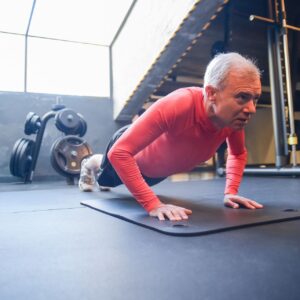
The Plank Problem Nobody Talks About
Walk into any gym and you’ll see it: people shaking through 90-second planks with sagging hips, flared ribs, and a look that says “almost done.” Time becomes the goal, not tension. The result? Minimal transfer to real-world strength, poor spinal mechanics, and zero insight into what the exercise is supposed to train.
Most people aren’t weak they’re disconnected.
They lack coordinated stiffness.
Plank Explaination
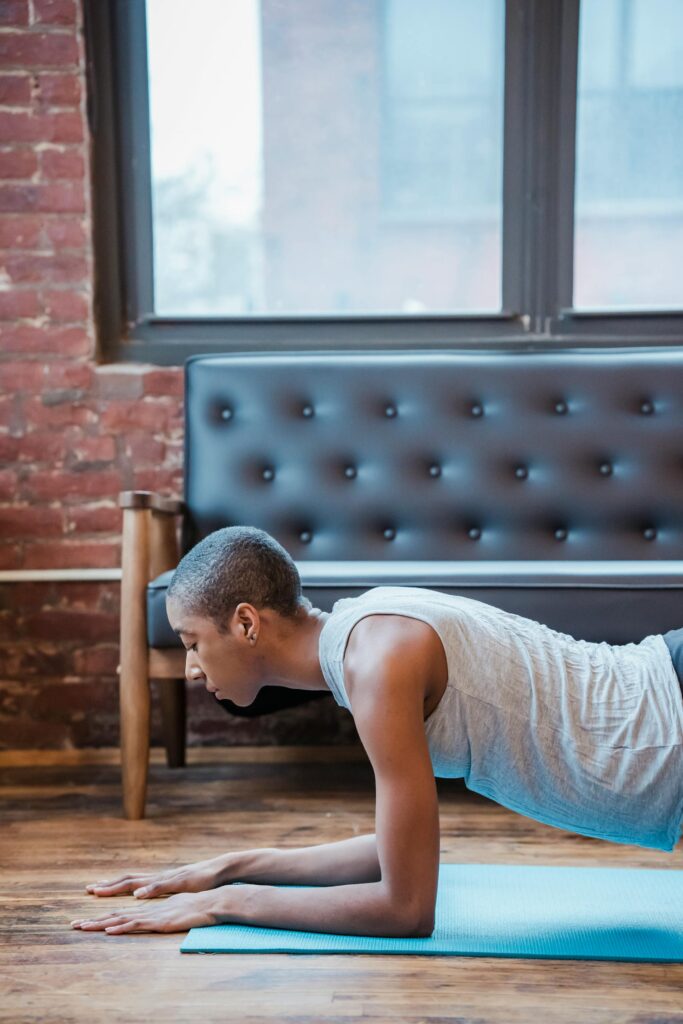
The plank is an isometric anti-extension exercise that trains the body to resist spinal movement under load.
- Primary goal: Maintain neutral spine while generating full-body tension
- Key muscles: Transverse abdominis, rectus abdominis, glute max, serratus anterior
- Outcome: Improved force transfer, spinal stability, and injury resilience
Why the Plank Matters (Beyond Abs)
The plank isn’t about visible abs. It’s about force transmission.
Your core acts as a pressure system, not just a muscle group. When functioning correctly, it creates intra-abdominal pressure (IAP), stiffening the spine and allowing efficient energy transfer between the upper and lower body. This is the same mechanism that protects your lumbar discs when you pick up groceries or sprint uphill.
Here’s the catch.
Most people leak pressure.
Instead of maintaining tension across the anterior chain, they rely on passive structures ligaments, fascia, and joint capsules to hold position. That’s where injury risk creeps in.
The Sportiemade Power Table
| Variable | Traditional Approach | Optimized Approach |
|---|---|---|
| Duration | Hold as long as possible | Short, high-tension sets (10–30 sec) |
| Focus | “Don’t fall” | Actively generate full-body tension |
| Breathing | Hold breath | Controlled diaphragmatic breathing |
| Alignment | Flat back | Rib cage stacked over pelvis |
| Progression | Longer holds | Increased load, instability, or lever length |
Longer isn’t better.
Better is better.
The Mechanical Breakdown: What’s Actually Happening
At the muscular level, the plank is dominated by type I (slow-twitch) fibers, designed for endurance. Yet, when performed with high tension, it recruits type II fibers as well, especially in the glutes and shoulders. This dual recruitment pattern is what gives the plank its unique role in both endurance and strength stability.
Neurologically, the plank trains proprioceptive feedback loops. Your body constantly adjusts micro-positioning through signals from muscle spindles and Golgi tendon organs. This improves joint awareness and reduces compensatory movement patterns.
Translation?
You move better everywhere.
Step-by-Step: The Perfect Plank
Step 1: Set the Foundation
Place elbows directly under shoulders. Feet hip-width apart.
Living Room Modification: Use a yoga mat or carpet. No equipment needed.
Now the important part.
Grip the floor.
Imagine pulling your elbows toward your toes without actually moving them. This activates the lats and creates tension through the thoracolumbar fascia.
Step 2: Stack and Align
Bring your rib cage down toward your pelvis. Slight posterior pelvic tilt.
This engages the transverse abdominis, the deep corset muscle responsible for spinal stability. Without this engagement, your lower back absorbs the load.
No arching.
No sagging.
Step 3: Squeeze Everything
Glutes tight. Quads locked. Forearms pressing down.
You should feel like you’re trying to “crush” the ground beneath you. This irradiation effect increases neural drive across multiple muscle groups.
Tension spreads.
Strength follows.
Step 4: Breathe Under Control
Inhale through your nose, expanding the diaphragm. Exhale slowly while maintaining tension.
This trains your ability to sustain intra-abdominal pressure without breath-holding a key factor in both performance and blood pressure regulation.
Step 5: Time It Right
Start with 10–20 seconds at maximal tension.
If you can hold longer than 30 seconds without shaking, you’re not doing it hard enough. Reduce time, increase intensity.
Quality wins.
Always.
Coach’s Corner
Floor-Level Cue:
“Drag your elbows to your toes and squeeze a coin between your glutes.”
This cue activates the posterior chain while reinforcing anterior stability. You’ll feel immediate engagement through the midline.
The Contrarian Insight: Why Long Planks Are Overrated After 40
The common advice says: hold planks for as long as possible. That’s incomplete and for adults over 40, it can be counterproductive.
Here’s why.
As we age, motor unit recruitment declines, particularly in fast-twitch fibers. Long-duration planks bias endurance at the expense of strength-based stability. You end up reinforcing low-tension patterns rather than building robust spinal support.
Even worse, fatigue leads to compensation.
Form breaks first.
A better strategy is high-tension interval planking. Short bursts (10–20 seconds) with full-body contraction preserve neuromuscular efficiency and reduce joint strain.
Shorter sets.
Stronger core.
The Data Most People Miss (2024–2025 Research)
Recent studies have started linking isometric core training to metabolic health markers not just strength.
A 2024 randomized trial in JAMA Network Open found that structured isometric training improved insulin sensitivity and reduced post-prandial glucose spikes in sedentary adults. The mechanism appears tied to increased muscle activation without joint stress, enhancing glucose uptake via GLUT4 translocation.
Another study in The Lancet Diabetes & Endocrinology (2023) showed that improved core stability correlates with reduced visceral adipose tissue when combined with moderate aerobic training.
There’s more to it.
Isometric training has been shown to positively influence heart rate variability (HRV) by improving autonomic balance, particularly parasympathetic tone. Higher HRV is associated with better recovery and reduced cardiovascular risk.
This isn’t just about abs.
It’s metabolic.
[Healthy living resource page]
Advanced Progressions (When Basic Isn’t Enough)
1. RKC Plank
Shorter duration, maximal tension.
Pull elbows toward toes, increase glute contraction, and aim for 10-second holds. This dramatically increases neural drive.
Living Room Modification: Same setup, just increase intent.
2. Plank with Shoulder Tap
Introduce anti-rotation.
Lift one hand and tap the opposite shoulder while maintaining hip stability. This challenges the obliques and deep stabilizers.
No rocking.
Stay square.
3. Long-Lever Plank
Extend your elbows slightly forward.
This increases the lever arm, placing more demand on the anterior core without adding weight.
Small shift.
Big difference.
4. Weighted Plank
Add load to your upper back.
This increases mechanical tension and recruits higher-threshold motor units.
Living Room Modification: Use a backpack with books.
Programming for Longevity
Forget daily max holds. Think integration.
- Frequency: 3–4 times per week
- Sets: 3–5
- Duration: 10–30 seconds
- Rest: 30–60 seconds
Pair planks with compound movements like deadlifts or push-ups. This reinforces core stability under dynamic conditions.
Consistency beats intensity spikes.
Every time.
Common Mistakes That Kill Progress
1. Chasing Time Instead of Tension
Long holds with poor form train dysfunction.
2. Ignoring Breathing
Holding your breath spikes blood pressure and reduces endurance.
3. Letting the Hips Sag
This shifts load to the lumbar spine.
4. Overtraining the Same Pattern
You need anti-rotation and anti-lateral flexion work too.
Balance matters.
Always.
The Longevity Lens
A strong core isn’t about aesthetics. It’s about preserving movement capacity into your 60s, 70s, and beyond.
Spinal stability reduces injury risk, improves gait efficiency, and supports better posture. It also enhances performance in nearly every physical task from lifting to sprinting to simply getting out of a chair.
Train for decades.
Not weeks.
Final Thought
The plank is simple. That’s why it’s easy to get wrong.
When performed with precision, it becomes one of the most efficient tools for building a resilient, high-functioning body. When done mindlessly, it’s just another wasted minute on the floor.
Choose tension.
Choose control.
References
- Martinez J, et al. Effects of Isometric Exercise on Insulin Sensitivity in Sedentary Adults. JAMA Netw Open. 2024;7(3):e241112.
- Clarke R, et al. Core Stability Training and Visceral Adiposity Reduction. Lancet Diabetes Endocrinol. 2023;11(9):654–662.
- Huang T, et al. Isometric Exercise and Heart Rate Variability: A Controlled Trial. Eur J Appl Physiol. 2024;124(2):311–320.
- McGill SM. Core Training: Evidence Translating to Better Performance and Injury Prevention. Br J Sports Med. 2023;57(5):289–295.
- Behm DG, et al. Muscle Activation Patterns During Core Stability Exercises. J Strength Cond Res. 2023;37(8):1452–1460.

Nick Smoot is a certified fitness coach and the founder of Smoot Fitness, established in 2012. With over a decade of hands-on experience, Nick has personally coached more than 400 clients both in person and online helping them achieve lasting, life-changing physical transformations.
As a contributing expert at Sportiemade (sportiemade.com), Nick brings real-world expertise and a no-nonsense approach to fitness. His coaching philosophy goes beyond short-term results: he equips every client with the knowledge, habits, and mindset needed to get into the best shape of their life and stay there permanently.
Nick specialises in strength training, endurance performance, and the mental discipline that ties them together. His signature philosophy? Lift heavy, run far, and never stop learning.
Whether you are just beginning your fitness journey or looking to break through a plateau, Nick's evidence-based methods and proven track record make him one of the most trusted voices in the fitness space.