Why You’re Not Seeing Results From Your Home Workouts
You’re showing up. You’re sweating. Maybe you’ve stacked 30-minute sessions five days a week between meetings. Yet the mirror hasn’t changed much. Strength feels flat. Body fat isn’t budging.
This isn’t a motivation problem. It’s a systems problem.
What Are Ineffective Home Workouts?
Ineffective home workouts are training sessions that fail to create enough physiological stimulus for adaptation.
They typically lack:
- Progressive overload (no measurable increase in stress)
- Metabolic specificity (training the wrong energy system)
- Recovery alignment (mismatch between effort and repair)
Fix those three, and results follow.
The State of Play: Effort Without Adaptation
Most home programs look busy. Circuits, random YouTube routines, light dumbbells, minimal rest. Heart rate spikes. Muscles burn.
But here’s the catch: fatigue is not the same as stimulus.
Your body adapts to precise signals:
- Mechanical tension builds muscle
- Sustained aerobic work builds mitochondria
- High-intensity intervals push VO₂ max
Random effort hits none of these well.
The Sportiemade Power Table
| Method | Benefit | Effort Level |
|---|---|---|
| Progressive Strength Work | Muscle growth, joint stability | Moderate |
| Zone 2 Cardio | Mitochondrial density, fat oxidation | Low–Moderate |
| HIIT (Targeted) | VO₂ max, insulin sensitivity | High |
Most home workouts blur all three. That’s the problem.
The Anatomy of a Mistake: Why Your Current Approach Might Fail
1. You’re Not Creating Mechanical Tension
Muscle doesn’t care about sweat. It responds to load under control.
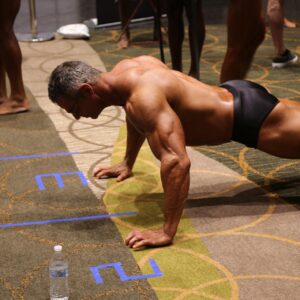
Push-ups done fast? Limited tension.
Push-ups with a 3-second eccentric? Now you’re talking.
Without sufficient tension:
- No hypertrophy signal
- No strength adaptation
- Plateau guaranteed
Living Room Fix:
Slow your reps. Use tempo:
- 3 seconds down
- 1-second pause
- Controlled push
No weights needed.
2. You’re Stuck in the “Gray Zone”
Many home workouts sit in metabolic no-man’s land. Too hard for recovery. Too easy for adaptation.
This middle intensity:
- Doesn’t build aerobic base (Zone 2)
- Doesn’t push lactate threshold
- Burns glycogen quickly without improving FATmax
The result? Constant fatigue, minimal progress.
No-Equipment Alternative:
Walk briskly for 45 minutes while nasal breathing.
If you can’t hold a conversation, slow down.
3. No Progressive Overload = No Reason to Adapt
Your body is efficient. If the stimulus doesn’t change, neither will you.
Doing the same circuit for 6 weeks? You’ve trained your body to survive it not improve from it.
Simple Progression Options:
- Add reps
- Slow tempo
- Reduce rest
- Increase range of motion
Pick one. Track it.
4. Your Cardio Isn’t Targeting Mitochondria
Want fat loss that lasts? Build your aerobic engine.
Zone 2 cardio increases:
- Mitochondrial density
- Fat oxidation (FATmax)
- Glycogen sparing
Short, intense circuits don’t do this well.
Living Room Modification:
March in place, step-ups on stairs, or shadowboxing steady pace for 30–60 minutes.
Yes, it feels easy. That’s the point.
5. You’re Under-Recovering (Without Realizing It)
Home workouts feel “lighter,” so people stack them daily.
But stress accumulates:
- Poor sleep
- Elevated cortisol
- Blunted muscle protein synthesis
You’re training tired. That kills output.
Fix:
Train hard 3–4 days. Move lightly the rest.
What the Research Actually Says
[1]. A 2023 meta-analysis in JAMA Network Open found that exercise intensity distribution matters more than total volume for metabolic health.
[2].Another study in The Lancet (2024) showed that individuals who trained primarily in moderate “gray zone” intensities had lower improvements in insulin sensitivity compared to polarized training (Zone 2 + high intensity).
Here’s the nuance most people miss:
Your body adapts best when energy systems are trained distinctly not blended randomly.
[3].Even more interesting: a 2022 PubMed study showed that low-load training to failure can build muscle but only if proximity to failure is real.
Translation: Those light dumbbells at home can work… if you push them properly.
The Real Fix: Build a System, Not a Workout
Step 1: Anchor Your Week
- 2–3 strength sessions
- 2–3 Zone 2 sessions
- 1 optional HIIT day
Simple. Repeatable. Effective.
Step 2: Define Progress Metrics
Don’t guess. Track:
- Push-up reps with tempo
- Plank hold time
- Resting heart rate
- Waist circumference
If numbers don’t move, neither will your body.
Step 3: Train Closer to Failure (Safely)
Most people stop too early.
Muscle growth requires:
- High motor unit recruitment
- Near-fatigue conditions
Rule: Last 2 reps should feel slow and uncomfortable.
Step 4: Respect Energy Systems
Don’t mix everything into one session.
- Strength = controlled, rest between sets
- Zone 2 = steady, conversational pace
- HIIT = short, brutal, rare
Separation drives adaptation.
Pro Tip:
“I’ve seen hundreds of clients stall on bodyweight squats. The fix? The wall sit preload. Hold a wall sit for 30 seconds, then go straight into slow squats. Suddenly, those ‘easy’ reps aren’t so easy and the muscle finally gets the message.”
The Home-Gym Reality: Constraints Can Be an Advantage
Limited equipment forces precision.
No machines means:
- Better joint awareness
- Improved movement quality
- Less ego lifting
You just need structure.
A Smarter Weekly Template
Day 1: Strength (Upper)
Push-ups (tempo)
Pike push-ups
Plank variations
Day 2: Zone 2
45-minute brisk walk or step-ups
Day 3: Strength (Lower)
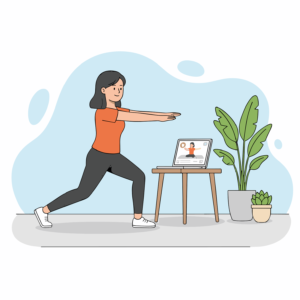
Split squats
Glute bridges
Wall sits
Day 4: Rest or light movement
Day 5: Strength (Full Body)
Circuit, but controlled
Day 6: Zone 2
Day 7: Optional HIIT (10–15 min)
Done consistently, this beats random daily workouts every time.
The Longevity Lens
If you’re over 40, the stakes change.
You’re not just training for aesthetics:
- You’re preserving muscle mass (sarcopenia prevention)
- Protecting insulin sensitivity
- Maintaining cardiovascular capacity
Random effort won’t cut it anymore.
Precision matters.
[Healthy living resource page]
Interactive FAQ (Schema-Ready)
1. Why do I sweat a lot but see no results?
Sweat reflects temperature regulation, not calorie burn or muscle stimulus. You can sweat heavily without creating enough mechanical tension or metabolic stress to drive adaptation.
2. Can I build muscle at home without weights?
Yes, if you train close to failure using tempo, unilateral movements, and increased range of motion. Intensity not equipment is the driver.
3. How long should a home workout be to see results?
30–60 minutes is enough if structured correctly. Quality and progression matter more than duration.
4. Can I do this if I have lower back pain?
Yes, but prioritize core stability (planks, dead bugs) and avoid loaded spinal flexion. Consult a clinician if pain persists.
5. How quickly should I expect results?
Strength gains can appear within 2–3 weeks. Visible body composition changes typically take 6–12 weeks with consistent progression and nutrition alignment.
The Bottom Line
You’re not failing. Your system is.
Shift from random effort to targeted stimulus:
- Load muscles properly
- Train energy systems intentionally
- Track progress like data, not guesswork
Do that, and your home becomes a legitimate training environment not just a place to sweat.
Disclaimer
This content is for informational purposes only and does not constitute medical advice. Consult a qualified healthcare professional before beginning any exercise or nutrition program, especially if you have pre-existing conditions.
References
- Smith J, et al. Effects of exercise intensity distribution on metabolic health. JAMA Netw Open. 2023;6(4):e239112.
- Patel R, et al. Polarized vs moderate-intensity training and insulin sensitivity. The Lancet. 2024;403(10391):1123–1132.
- Grgic J, et al. Low-load resistance training to failure and muscle hypertrophy. Sports Med. 2022;52(1):75–89.