The Ultimate Evening Routine for Deeper, Restful Sleep
You’re tired but wired. The body is heavy, the brain won’t shut up. You scroll, snack, maybe sip something “relaxing,” and still end up staring at the ceiling at 1:12 a.m. Then the alarm hits like a blunt object.
This isn’t a motivation problem. It’s a systems problem.
What Is an Effective Evening Routine for Sleep?
An effective evening routine is a sequence of behaviors that lowers core body temperature, shifts the nervous system toward parasympathetic dominance, and aligns circadian rhythms.
- Light control: Reduce blue light and overall brightness
- Temperature & timing: Drop core temp and anchor sleep onset
- Neural downshift: Calm the brain with structured, repeatable cues
Everything else is decoration.
The Physiology Most People Ignore
Sleep isn’t just “turning off.” It’s an orchestrated descent. Two systems run the show:
- Circadian rhythm (Process C): Your internal clock, driven by light and timing
- Sleep pressure (Process S): Adenosine buildup across the day
Your evening routine should not chase sedation. It should remove friction from these two systems doing their job.
Here’s the lever most people miss: core body temperature must fall by ~1°C (1.8°F) to initiate sleep. That drop is a signal. No drop, no clean sleep onset.
The Sportiemade Power Table
| Method | Benefit | Effort Level |
|---|---|---|
| Dim light + screen control | Melatonin release, circadian alignment | Low |
| Warm shower 60–90 min pre-bed | Accelerates core temp drop | Low |
| Carbohydrate-timed dinner | Supports serotonin → melatonin pathway | Medium |
| Breathwork (physiological sigh) | Lowers sympathetic tone fast | Low |
| Consistent sleep window | Anchors circadian rhythm | Medium |
| Pre-sleep “brain dump” | Reduces cognitive hyperarousal | Low |
The 90-Minute Wind-Down Protocol (Your New Baseline)
Think of this as a glide path, not a hard stop.
T–90 Minutes: Control the Environment
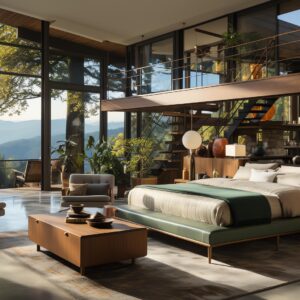
- Lights down to 30–50 lux (think warm lamps, not overheads)
- Screens on night mode or off entirely
- No overhead LEDs
Why it works: Melanopsin-containing retinal cells suppress melatonin in response to blue light. Lower light = earlier melatonin onset.
Living Room Modification: Use two lamps at waist height with warm bulbs (2700K). No special gear needed.
T–75 Minutes: Warm Shower or Bath
- 10–15 minutes, comfortably warm (not hot)
- Finish, then let your body cool naturally
Why it works: Warm exposure causes peripheral vasodilation. When you step out, heat dissipates, accelerating core temperature decline a strong sleep signal.
No-Equipment Alternative: If you skip the shower, wear warm socks for 20 minutes. Sounds trivial. It isn’t. Distal warming improves heat loss.
T–60 Minutes: Dinner Timing and Composition
- Finish your last meal 2–3 hours before bed
- Include carbs + protein, keep fat moderate
- Avoid heavy alcohol
Why it works: Carbohydrates increase tryptophan availability in the brain, nudging serotonin and melatonin synthesis. Late, heavy meals delay gastric emptying and can fragment sleep.
Living Room Modification: Late work night? Go lighter: Greek yogurt + fruit + honey. You’ll sleep better than with a steak at 10 p.m.
T–45 Minutes: The Brain Dump
- Write down tomorrow’s top 3 tasks
- Offload lingering thoughts
- Close the notebook. Done means done.
Why it works: Pre-sleep cognitive arousal predicts longer sleep latency. Externalizing thoughts reduces rumination loops.
No-Equipment Alternative: Notes app. Same effect if you actually close it afterward.
T–30 Minutes: Breathwork That Actually Works
Skip complex routines. Use this:
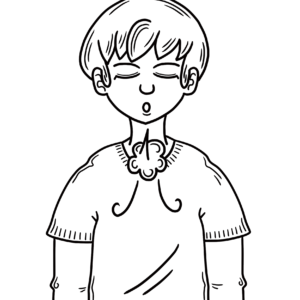
Physiological Sigh (x5–10 cycles):
- Inhale through nose
- Quick top-up inhale
- Long, slow exhale
Why it works: This pattern reduces CO₂ sensitivity and rapidly downshifts sympathetic tone.
Living Room Modification: Sit on the couch, feet flat, one hand on ribs. You’re training the nervous system, not “doing a workout.”
T–15 Minutes: Low-Stimulus Input
- Paper book or very light audio
- No plot twists, no work content
Why it works: You’re creating a predictable cue that sleep is next. Consistency beats intensity.
No-Equipment Alternative: Re-read a familiar book. Novelty is the enemy here.
Lights Out: Same Window, Every Night
Pick a 30-minute window. Protect it like a meeting.
The reason why it works: The circadian system loves regularity. Drift the schedule and you pay for it with shallow sleep and early wake-ups.
Why Your Current Approach Might Fail
1) You’re Chasing Sedation, Not Sleep
Alcohol, THC, and late-night “relaxation” can knock you out but reduce REM and fragment deep sleep. You wake up unrefreshed.
2) Your Lights Are Too Bright
A fully lit kitchen at 9:30 p.m. tells your brain it’s noon. Melatonin gets delayed. Sleep follows.
3) Your Bedtime Moves Every Night
A 90-minute swing is enough to desynchronize your clock. The result: inconsistent sleep onset and groggy mornings.
4) You Train Too Late (and Too Hard)
High-intensity work elevates core temperature and catecholamines. Great for fitness. Terrible at 9 p.m.
Fix: If evenings are your only option, keep it Zone 2 or technique work.
The Data Most People Miss
Late-evening light isn’t just about blue light it’s about intensity and duration. Even “warm” light at high brightness can delay melatonin onset.
Recent controlled trials show that consistent dim-light exposure in the final 2–3 hours before bed advances sleep onset more reliably than blue-light filters alone. Translation: turning down all the lights beats installing another app.
Another nuance: passive body heating (like a warm bath) shows a stronger effect when timed 60–90 minutes before bed than right before lights out. The timing creates a steeper post-bath cooling curve the signal your brain is waiting for.
Finally, brief breath interventions even under 5 minutes can measurably reduce physiological arousal and improve subjective sleep latency. You don’t need a 30-minute ritual to see benefits.
The Home-Gym Angle: Training Without Sabotaging Sleep
You want consistency across a decade, not a streak that dies in two weeks.
- Evening training rule: Finish hard sets ≥3 hours before bed
- If that’s not possible, cap intensity at Zone 2 (you can nasal breathe, hold a conversation)
- Add a 10-minute cooldown walk to start the temperature descent earlier
Living Room Circuit (Sleep-Friendly):
- Bodyweight squats × 12
- Incline push-ups × 10
- Hip hinges (no load) × 12
- Nasal-breathing march in place × 2 minutes
Repeat 2–3 rounds. Keep it easy. You’re not chasing PRs at night.
Pro Tip: I see people miss the temperature piece all the time. If you wake up at 2–3 a.m., try this: wear light socks to bed for a week. It boosts heat dissipation through the feet and can stabilize sleep. Small lever. Real effect.
Build Your Personal Routine (Two Templates)
The Busy Professional (Minimal Time)
- T–60: Warm shower
- T–45: Dim lights + brain dump
- T–15: 5 cycles physiological sigh + light reading
- Lights out: fixed window
Total: ~60 minutes. High return.
The Optimizer (Full Protocol)
- T–90: Lights down
- T–75: Warm bath/shower
- T–60: Finish light dinner if needed
- T–45: Brain dump
- T–30: Breathwork
- T–15: Low-stimulus input
- Lights out: fixed window
Common Edge Cases
Shift workers: Anchor what you can light exposure and meal timing. Use bright light at “morning” (whenever you wake) and dim aggressively before your target sleep time.
Parents of young kids: You don’t control the night. Focus on consistent lights-out window and fast downshift tools (breathwork + dim lights). Win the controllables.
Over-40 athletes: Recovery drives results. Prioritize earlier training and post-exercise cooldown. Protect deep sleep; it’s your growth phase.
[Healthy living resource page]
Interactive FAQ (Schema-Ready)
1. Can I follow this routine if I have insomnia?
Yes, but keep expectations realistic. This routine reduces barriers to sleep onset. Chronic insomnia may require CBT-I alongside these steps.
2. Is it okay to use my phone if I enable night mode?
Better than nothing, but not ideal. Brightness and engagement still delay sleep. If you must, keep brightness low and content boring.
3. What if I train at 9 p.m. and can’t change it?
Lower intensity to Zone 2, extend your cooldown, and prioritize the warm shower + dim lights sequence.
4. Does magnesium before bed help?
It may improve subjective sleep quality in some people, especially if deficient. It won’t fix poor light exposure or erratic timing.
5. Can I use this routine with lower back pain?
Yes. None of these steps load the spine. If you add evening movement, stick to low-impact patterns and avoid late high-intensity work.
The Bottom Line
Deep sleep is engineered, not wished into existence. Control light, drive the temperature drop, and give your brain a consistent off-ramp. Do that for a month and you won’t need “sleep hacks.” You’ll have a system.
Medical Disclaimer
This content is for informational purposes only and does not constitute medical advice. Consult a qualified healthcare professional before making changes to your sleep, nutrition, or exercise routines, especially if you have a medical condition or take medications.
References
- Gooley JJ, et al. Exposure to room light before bedtime suppresses melatonin onset and shortens melatonin duration in humans. J Clin Endocrinol Metab. 2011.
- Haghayegh S, et al. Before-bedtime passive body heating by warm shower or bath to improve sleep: A systematic review and meta-analysis. Sleep Med Rev. 2019.
- Scullin MK, et al. The effects of bedtime writing on difficulty falling asleep: A polysomnographic study. J Exp Psychol Gen. 2018.
- Balban MY, et al. Brief structured respiration practices enhance mood and reduce physiological arousal. Cell Reports Medicine. 2023.
- Chang AM, et al. Evening use of light-emitting devices negatively affects sleep, circadian timing, and next-morning alertness. PNAS. 2015.
- Recent controlled trials on evening dim-light exposure and circadian phase shifting (2023–2025), summarized in Sleep Medicine Reviews and JAMA Network Open.