Core Exercises You Can Do While Watching TV
You don’t need an hour-long gym session to strengthen your core. You need consistency and maybe your favorite show.
What Are Core Exercises You Can Do While Watching TV? (Featured Snippet Definition)
Core exercises you can do while watching TV are low- to moderate-intensity movements that strengthen the abdominal muscles, obliques, lower back, and hips without requiring gym equipment. These exercises such as planks, glute bridges, dead bugs, and seated leg lifts can be performed safely in a living room setting while maintaining proper form and posture.
Why This Matters (Especially If You Sit All Day)
The average adult spends over 3–4 hours per day watching TV, according to data from the Bureau of Labor Statistics. Add desk work, commuting, and phone time and we’re looking at prolonged sitting that affects:
- Posture
- Lower back health
- Hip mobility
- Metabolic function
Research published in the American Journal of Clinical Nutrition shows that extended sedentary behavior is linked to increased cardiometabolic risk even in people who exercise regularly.
That’s where “TV core workouts” come in.
They don’t replace structured training.
They reduce inactivity gaps.
And for busy professionals or parents? They’re realistic.
Science-Backed Benefits of Core Training at Home
Let’s separate hype from evidence.
1. Improved Spinal Stability
The core includes more than abs. It involves:
- Transverse abdominis
- Multifidus
- Pelvic floor muscles
- Diaphragm
According to the National Institutes of Health (NIH), strengthening deep core musculature improves spinal stability and reduces risk of lower back pain.
2. Better Posture and Reduced Back Pain
Mayo Clinic notes that weak core muscles increase strain on the lumbar spine. A stronger core distributes load more efficiently during daily movement.
For anyone over 40? This becomes even more important for longevity and injury prevention.
3. Enhanced Functional Strength
A 2020 PubMed review showed core training improves balance and functional movement patterns especially in older adults.
That means:
- Safer lifting
- Better walking mechanics
- Improved athletic longevity
4. Metabolic Boost (Yes, Even Light Activity Helps)
While planks won’t burn hundreds of calories, breaking up sedentary time improves insulin sensitivity and circulation, according to WHO guidelines on physical activity.
Even small muscle contractions matter.
Is It Safe to Exercise While Watching TV?
Generally, yes if:
- You maintain proper form
- You choose exercises appropriate for your level
- You avoid distracted, sloppy movement
The biggest risk? Losing focus and compensating through the lower back.
We’ll address how to prevent that.
10 Core Exercises You Can Do While Watching TV
These are selected for:
- Minimal equipment
- Small space
- Joint-friendly movement
- Scalability for beginners and intermediate levels
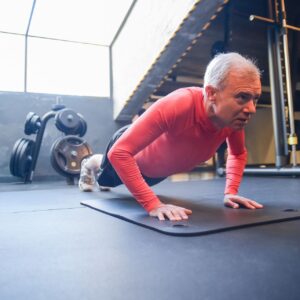
1. Forearm Plank
How to do it:
- Elbows under shoulders
- Engage glutes and abs
- Keep spine neutral
- Hold 20–60 seconds
Coaching cue: Imagine pulling your elbows toward your toes without moving them.
2. Side Plank
Targets obliques and hip stabilizers.
- Hold 15–45 seconds per side
- Modify by bending knees
Great for reducing lateral instability.
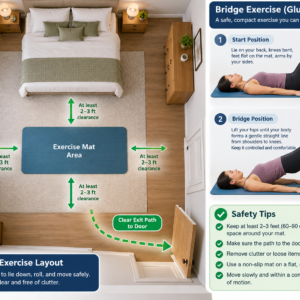
3. Glute Bridges
A favorite for desk workers.
- Lie on your back
- Feet flat
- Drive hips upward
- Squeeze glutes at top
Do 12–15 reps during commercial breaks.
4. Dead Bugs
Highly underrated.
- Opposite arm and leg extend
- Keep lower back pressed into floor
This activates deep stabilizers without straining the spine.
5. Seated Knee Lifts
Perfect for limited space.
- Sit tall
- Lift one knee at a time
- Avoid leaning back
Beginner-friendly.
6. Russian Twists (Controlled)
- Lightly rotate torso
- Keep chest upright
- Slow tempo
Skip this if you have existing lower back pain.
7. Bird Dogs
Great for coordination.
- Extend opposite arm and leg
- Pause
- Maintain balance
Excellent for adults over 40.
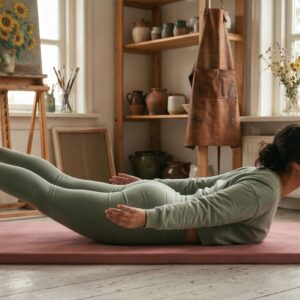
8. Hollow Body Hold (Intermediate)
More advanced.
- Lower back pressed down
- Legs extended
- Arms overhead
Start with 10–20 seconds.
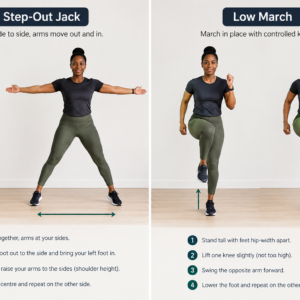
9. Standing Core Marches
If you don’t want to get on the floor.
- Engage abs
- Lift knees high
- Slow, controlled
Ideal during dramatic scenes.
10. Wall Sit with Core Bracing
Not traditional core but powerful.
- Back against wall
- Knees at 90°
- Brace abs
Full-body tension matters.
Quick Comparison Table
| Exercise | Difficulty | Spine-Friendly | Burns Calories | Beginner Suitable |
|---|---|---|---|---|
| Forearm Plank | Moderate | Yes (if aligned) | Moderate | Yes |
| Dead Bug | Easy–Moderate | Excellent | Low | Yes |
| Russian Twist | Moderate | Limited | Moderate | With caution |
| Hollow Hold | Advanced | Moderate | Moderate | No |
| Glute Bridge | Easy | Excellent | Low | Yes |
How Long Should You Do Core Exercises While Watching TV?
For most people:
- 10–20 minutes total
- 2–4 exercises per episode
- 2–4 times per week
You can rotate:
- Episode 1 → Plank focus
- Episode 2 → Stability focus
- Episode 3 → Glute activation
Consistency beats intensity.
A Real-World Scenario
Let’s say you’re a 42-year-old professional.
You:
- Sit 8 hours daily
- Watch 1–2 episodes nightly
- Struggle with mild lower back tightness
Instead of scrolling on your phone during commercials, you perform:
- 3 rounds of glute bridges
- 2 rounds of dead bugs
- 1 plank hold
That’s 12–15 minutes of targeted movement.
Over 12 weeks? That’s over 10 hours of additional core training without blocking off gym time.
That’s sustainable fitness.
Unique Insight: The “Attention Anchor” Effect
Here’s something competitors rarely mention.
When you pair core training with entertainment, adherence improves.
Behavioral psychology calls this “temptation bundling” combining a task you should do with one you enjoy.
This increases long-term consistency.
And consistency drives adaptation not occasional hard workouts.
Common Mistake: Treating It Like Cardio
This is not HIIT.
If your heart rate is spiking and your form breaks down, you’re missing the point.
Core work while watching TV should focus on:
- Controlled tension
- Quality reps
- Breathing mechanics
Slow is better.
Pro Tip from Sportiemade
Instead of doing random exercises each night, create a 3-week rotation:
Week 1: Stability
- Dead bugs
- Bird dogs
- Planks
Week 2: Glute & Posterior Chain
- Glute bridges
- Wall sits
- Side planks
Week 3: Integrated Strength
- Standing marches
- Hollow holds
- Controlled twists
Then repeat.
This progressive approach supports longevity and balanced development.
For more structured programs, see our
[Related Home Workout Guide]
And if your goal is sustainable health beyond workouts:
[Healthy Living Resource Page]
Risks and Limitations
Core exercises during TV time may not be appropriate if:
- You have acute spinal injury
- You experience sharp radiating pain
- You’ve had recent abdominal surgery
Distraction increases risk of poor alignment.
If you feel strain in the lower back instead of the abdomen, stop and reassess.
Frequently Asked Questions (FAQ)
1. Can you actually build abs while watching TV?
Yes, but visible abs depend on body fat levels. Core exercises strengthen muscles, but nutrition and overall activity determine definition.
2. Is 10 minutes of core work enough?
Research suggests even short, consistent sessions improve endurance and stability. Ten focused minutes is better than zero.
3. Are planks better than sit-ups?
For most adults, planks are safer and more spine-friendly than traditional sit-ups, according to guidance from Mayo Clinic.
4. How often should I train my core?
2–4 times per week works well for beginners. Advanced individuals may integrate core work daily in smaller volumes.
5. Is it safe to do core workouts every day?
Low-intensity stabilization work can be performed daily, but higher-intensity movements should allow recovery time.
Quick Summary
- Core exercises while watching TV reduce sedentary time.
- They improve posture, spinal support, and balance.
- 10–20 minutes per session is effective.
- Focus on form, not speed.
- Consistency over months matters more than intensity.
Final Takeaway
Your core doesn’t need more motivation. It needs repetition.
If you already sit down to watch a show most nights, that’s your window. Start with two exercises tonight. Keep the reps controlled. Stay consistent for 30 days.
The goal isn’t six-pack abs by next month.
It’s a stronger, more resilient body five years from now.
And that’s how Sportiemade approaches fitness discipline over hype, sustainable movement over extremes.
Medical Disclaimer:
This article is for educational purposes only and does not replace professional medical advice. Consult your healthcare provider before starting any new health routine.
Suggested Citations
- National Institutes of Health (NIH) – Core stability and low back pain research
- Mayo Clinic – Core strength and back health guidelines
- World Health Organization (WHO) – Physical activity and sedentary behavior recommendations
- American Journal of Clinical Nutrition – Sedentary time and cardiometabolic risk

Nick Smoot is a certified fitness coach and the founder of Smoot Fitness, established in 2012. With over a decade of hands-on experience, Nick has personally coached more than 400 clients both in person and online helping them achieve lasting, life-changing physical transformations.
As a contributing expert at Sportiemade (sportiemade.com), Nick brings real-world expertise and a no-nonsense approach to fitness. His coaching philosophy goes beyond short-term results: he equips every client with the knowledge, habits, and mindset needed to get into the best shape of their life and stay there permanently.
Nick specialises in strength training, endurance performance, and the mental discipline that ties them together. His signature philosophy? Lift heavy, run far, and never stop learning.
Whether you are just beginning your fitness journey or looking to break through a plateau, Nick's evidence-based methods and proven track record make him one of the most trusted voices in the fitness space.