What is a 20-minute apartment-friendly cardio workout?
A 20-minute apartment-friendly cardio workout is a high-intensity, low-impact routine that maximizes caloric burn through continuous, rhythmic movement without jumping or heavy equipment. By focusing on multi-planar motions like lateral lunges and shadowboxing you can reach your anaerobic threshold and improve heart health in a small space while remaining completely silent for neighbors.
The Science of Quiet Intensity
Most people equate “cardio” with the thud-thud-thud of a treadmill or the explosive impact of burpees. However, your heart doesn’t know if you’re jumping over a hurdle or holding a deep, pulsating squat; it only knows the demand for oxygen.
When we strip away the impact, we actually force the muscles to work harder. Without the “rebound” effect of a jump, your muscles must control every inch of the movement. This leads to increased time under tension (TUT), which can help with muscle toning even as you focus on your heart rate.
According to research published in the Journal of Applied Physiology, short bursts of high-intensity exercise can improve insulin sensitivity and VO2 max just as effectively as longer, moderate-intensity sessions. For the apartment dweller, this means a 20-minute session isn’t just a “placeholder” workout it’s a powerful tool for longevity.
Can you really get a good cardio workout without jumping?
This is one of the most common questions we receive at Sportiemade. The answer lies in “non-impact circulatory conditioning.” By utilizing large muscle groups specifically the glutes, quads, and lats simultaneously, you create a massive demand for blood flow.
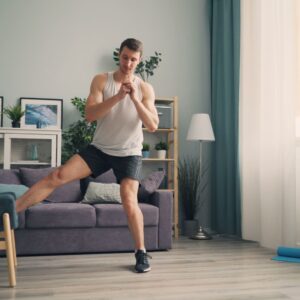
Think of a “Skater Lunge” performed slowly and deeply versus a quick hop. The slow, controlled version requires immense stabilization from your core and ankles. You’re trading “vertical displacement” (jumping) for “horizontal tension.” It’s quieter, safer for your joints, and incredibly taxing on your metabolic system.
Disclaimer: While this workout is designed to be low-impact, please consult your doctor before starting any new exercise regimen, especially if you have pre-existing joint issues or cardiovascular conditions.
The 20-Minute “Silent Sweat” Circuit
This routine is broken into four blocks. Perform each move for 45 seconds, followed by 15 seconds of active recovery (marching in place). Repeat the entire circuit twice.
Block 1: The Engine Starter (Warm-up)
- Windmill Reaches: Stand with feet wider than hip-width. Reach your right hand to your left toe while keeping your core tight, then switch. This wakes up the posterior chain.
- Modified Seal Jacks: Instead of jumping, step your right foot out to the side while opening your arms wide, then return to center and switch.
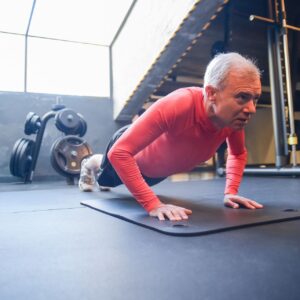
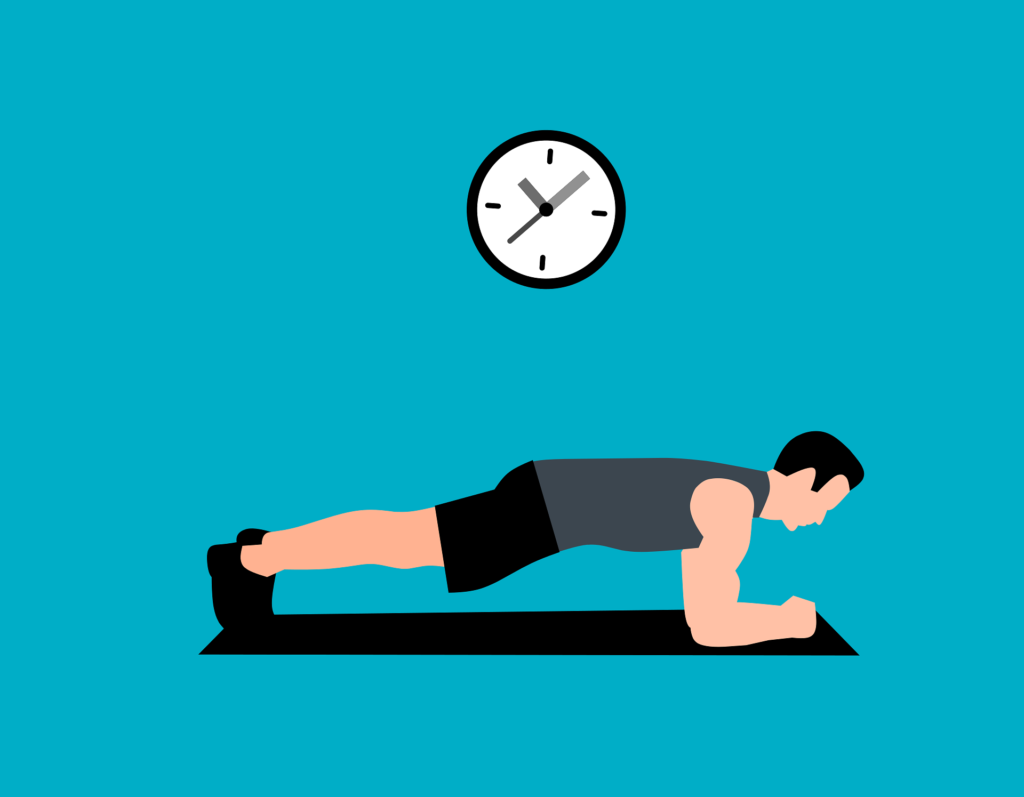
- Inchworm to High Plank: Walk your hands out until you’re in a plank, hold for two seconds to engage the serratus anterior, and walk back.
Block 2: High-Velocity, Zero-Impact
- Shadowboxing with a Squat: Throw four punches (cross, hook, cross, hook) then perform a deep air squat. The rapid arm movement spikes the heart rate faster than leg movements alone.
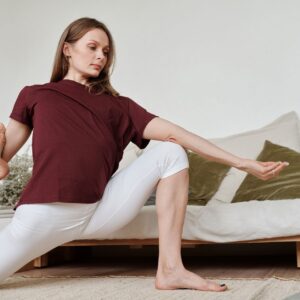
- Pillar Skaters: Step your left leg behind your right in a curtsy lunge, reaching your left arm toward the floor. Keep it fluid. Do not hop; glide.
- Standing Knee-to-Elbow: Drive your knee toward the opposite elbow across your midline. This targets the obliques and uses the “cross-body” effect to increase neurological demand.
Block 3: The Posterior Burn
- Reverse Lunge to Overhead Reach: As you step back, drive both arms toward the ceiling. This stretches the hip flexors while demanding balance.
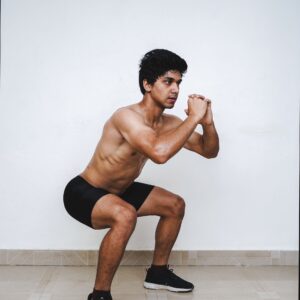
- Sumo Squat Pulses: Stay low in a wide stance. Pulse for three counts, then stand halfway up. The “constant tension” method keeps the heart rate elevated without needing speed.
- Good Mornings to Snap-Back: Pivot at the hips with a flat back, then “snap” your hips forward using your glutes.
Block 4: Floor Core & Finish
- Mountain Climbers (Slow-Mo): In a plank position, drive your knees toward your chest. Doing these slowly actually requires more core stabilization than “running” them.
- Plank Shoulder Taps: Minimize hip sway. This is a secret cardio killer because your entire body is under isometric tension.
- Bird-Dog Crunches: From all fours, extend opposite arm and leg, then crunch them together under your belly.
Maximizing Results in Minimal Space
To get the most out of these 20 minutes, you need to focus on Proprioception your body’s ability to sense its movement in space. Because you aren’t moving across a gym floor, you have to create your own resistance.
- Squeeze the Air: When you punch or reach, imagine you are moving through water. Tense your muscles as if resisting an invisible force.
- Focus on the Eccentric: The lowering phase of a lunge or squat is where the most muscle damage (the good kind!) occurs. Slow it down.
- Breath Control: Use “diaphragmatic breathing.” Inhale through the nose, exhale forcefully through the mouth during the hardest part of the move.
Comparison: Apartment Cardio vs. Traditional Cardio
|
Feature |
Apartment-Friendly (Low-Impact) |
Traditional Cardio (High-Impact) |
|---|---|---|
|
Joint Stress |
Minimal / Protective |
Moderate to High |
|
Noise Level |
Whisper Quiet |
Loud (Thumping) |
|
Equipment |
None Required |
Often Requires Machines/Weights |
|
Caloric Burn |
High (via Time Under Tension) |
High (via Explosive Power) |
|
Space Needed |
6×6 square feet |
Varies (Large) |
Pro Tip from Sportiemade: The “No-Shoes” Advantage
Many people ask if they should wear sneakers for an apartment workout. If you are on a rug or a yoga mat, try going barefoot. Working out without shoes strengthens the small intrinsic muscles of the feet and improves ankle stability. Over time, this can help prevent common injuries like plantar fasciitis. However, if you have high arches or previous foot injuries, a pair of cross-trainers might be best.
People Also Ask: Common Apartment Fitness Obstacles
How can I get cardio if I can’t run or jump?
You can achieve cardiovascular conditioning by increasing your “reps per minute” (RPM) of low-impact movements and reducing rest periods. Exercises like high-knee marches, dance, fast-paced shadowboxing, and continuous lunging keep the heart in the “aerobic zone” these activities protect your joints while significantly raising your heart rate (60-70% of max heart rate) without the need for vertical impact.
Is 20 minutes of cardio enough to lose weight?
Consistency beats duration. A 20-minute session performed five times a week is far more effective for metabolic health than a single 60-minute session once a week. According to the Mayo Clinic, regular physical activity combined with a balanced diet is the cornerstone of weight management. The “Afterburn Effect” (EPOC) from high-intensity intervals can also keep your metabolism elevated for hours after you finish.
How do I stop my yoga mat from sliding on hardwood floors?
Sliding is a safety hazard. If your mat moves during “Skaters,” place a non-slip rug pad or mesh underneath it or use a natural rubber mat, which tends to have better “grip” than cheap PVC foam mats. You can also use “yoga towels” with silicone nubs for extra traction.
The Common Misconception: “No Sweat, No Gain”
There is a lingering myth that if you aren’t gasping for air and drenched in sweat, the workout didn’t “count.” In an apartment setting, you might not feel the same “winded” sensation as you would after a sprint. However, pay attention to your muscle fatigue and your internal temperature. If your muscles are shaking during a slow-motion mountain climber, your nervous system is working. Trust the process of “mechanical tension.”
Integrating Longevity into Your Routine
For those of us focusing on long-term health especially athletes over 40 low-impact cardio is a “cheat code.” It allows you to maintain a high level of conditioning without the “wear and tear” on the menisci of the knees or the intervertebral discs of the spine.
By substituting a 5-mile run with a 20-minute silent circuit once or twice a week, you give your joints a “recovery day” while still challenging your mitochondria. This is the essence of smart training: working with your environment, not against it.
Taking it to the Next Level
Once you have mastered the “Silent Sweat” circuit, you can increase the intensity without increasing the noise:
- Add Resistance Bands: Placing a mini-band above your knees during lunges triples the glute activation.
- Slow Down Further: Try a 5-second “down” and 5-second “up” tempo for your squats.
- Shorten Rest: Move from a 15-second rest to a 10-second rest.
If you found this guide helpful, you might want to explore our [Sportiemade Guide to Post-Workout Recovery] to ensure your muscles bounce back quickly, or check out our [Essential Home Gym Equipment for Small Spaces] if you’re ready to add a few tools to your kit.
Your next step: Set a timer for 20 minutes right now. Don’t worry about the perfect outfit or the perfect playlist. Just clear a small space, apologize to your floorboards in advance, and start moving. Your heart and your neighbors will thank you.
You can also check out our 10 Best No-equipment Morning stretches For Daily Mobility

Nick Smoot is a certified fitness coach and the founder of Smoot Fitness, established in 2012. With over a decade of hands-on experience, Nick has personally coached more than 400 clients both in person and online helping them achieve lasting, life-changing physical transformations.
As a contributing expert at Sportiemade (sportiemade.com), Nick brings real-world expertise and a no-nonsense approach to fitness. His coaching philosophy goes beyond short-term results: he equips every client with the knowledge, habits, and mindset needed to get into the best shape of their life and stay there permanently.
Nick specialises in strength training, endurance performance, and the mental discipline that ties them together. His signature philosophy? Lift heavy, run far, and never stop learning.
Whether you are just beginning your fitness journey or looking to break through a plateau, Nick's evidence-based methods and proven track record make him one of the most trusted voices in the fitness space.