10 Best No-Equipment Morning Stretches for Daily Mobility
1. The Cat-Cow (Spinal Segmentation)
This is the gold standard for back health. It moves the spine through flexion and extension, “waking up” the vertebrae and the surrounding musculature. It’s also a gentle four-point kneeling that alternates between arching and rounding the back to help improve spinal mobility, strength and flexibility.
- How to do it: Start on all fours. As you inhale, drop your belly and look toward the ceiling (Cow). As you exhale, tuck your chin and round your back like a frightened cat (Cat).
- Sportiemade Pro Tip: Don’t just move your back. Focus on moving one vertebra at a time, starting from your tailbone and ending at your neck.
2. Child’s Pose with a Lateral Reach
Traditional Child’s Pose is great for the lower back, but adding a “reach” targets the latissimus dorsi and the intercostal muscles between your ribs.
- How to do it: Sit back on your heels with your knees wide. Reach your arms forward. Walk both hands to the right side until you feel a pull along your left ribs. Hold, then switch.
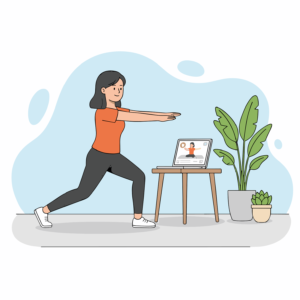
3. The “World’s Greatest Stretch” (Spiderman Lunge with Reach)
There’s a reason pro athletes do this daily. It hits the hip flexors, thoracic spine, hamstrings, and glutes all at once.
- How to do it: Step forward into a deep lunge with your right foot. Place your left hand on the floor. Take your right elbow and try to touch the floor next to your right instep, then rotate your right hand up toward the sky.
4. 90/90 Hip Switches
Modern life involves a lot of sitting, which kills hip internal rotation. This move fixes that without needing any equipment. Also a mobility exercise to improve hip internal and external rotation by sitting with both knees bent at 90-degree angles, creating a “Z” shape with legs.
- How to do it: Sit on the floor with your knees bent. Drop both knees to the right so your right leg is at a 90- degree angle in front and your left is at 90 degrees to the side. Without using your hands, switch the knees to the left side.
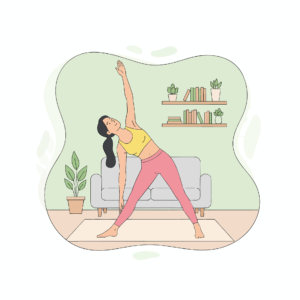
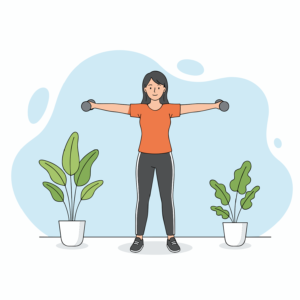
5. Standing Side Reach (The Lateral Opener)
We spend most of our lives moving forward and backward. We rarely move sideways. This stretch opens up the lateral chain.
-
- How to do it: Stand with feet hip-width apart. Reach your right arm over your head and lean to the left, pushing your right hip out.
Common Misconception: Many people believe they need to hold morning stretches for minutes at a time. In the morning, dynamic stretching (moving through the stretch) is actually better than static stretching (holding still) because it increases blood flow faster.
6. Wall Pectoral Stretch
If you sleep on your side or hunched over, your chest muscles are likely tight. This can lead to that “slumped” shoulder look.
-
-
- How to do it: Stand in a doorway or against a wall corner. Place your forearm on the wall at a 90-degree angle and gently turn your body away.
-
7. The Deep Squat (The Paleo Chair)
This isn’t just an exercise; it’s a fundamental human resting position. It opens the ankles, knees, and hips. It’s often referred as the “paleo chair”, is the the act of squatting down until your buttocks are as close to your heels as possible.
-
-
- How to do it: Stand with feet slightly wider than shoulder-width. Drop your hips as low as they can go while keeping your heels on the ground. Use your elbows to gently push your knees out.
- Sportiemade Pro Tip: If your heels lift off the floor, hold onto a doorknob for support until your ankles loosen up.
-
8. Forward Fold with Soft Knees
This targets the posterior chain your calves, hamstrings, and lower back.
-
-
- How to do it: Stand tall and slowly roll down, reaching for your toes. Keep a generous bend in your knees so you feel the stretch in your hamstrings, not just a pull in your lower back.
-
9. Neck Carousels (Controlled Articular Rotations)
Never “roll” your neck in a full, fast circle. It can pinch nerves. Instead, use controlled rotations. Also a daily mobility exercise designed to improve neck health, reduce stiffness, and increase your active range of motion.
-
-
- How to do it: Drop your chin to your chest. Slowly trace your collarbone with your chin to the right shoulder. Look up slightly, then trace back to the left.
-
10. The Glute Bridge (Activation, not just Stretching)
Technically an activation move, but essential for “turning on” the muscles that support your spine.
-
- How to do it: Lie on your back with knees bent. Squeeze your glutes and lift your hips toward the ceiling. Hold for 2 seconds and lower.
Comparing Morning Stretch Styles
|
Feature |
Static Stretching |
Dynamic Stretching |
|---|---|---|
|
Method |
Hold a position for 30+ seconds |
Move through a range of motion |
|
Best Time |
Post-workout / Evening |
Immediately upon waking |
|
Goal |
Increase muscle length |
Joint lubrication & blood flow |
|
Risk |
Can feel “jarring” on cold muscles |
Very |
How to Make Your Morning Routine Stick (Habit Stacking)
Knowing the moves is one thing; doing them is another. The best way to ensure you actually stretch is to use Habit Stacking. This is a concept where you tie a new habit to an existing one.
- The Coffee Method: Do your Cat-Cows and Child’s Pose while the coffee is brewing.
- The Shower Method: Do your Standing Side Reaches and Wall Pec Stretches while waiting for the water to get hot.
- The Bed Method: Don’t even leave the mattress. You can do the Cat-Cow and 90/90 Hip Switches right on your bed before your feet touch the floor.
Frequently Asked Questions (People Also Ask)
Is it okay to stretch right after waking up?
Yes, but you should be gentle. Your spinal discs are actually more hydrated and “plump” in the morning, which makes them slightly more sensitive to extreme forward bending. Start with gentle rotations before moving into deep folds.
How long should a morning stretch routine last?
For most people, 5 to 10 minutes is the sweet spot. Consistency matters more than duration. Five minutes every day is far more effective for your mobility than one hour once a week.
Can stretching help with morning back pain?
While we don’t provide medical advice, many people find that gentle movement helps alleviate “mechanical” back pain caused by stiffness. However, if you feel sharp, shooting pain, stop immediately and consult a healthcare professional. You can read more about back health on high-authority sites like the Mayo Clinic or PubMed.
Summary: The Sportiemade Philosophy
At Sportiemade, we don’t believe you need to be an elite athlete to move like one. Taking ten minutes to grease the wheels of your joints isn’t just about fitness it’s about quality of life. When you move better, you feel better. When you feel better, you perform better in every area of your life.
Start tomorrow morning. No equipment. No excuses. Just a more mobile you.